
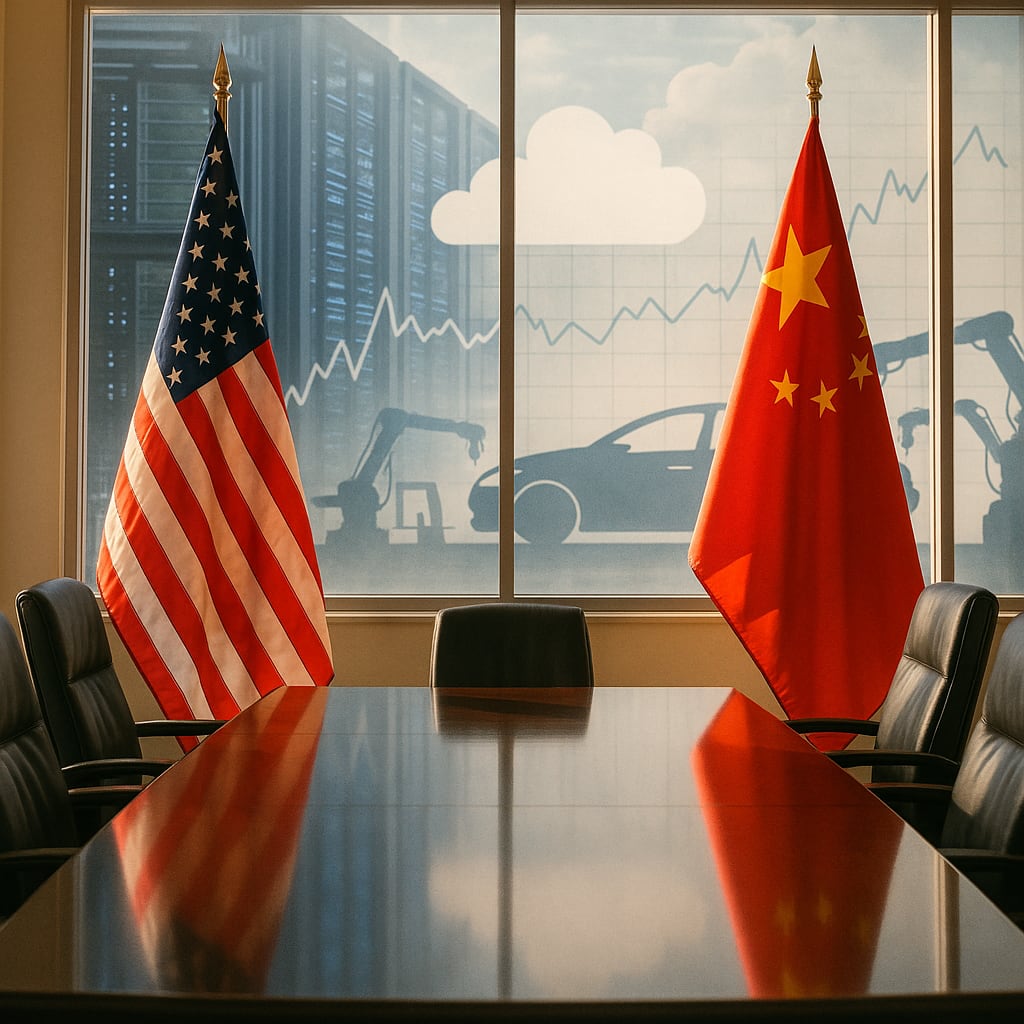
Pentagon adds Alibaba, BYD, Baidu to “Chinese military companies” list; Beijing condemns move
Narrative Snapshot
- Cross-outlet consensus: the Pentagon expanded its list to include Alibaba, Baidu, and BYD alongside more than a dozen other Chinese firms; Beijing objected. This baseline is consistent across South China Morning Post (both reports), the Japan Times, The Hindu, Al Jazeera, the Guardian, and Folha de S.Paulo.
- Emphasis diverges: the Hindu foregrounds the list’s statutory origins (a 2021 congressional mandate), while SCMP’s tech-war coverage highlights reputational exposure and the prospect of investment curbs for listed firms. The Guardian frames escalation risks; Al Jazeera and Folha prioritize China’s condemnation and protest.
- Timing vs. signaling: the Japan Times stresses that Washington’s update came less than a month after a Trump–Xi meeting in Beijing, juxtaposing high-level engagement with continued pressure.
- What’s at stake: access to capital and partners for Chinese tech champions (SCMP), the tenor of U.S.–China tech rivalry spanning AI and EVs (SCMP, Guardian), and how third countries assess Chinese AI integration amid influence risks (The Diplomat).
What Happened
The U.S. Department of Defense added Alibaba, Baidu, BYD, and more than a dozen other Chinese companies to its roster of “Chinese military companies” operating in the United States, according to reports from the South China Morning Post and other outlets on June 8–9, 2026. The Hindu notes the list was created in 2021 by a congressional mandate to identify firms the Pentagon considers linked to China’s military. Al Jazeera reports that China’s embassy in Washington condemned the designations as “discriminatory,” while Folha de S.Paulo says Beijing lodged a protest. The update arrives less than a month after President Donald Trump met Xi Jinping in Beijing, the Japan Times reports. SCMP’s follow-up coverage frames the additions within intensifying U.S.–China competition and flags potential reputational and investment implications for affected firms; the Guardian similarly underscores the risk of heightened tensions.
Why It Matters
This round of designations operates within a U.S. legal architecture designed to identify firms tied to China’s armed forces (The Hindu). While the Pentagon’s list is not itself a sanctions instrument, SCMP’s tech-focused analysis underscores it can generate reputational risk and “raise the spectre of investment curbs” for major Chinese technology companies. The move touches core sectors—e-commerce/cloud (Alibaba), AI (Baidu), and EVs/batteries (BYD)—that anchor global supply chains and standards-setting contests highlighted by SCMP and the Guardian. It also lands amid renewed high-level diplomacy (Japan Times), testing whether engagement can coexist with structural techno-security competition. Beyond the bilateral frame, The Diplomat’s assessment of the ASEAN–China AI Center points to Southeast Asia’s simultaneous pursuit of Chinese AI integration and concerns over influence operations—an environment in which U.S. designations may shape risk perceptions and due diligence baselines.
Diverging Narratives
U.S. framing, as reported across outlets, is institutional and security-driven: the Pentagon is executing a congressionally mandated process to identify entities it assesses as linked to the Chinese military (The Hindu; SCMP). SCMP’s broader lens places the update in a continuum of “widening competition,” implying the list functions as a policy signal with market consequences even absent automatic sanctions. By contrast, China’s response—reported by Al Jazeera and Folha de S.Paulo—casts the move as discriminatory and grounds Beijing’s objection in diplomatic protest. The Guardian stresses escalation risks for the bilateral relationship, while the Japan Times highlights the proximity to a Trump–Xi meeting, inviting questions about the balance of engagement and pressure. Across reports, uncertainty remains around operational criteria and downstream measures: SCMP flags the potential, but not inevitability, of investment restrictions and capital-access constraints. That ambiguity—designation versus enforceable prohibitions—underpins much of the practical divergence in how stakeholders may read the policy’s bite.
What Happens Next
- Investment and capital-access follow-through: SCMP’s tech-war coverage signals that designations could presage investment curbs. Analysts should watch for subsequent U.S. actions linking the Pentagon list to capital-market or investment prohibitions, as well as any guidance to institutional investors on exposure to listed firms. A move toward curbs would heighten financing and partnership risks; absent such steps, reputational headwinds remain the primary channel.
- Diplomatic sequencing after the leaders’ meeting: The Japan Times’ timing note positions forthcoming bilateral interactions as a barometer. Indicators include additional U.S. list expansions or clarifications, and whether Beijing escalates beyond embassy-level condemnation and protest reported by Al Jazeera and Folha.
- Third-country risk calibration: The Diplomat’s discussion of the ASEAN–China AI Center suggests regional institutions are weighing innovation gains against influence risks. Watch whether Southeast Asian governments reference U.S. designations in their procurement, research partnerships, or governance dialogues related to Chinese AI firms.