
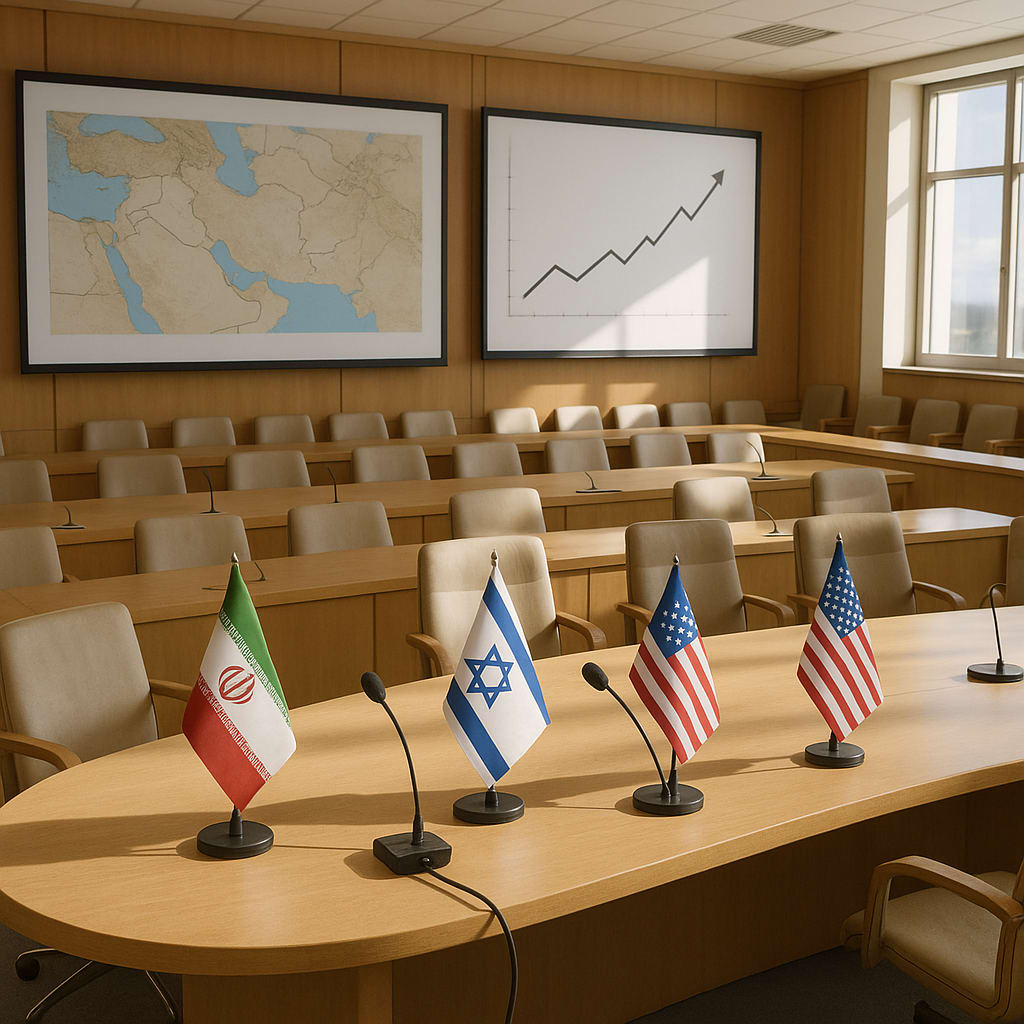
Iran and Israel pause cross-border strikes after first exchange since April truce, amid U.S. pressure
Narrative Snapshot
- Several outlets foreground U.S. intervention: reports of Donald Trump urging restraint preceded both sides’ pause announcements (DW; Middle East Eye; Times of Israel), while others underline that Israel still struck Iran despite an earlier plea (the Guardian). Asian and European coverage includes both interpretations, with skepticism about U.S. control (South China Morning Post) alongside accounts of pointed warnings to Benjamin Netanyahu (La Repubblica; Corriere della Sera).
- Tehran frames its halt as conditional and retaliatory: an end to attacks so long as Israel does not escalate in Lebanon (DW; The Hindu, June 7), and after a “painful response” (Middle East Eye). Jerusalem emphasizes deterrence and continuity of operations against Hezbollah (Times of Israel) and vows of forceful response to future attacks (The Hindu).
- Negotiations loom over reporting: Iranian and U.S. officials signal talks are ongoing (Clarin; Japan Times; Times of Israel), even as Washington messaging ranges from imminent-deal claims (TASS; RT; Times of Israel) to domestic skepticism (the Guardian).
- Markets and regional exposure temper the “pause” narrative: oil prices rose despite the halt (Middle East Eye), and earlier in the week the U.S. reported intercepting Iranian threats toward Bahrain and Kuwait (Middle East Eye; South China Morning Post).
What Happened
Iran said it halted attacks on Israel after firing roughly 30 missiles in response to a strike in Lebanon, while Israel launched two waves of airstrikes in Iran—the first direct exchange since an April truce (BBC; The Hindu, June 7). Donald Trump publicly urged Netanyahu not to retaliate (Middle East Eye), yet Israel struck Iran before both sides announced a pause (the Guardian; Deutsche Welle). Netanyahu acknowledged the halt but vowed to respond “with force” to any future Iranian attack (The Hindu, June 8–9). Tehran’s military warned it would resume strikes if Israel escalates in Lebanon (DW; The Hindu, June 7). Israeli officials said operations against Hezbollah continue and suggested this round is “behind us,” as Netanyahu convened his security cabinet (Times of Israel). Parallel reporting highlighted ongoing U.S.-Iran talks (Japan Times; Clarin) and rising oil prices despite the lull (Middle East Eye).
Why It Matters
The pause sits at the intersection of battlefield signaling and coercive diplomacy. Several outlets link the halt to direct U.S. pressure (DW; Times of Israel; Middle East Eye), highlighting the weight of personalized executive diplomacy over formal mechanisms—an influence European analysis also stresses (Le Monde). Yet continued Israeli operations in Lebanon and Iran’s conditionality tie de-escalation to a volatile secondary front (Times of Israel; DW; The Hindu), underscoring the fragility of any lull absent a broader Israel–Hezbollah arrangement. Concurrent claims of progress toward a U.S.–Iran deal (Times of Israel; TASS; RT) coexist with domestic U.S. skepticism (the Guardian), revealing a negotiating environment where public timelines and political constraints can undercut deterrence. The earlier interception of Iranian threats toward Gulf states (Middle East Eye; South China Morning Post) and oil’s upward move despite the pause (Middle East Eye) signal persistent regional and market risk even when direct Iran–Israel fire subsides.
Diverging Narratives
- U.S. leverage over Israel: Times of Israel and DW describe a pause following Trump’s pressure, while the Guardian reports Israel struck Iran despite his plea. Trump later insisted Netanyahu did not defy him (Times of Israel, June 9). SCMP highlights skepticism over whether Washington is “calling the shots,” whereas Italian coverage spotlights Trump’s warnings to Netanyahu (La Repubblica; Corriere della Sera). RT argues Washington’s influence is limited as Israel expands in Lebanon (RT, June 3).
- Deterrence versus conditional restraint: Netanyahu frames the halt as the result of having “hit the terror regime in Tehran,” coupled with a promise of force if attacked again (The Hindu). Iran characterizes its pause as contingent on Israel not escalating in Lebanon and as following a “painful response” (DW; Middle East Eye), while signaling it “will not yield to pressure” even as talks continue (Middle East Eye; Japan Times; Clarin).
- War or deal trajectory: U.S. statements range from “final throes” of talks and imminent outcomes (Times of Israel; TASS; RT) to reporting that such messaging isn’t resonating in Congress or with the public (the Guardian). Energy and regional indicators—rising oil prices and earlier Gulf threats—counter any assumption that the pause alone reduces risk (Middle East Eye; South China Morning Post).
What Happens Next
- Lebanon front as trigger: Iran says strikes would resume if Israel escalates in Lebanon (DW; The Hindu, June 7). Watch IDF strike tempo in southern Lebanon and Beirut suburbs, Hezbollah responses, and any Israeli cabinet guidance signaling expansion or restraint (Times of Israel).
- Negotiation track signals: U.S. leaders tout rapid progress (Times of Israel; TASS; RT), while Iranian officials insist on not yielding (Middle East Eye) and on balancing “battlefield” and talks (Japan Times). Indicators include formal negotiation milestones, aligned U.S.–Iran public messaging, or hardline statements narrowing space for compromise.
- Israeli decision-making: A “sense this round is behind us” contrasts with vows of future force (Times of Israel; The Hindu). Monitor cabinet deliberations, rules-of-engagement adjustments, and any linkage of Iran deterrence to Hezbollah operations.
- Regional and market risk: Continued reports of missile activity toward Gulf states or U.S. interceptions (Middle East Eye; South China Morning Post) and oil price responses (Middle East Eye) will reveal whether the pause contains, or merely postpones, broader escalation dynamics.