
Cross-border strikes intensify: Ukraine hits Russian logistics, Russia steps up aerial attacks, NATO downs drone over Latvia
Narrative Snapshot
- Broad agreement that Ukraine has increased strikes against fuel and logistics nodes supporting Russia’s occupation; Western and Ukrainian outlets link this to supply strain in occupied territories (BBC; Kyiv Independent), while Russian state media frame the same actions as deliberate targeting of civilians (TASS).
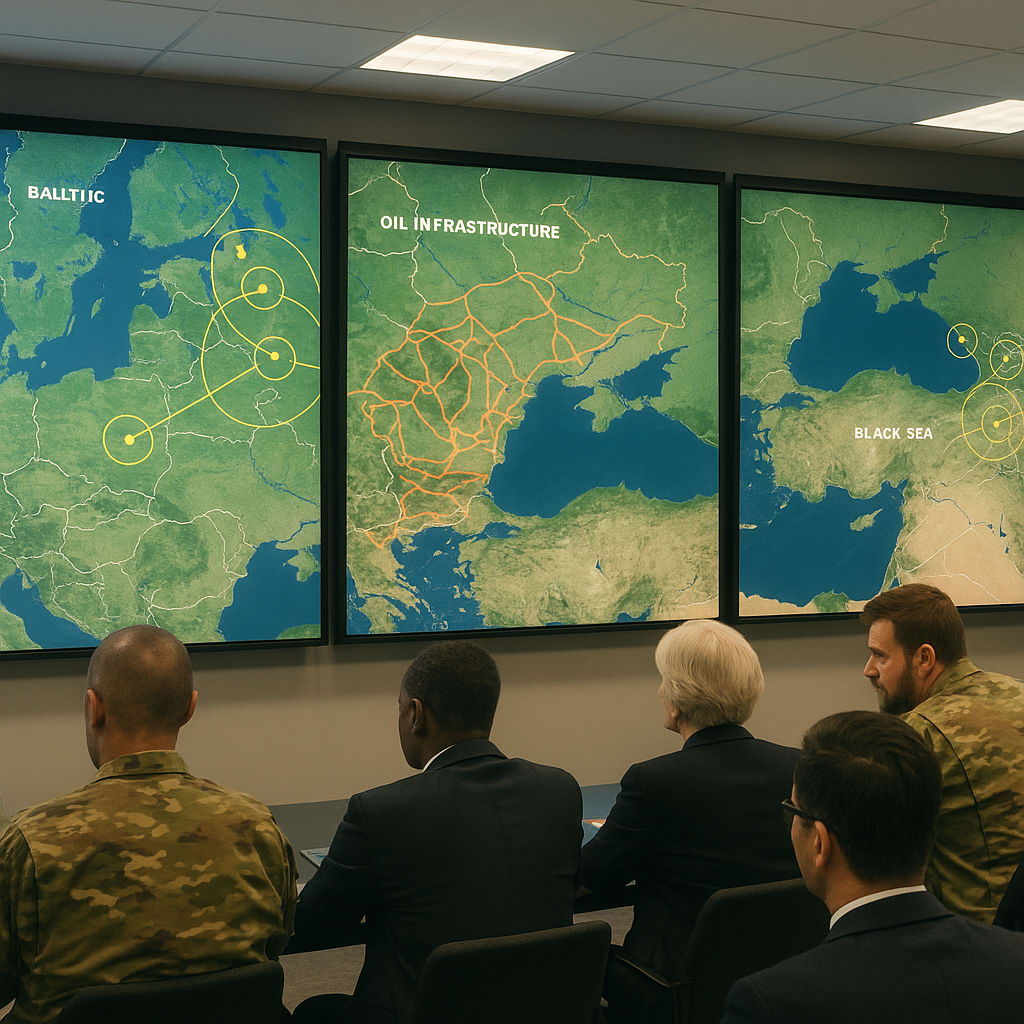
- Coverage splits over spillover risk: NATO’s shoot-down of a drone over Latvia is reported as alliance air policing in action (Corriere della Sera; Kyiv Independent), whereas RT spotlights alleged Ukrainian drones appearing across EU states and near a Romanian oil terminal, emphasizing cross-border hazards (RT).
- On battlefield momentum and diplomacy, Ukrainian and European sources highlight Kyiv’s claim of net territorial gains in May and Moscow’s rejection of peace initiatives (Kyiv Independent; La Repubblica), while an interview in Le Monde suggests signs—however limited—of a potential negotiating dynamic around the Kremlin.
What Happened
Ukrainian strikes targeted Russian oil depots and logistics in occupied areas, with Kyiv and Western outlets linking the campaign to growing fuel and supply constraints (Corriere della Sera; BBC; Kyiv Independent). NATO jets shot down a drone in Latvian airspace, underscoring alliance air policing on the eastern flank (Corriere della Sera; Kyiv Independent). Russia intensified aerial attacks, including a major strike on several cities that killed at least nine and wounded over 60 earlier in the week, and additional raids in Kharkiv that left four dead and 15 injured (South China Morning Post; La Repubblica). Kyiv’s commander-in-chief said Ukraine recaptured more territory than it lost in May, as Moscow rejected Ukrainian and European peace initiatives and said the battlefield would decide the war (Kyiv Independent; La Repubblica). Turkey’s foreign minister warned the fighting could spread as both sides widen target sets (TASS). RT reported a suspected Ukrainian drone detonated near Romania’s Constanța oil terminal (RT). Reports also described food shortages in Crimea amid disrupted Russian logistics (Kyiv Independent).
Why It Matters
The interdiction of fuel and logistics hubs points to a sustained attritional strategy that challenges Russia’s ability to supply both its forces and occupied territories, with immediate humanitarian and governance implications in areas like Crimea (BBC; Kyiv Independent). NATO’s interception over Latvia and reported drone incidents near EU infrastructure highlight the alliance’s evolving air and maritime security requirements and the salience of Baltic and Black Sea defense postures (Corriere della Sera; RT). Moscow’s dismissal of peace initiatives, juxtaposed with analysis suggesting constrained options for the Kremlin, reinforces a protracted conflict dynamic with limited diplomatic openings (Kyiv Independent; Le Monde). For policymakers, the confluence of supply degradation, intensified strikes on cities, and cross-border airspace events raises questions about escalation management, civilian protection, and the resourcing of integrated air and missile defenses across NATO’s eastern flank.
Diverging Narratives
Ukrainian and Western reporting emphasizes military objectives—oil depots and logistics nodes—framing the campaign as a bid to erode Russia’s occupation capacity and battlefield tempo (BBC; Kyiv Independent; Corriere della Sera). Russian state media advance a contrasting line: that Kyiv is making “no secret” of intent to strike civilians to break morale, citing a Russian expert’s assessment (TASS). On cross-border risk, NATO’s downing of a drone over Latvia appears as routine allied defense activity in Western and Ukrainian outlets (Corriere della Sera; Kyiv Independent), while RT concentrates on alleged Ukrainian UAV incidents across multiple EU countries and a detonation near Romania’s Constanța oil terminal to underscore hazards tied to Kyiv’s drone operations (RT). Diplomatically, Kyiv and European sources report Moscow’s rejection of peace initiatives and insistence that the war be decided on the battlefield (Kyiv Independent; La Repubblica), whereas an interview in Le Monde interprets recent signals as potentially indicating a nascent negotiating dynamic around the Kremlin, even as it portrays President Putin as trapped between inability to win or quit the war (Le Monde).
What Happens Next
- NATO and EU airspace/maritime security: Further intercepts or incidents over the Baltics or near Black Sea energy infrastructure would test alliance air policing and host-nation protocols. Watch for Latvian, Romanian, or NATO statements refining rules of engagement and air defense posture (Corriere della Sera; RT).
- Ukraine’s interdiction campaign: Indicators include additional strikes on depots, rail hubs, and ports, and corroborated reports of supply disruptions or shortages in occupied territories (BBC; Kyiv Independent). Russian adaptations—dispersal, hardening, or rerouting—will signal resilience or strain.
- Russian strike patterns: The scale/frequency of massed attacks on cities like Kyiv, Dnipro, and Kharkiv, along with casualty trends, will reflect Moscow’s response calculus and capacity (SCMP; La Repubblica).
- Diplomacy: Moscow’s continued rejection of initiatives versus any movement consistent with the negotiating “signals” described in Le Monde will shape expectations for talks. Turkish messaging on regional spillover risk, and any related de-escalation proposals, are key signals to monitor (Kyiv Independent; Le Monde; TASS).