
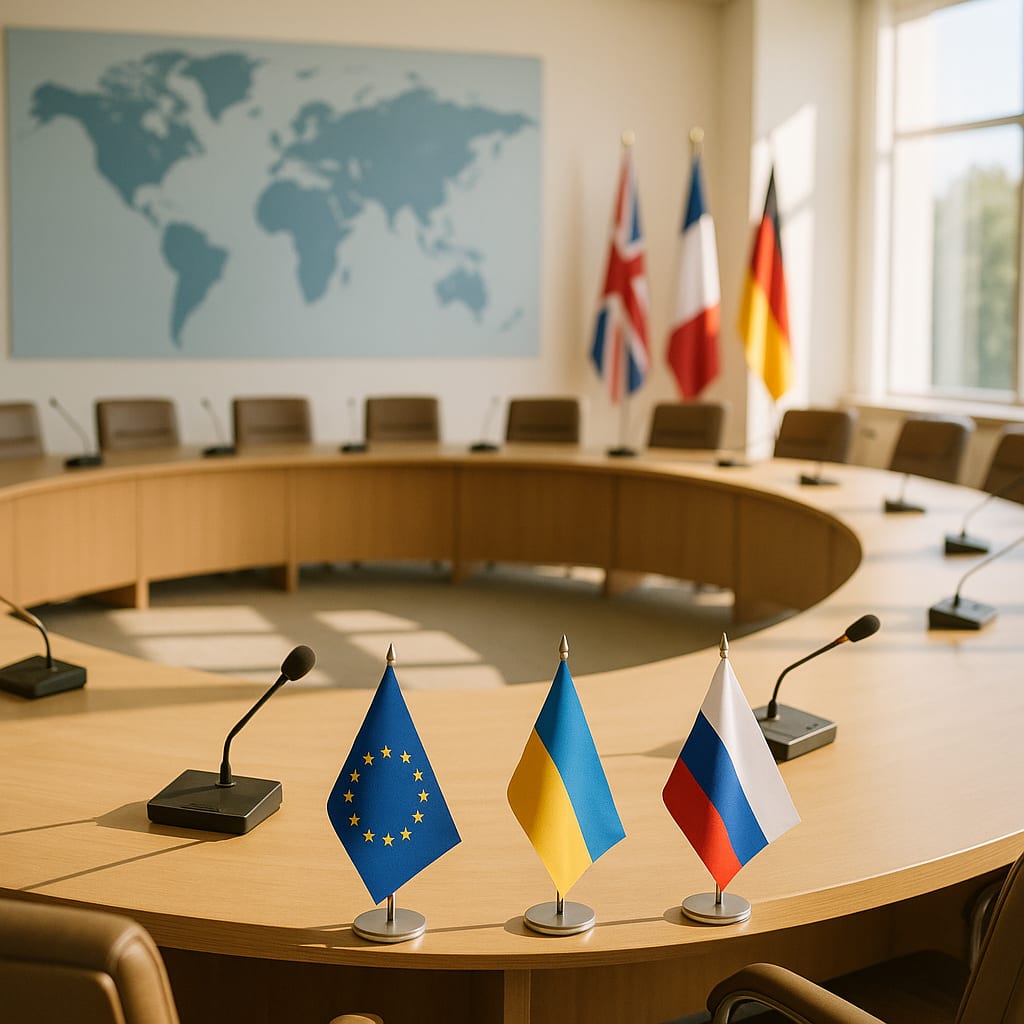
Europe backs Zelensky–Putin summit bid; Moscow rebuffs initiatives and says no talks are under way
Narrative Snapshot
- European and Ukrainian outlets emphasize formal Western backing for direct ceasefire talks, contrasted with Moscow’s public dismissal. South China Morning Post reports the UK, France, and Germany endorsed President Volodymyr Zelensky’s call for a summit with Vladimir Putin, while Kyiv Independent highlights Sergey Lavrov’s stance that the battlefield will decide and that negotiations are not feasible now.
- Russian official and state-linked coverage centers on preconditions and perceived Western duplicity: TASS carries statements urging Kyiv to lift its ban on talks, criticism that Europe “talks peace” while arming Ukraine (echoed via The Hindu), and claims the United States is uninterested in prior “Alaska” understandings.
- Mediation signals are uneven across sources: Corriere della Sera reports Roman Abramovich is again acting as a messenger; TASS quotes a U.S. lawmaker saying peace talks are “alive and well,” even as other Russian officials say no talks are happening and that mediation is stalled. Le Monde notes signs of negotiating dynamics from the Kremlin despite its refusal to meet Zelensky.
- Civilian realities under occupation, covered by Kyiv Independent, are largely absent from official diplomatic messaging but foreground the human stakes of any ceasefire or territorial arrangement.
What Happened
Leaders of the UK, France, and Germany issued a joint statement backing Zelensky’s call for direct ceasefire talks with Russia (South China Morning Post). Senior Russian figures publicly rejected current initiatives: Foreign Minister Sergey Lavrov said he did not see how talks could occur and that the battlefield would decide (Kyiv Independent), adding the United States showed no interest in returning to prior “understandings” reached in Alaska (TASS). The Kremlin accused European leaders of speaking about peace while providing new weapons to Kyiv (The Hindu). Federation Council Speaker Valentina Matviyenko urged Zelensky to cancel Ukraine’s ban on negotiations with Moscow (TASS). On mediation, TASS quoted U.S. Rep. Anna Paulina Luna claiming peace talks were “alive and well,” while Russia’s UN envoy said none were under way and Kremlin spokesman Dmitry Peskov described the mediation track as stalled (both TASS). Corriere della Sera reported Roman Abramovich is again acting as a messenger between Moscow and Kyiv. Peskov said the Kremlin appreciated Donald Trump’s “peace push” and noted differing views inside his team, referencing Marco Rubio’s rhetoric (TASS). Le Monde cited signals of a negotiating dynamic from the Kremlin despite Putin’s refusal to receive Zelensky.
Why It Matters
The alignment of London, Paris, and Berlin behind direct talks signals a coordinated European push for a negotiated pause—even as these governments continue military support—testing whether parallel “arm and talk” strategies can open a channel acceptable to Moscow (SCMP; The Hindu). Russia’s framing—insisting Kyiv lift its own legal barrier to talks and pointing to Western arms transfers—underscores a widening trust deficit that complicates any ceasefire architecture (TASS; The Hindu). Claims that Washington has stepped back from prior U.S.–Russia “understandings” point to frayed great‑power guardrails (TASS). Mixed messages on mediation—reports of Abramovich as a go‑between, U.S. political figures touting efforts, and Moscow’s assertion that talks are stalled—highlight the fragility of backchannels (Corriere della Sera; TASS). For multilateral bodies, Russia’s UN envoy stating no talks are active narrows near‑term institutional leverage, while conditions under occupation described by Kyiv Independent accentuate the humanitarian and legal stakes any negotiations would need to address.
Diverging Narratives
- Preconditions vs. feasibility: Russian officials argue Kyiv is unwilling to compromise and must rescind its ban on negotiations; Lavrov and Russia’s UN envoy say talks are not possible and not happening (TASS; Kyiv Independent). By contrast, European leaders publicly endorse a Zelensky–Putin summit to seek a ceasefire (SCMP), presenting talks as both urgent and necessary.
- “Peace talk” credibility: Moscow accuses European leaders of advocating dialogue while escalating arms deliveries, casting doubt on Western intentions (The Hindu). European statements reported by SCMP focus on enabling direct talks without addressing arms assistance, creating a split-screen where each side spotlights a different prerequisite for credibility.
- Mediation signals: TASS amplifies a U.S. lawmaker’s assertion that talks are “alive and well,” yet also reports Peskov saying mediation is stalled and Nebenzya saying no talks are ongoing. Corriere della Sera adds that Abramovich is again shuttling messages, while Le Monde detects negotiation “signals” from within the Kremlin despite Putin’s refusal to meet Zelensky. Together, these accounts suggest activity around backchannels but no acknowledged, formal process.
- Strategic end states: Kyiv Independent reports Lavrov’s statement that the battlefield will decide, implying coercive leverage over diplomacy. Le Monde’s interview frames Putin as unable to win or exit the war but still sending mixed signals, underscoring ambiguity within Russia’s strategic calculus.
What Happens Next
- Direct leader-level channel: Watch whether Kyiv and Moscow move toward—or away from—a Zelensky–Putin meeting. Indicators include any response from Moscow to the UK–France–Germany backing (SCMP), a public shift by Russia away from “battlefield first” rhetoric (Kyiv Independent), or steps by Kyiv on its ban on negotiations that Russian officials say must be lifted (TASS).
- Mediation/backchannels: Track credible confirmation of Abramovich’s messenger role from either capital (Corriere della Sera), signs of a Putin–Trump conversation endorsed by both sides, or official designation of mediators. Peskov’s characterization of the track as “stalled” and Nebenzya’s “no talks” baseline set the bar for what would count as movement (TASS).
- U.S. vector: Monitor whether claims of “alive and well” talks by U.S. figures translate into identifiable diplomatic actions, or remain rhetorical (TASS). Also relevant is any shift in Washington’s posture toward the “Alaska understandings” Lavrov referenced (TASS).
- European follow‑through: Look for concrete mechanisms—envoy appointments, proposals for venue/format, or outreach to Moscow—stemming from the UK–France–Germany statement (SCMP), and whether simultaneous arms support continues at current or altered levels (The Hindu).