
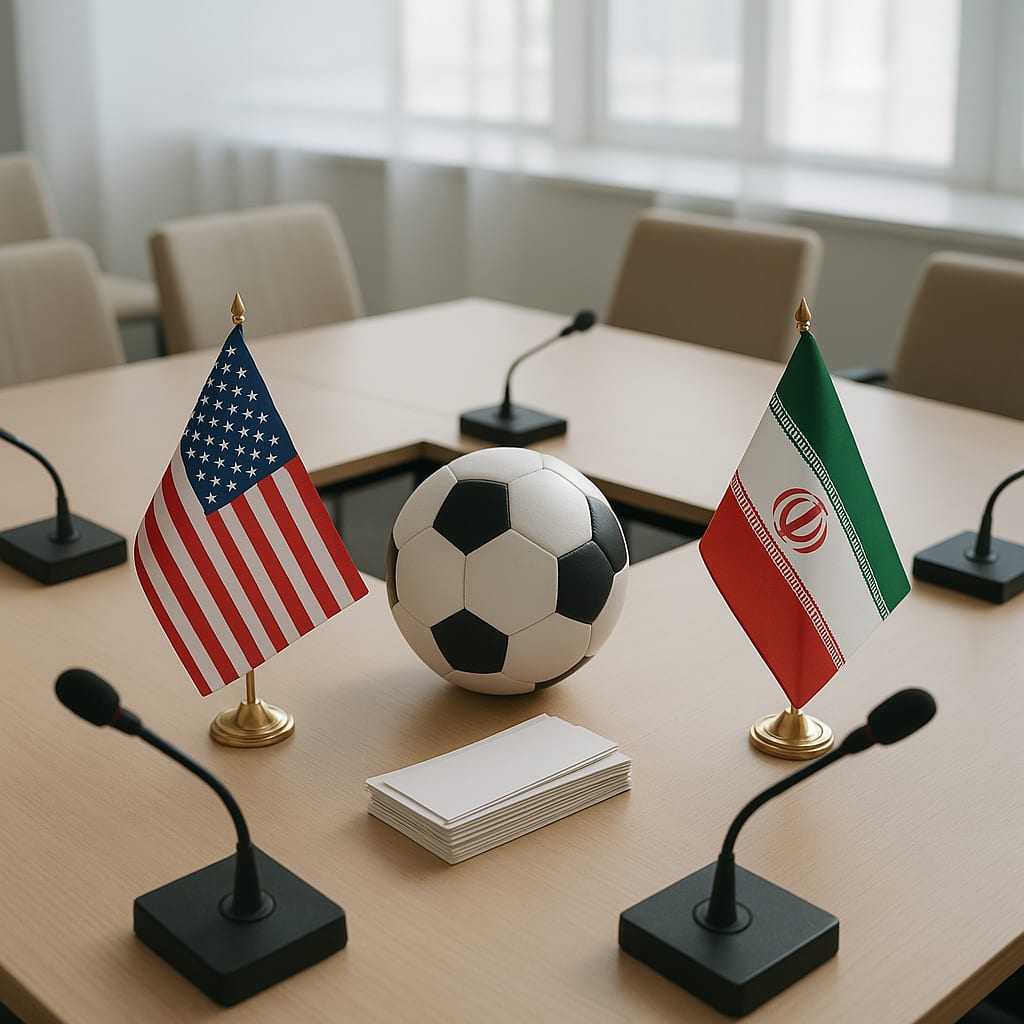
Iran’s football federation says its World Cup fan ticket allocation was revoked; FIFA and US organizers have not commented
Narrative Snapshot
- Most outlets lead with the federation’s claim and the timing: the alleged revocation came days before kickoff, after Iranian players and staff secured US visas and arrived in Mexico (BBC; Al Jazeera English, 9 June).
- Attribution varies. Some reports explicitly tie the decision to US authorities or organizers (Al Jazeera English, La Repubblica, ANSA, Times of Israel), while others foreground that this is the federation’s allegation (BBC) or present it as the organizers’ action (TASS).
- Emphases diverge: Italian coverage underscores a “hard” federation statement and the absence of any delivered tickets despite travel plans (La Repubblica); Israeli reporting notes the federation had begun selling seats under its quota (Times of Israel); Russian and Middle Eastern outlets stress the impact on fans who finalized itineraries (TASS; Middle East Eye).
- Contextual frames differ. Some link the episode to active US–Iran brinkmanship and talks (Al Jazeera English, 5 June). Separately, South African commentary questions broader fan access at this World Cup, especially for Africans, amid an unprecedented 10 African teams (Mail & Guardian).
What Happened
Iran’s football federation announced that its allocation of World Cup group‑stage tickets for Iranian supporters had been revoked shortly before the tournament, attributing the move to US organizers/authorities (Al Jazeera English, 9 June; ANSA; La Repubblica; Times of Israel). Multiple outlets report no comment so far from FIFA or US organizers/authorities (BBC Sport, 9 June; ANSA; Times of Israel). The federation says some fans had already organized travel and accommodation, and that it had begun selling seats in line with its quota, but “not a single ticket” was delivered (La Repubblica; Times of Israel). TASS framed the development as organizers withdrawing Iran’s allocation, leaving fans who finalized plans unable to attend (TASS). This followed the squad’s arrival in Mexico on Sunday; players and support staff had obtained US visas and will fly in and out of the US for each group match (BBC News, 8 June; Al Jazeera English, 9 June). The World Cup opens on 11 June across the US, Mexico, and Canada (Mail & Guardian).
Why It Matters
The dispute collides with two systemic stress points documented in the coverage. First, it sits within strained US–Iran dynamics, where both sides are pursuing talks while signaling readiness to use force (Al Jazeera English, 5 June). Even absent explicit linkage, a high‑visibility access issue at a major US‑cohosted sporting event adds friction to an already sensitive context. Second, it raises immediate questions for event governance and transparency: FIFA and US organizers have yet to publicly clarify process, rationale, or remedies, despite multiple outlets seeking comment (BBC Sport; ANSA; Times of Israel). More broadly, concerns about supporter access to North American venues are not isolated to Iran; South African commentary highlights anxieties among African fans at a tournament with a record 10 African teams (Mail & Guardian). For policymakers and organizers, the episode underscores how cross‑border logistics, visas, and ticketing practices intersect with geopolitics and public legitimacy.
Diverging Narratives
- Claim vs. confirmation: Several outlets carefully attribute the revocation to Iran’s federation (“says federation”) and note the absence of official confirmation (BBC Sport; ANSA). TASS presents the withdrawal as a fait accompli by organizers (TASS). This leaves unresolved who made the decision, on what authority, and with what documentation.
- What was in motion: Times of Israel reports the federation had already begun selling seats in line with its quota, whereas La Repubblica stresses that “not a single ticket” was delivered despite fans arranging travel (Times of Israel; La Repubblica). Read together, coverage suggests authorization to sell may have preceded physical allocation, but the sequencing and mechanics remain opaque.
- Scope of impact: Al Jazeera English and Middle East Eye foreground immediate uncertainty for Iranian fans alongside the team’s successful visa processing (Al Jazeera English, 9 June; Middle East Eye). TASS states that all fans who finalized plans will be unable to attend (TASS), a stronger claim not corroborated elsewhere.
- Framing the stakes: Al Jazeera situates the dispute amid current US–Iran tensions (Al Jazeera English, 5 June), while Mail & Guardian places it within broader debates about fan access at the North American World Cup (Mail & Guardian). Neither establishes causality for the Iran ticket decision; both widen the lens on context.
What Happens Next
- Clarification from FIFA and US organizers: Paths include public confirmation of a revocation with stated grounds; reinstatement or reallocation of Iran’s quota; or a process fix (e.g., alternative distribution channels). Indicators: first official statements from FIFA or US organizing entities, which multiple outlets note are currently absent (BBC Sport; ANSA; Times of Israel).
- Remedial options for affected supporters: Iran’s federation could outline refunds, re‑ticketing attempts, or travel guidance for fans who had planned trips (La Repubblica; TASS). Indicators: federation advisories on compensation or next steps; any mention of general‑sale access as a substitute (not reported so far).
- Cross‑border operations during group stage: The team’s need to fly in and out of the US for matches is established (BBC News, 8 June). Indicators: any operational adjustments announced by organizers or the federation that might indirectly signal how supporter access issues are being managed, even if unrelated to ticketing.
- Wider access signals: Given parallel concerns about African supporter access (Mail & Guardian), watch for tournament‑wide guidance or policy communication on international fan entry and stadium access, which could clarify whether the Iran case reflects a narrow dispute or a broader approach to high‑risk or complex cases.