
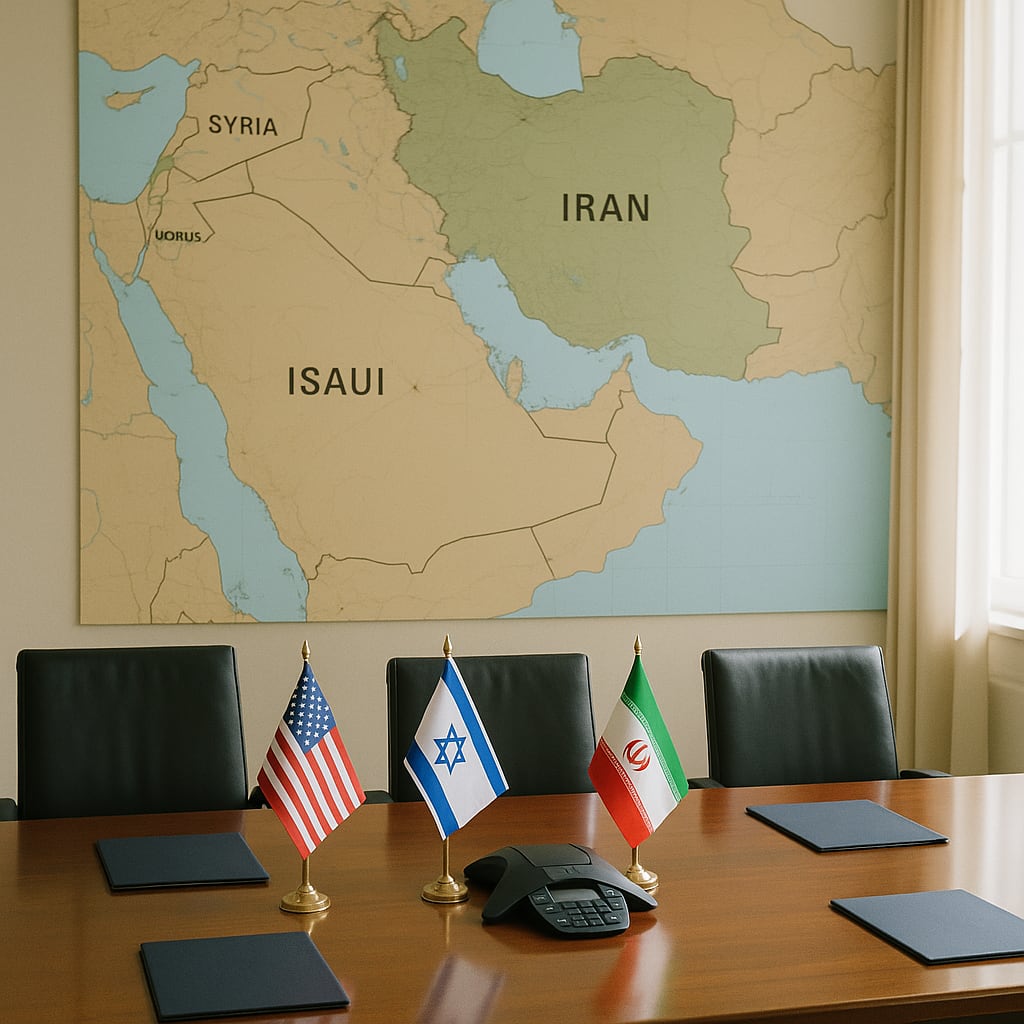
Trump presses Netanyahu as Iran–Israel strikes pause, exposing strains over leverage and Lebanon
Narrative Snapshot
- Across outlets, there is broad agreement that Washington leaned hard on Jerusalem to curb escalation with Iran while indirect US–Iran talks continue; where they diverge is over how much control the US actually exerted and whether Israel complied in full (TASS, Middle East Eye, Al Jazeera; New York Times, BBC, Guardian).
- Israeli operations in Lebanon are a fault line: several European papers stress Netanyahu’s insistence on continuing that front despite US pressure, even as strikes on Iran pause (Corriere della Sera; La Repubblica; Le Monde, 2 Jun).
- US messaging splits coverage. State-aligned Russian outlets amplify Trump’s claims that he “calls the shots” and that a deal is imminent, while US and European sources emphasize limits, domestic pushback, and fragile deterrence (RT; Deutsche Welle; Guardian; New York Times).
- Israeli media foreground the political cost for Netanyahu of appearing constrained by Washington while facing Iran and Hezbollah simultaneously (Times of Israel).
What Happened
Following renewed Israel–Iran missile exchanges after a fragile two‑month lull, President Donald Trump publicly demanded both sides “stop shooting immediately” and privately pressed Prime Minister Benjamin Netanyahu to limit retaliation (Middle East Eye, 7–8 Jun; BBC, 8 Jun). Multiple reports describe heated calls in which Trump castigated Netanyahu over Lebanon strikes; Trump himself confirmed calling the prime minister “f***ing crazy” regarding Beirut (Guardian, 2 Jun; RT, 3 Jun). Russian state media said Israel halted strikes on Iran at Trump’s request, and Trump later stated Israel and Iran agreed to pause attacks for a week (TASS, 8–9 Jun). Axios, cited by RT and Al Jazeera, reported Trump warned Netanyahu he would be “on your own” if Israel escalated against Iran (RT, 9 Jun; Al Jazeera, 9 Jun). Netanyahu signaled continued operations in Lebanon and vowed to respond if Iran attacked again (La Repubblica, 9 Jun; Corriere della Sera, 8–9 Jun). Meanwhile, Trump repeatedly claimed an Iran deal was imminent (Deutsche Welle, 9 Jun; TASS, 5 Jun; RT, 9 Jun), and Vice President J.D. Vance framed it as a US priority irrespective of Israeli objections (Times of Israel, 9 Jun).
Why It Matters
The episode tests the practical leverage the US wields over Israel’s use of force and how that leverage is communicated. European analysis credits the American presidency with being the main brake on Israeli escalation, including in Beirut (Le Monde, 2 Jun), while US and Israeli reporting underscores that Washington’s influence is contested and politically costly in Jerusalem (New York Times, 8 Jun; Times of Israel, 5 Jun). The threatened conditioning of US backing—reported via Axios—would mark an escalation in alliance management, with implications for future crisis episodes (Al Jazeera, 9 Jun; RT, 9 Jun). Simultaneously, the White House seeks to keep indirect talks with Tehran on track without major concessions, aiming to end open hostilities while preventing a nuclear Iran (Le Monde, 9 Jun; Times of Israel, 9 Jun; Al Jazeera, 5 Jun). Messaging gaps—Trump’s repeated imminent‑deal claims versus skepticism at home and abroad—affect credibility, deterrence, and bargaining space (Guardian, 4 Jun; BBC, 8 Jun; Deutsche Welle, 9 Jun).
Diverging Narratives
- Who “calls the shots”: Trump told the Financial Times he decides the terms with Tehran and that Netanyahu has “no choice” (RT, 8 Jun). TASS reinforced that Israel halted Iran strikes at Trump’s request and agreed to a week‑long pause (8–9 Jun). By contrast, US and UK outlets stress Trump’s constraints and the complexity of the Trump–Netanyahu dynamic undermining ceasefire prospects (New York Times, 8 Jun; Guardian, 8 Jun; BBC, 8 Jun). Israeli coverage notes Trump later insisted Netanyahu did not defy him, reflecting sensitivity to perceptions of Israeli autonomy (Times of Israel, 9 Jun).
- The Lebanon exception: Italian and French papers emphasize that Netanyahu is proceeding in Lebanon despite US pressure, framing defiance as politically necessary for strength at home (Corriere della Sera, 8–9 Jun; La Repubblica, 9 Jun). Le Monde similarly portrays Washington trying to restrain Israeli force to avoid open war (2 Jun), while Middle East Eye and Al Jazeera focus on US efforts to cap escalation against Iran specifically (7–9 Jun).
- Trajectory of talks: Trump’s compressed timelines for an Iran deal recur in RT and Deutsche Welle coverage (RT, 9 Jun; DW, 9 Jun), while the Guardian highlights skepticism among Republicans and the public about his Iran war messaging (4 Jun). Al Jazeera frames the moment as dual‑track—talks continuing, but both sides signaling readiness to use force (5 Jun).
What Happens Next
- Scope of the pause: Trump cited a week‑long halt to Iran‑Israel strikes (TASS, 9 Jun). Watch whether Israeli actions remain confined to Lebanon and whether Tehran reciprocates restraint; Netanyahu has pledged to hit back if Iran resumes attacks (La Repubblica, 9 Jun).
- Lebanon escalation: US pressure to avoid renewed Beirut bombing has been explicit (Guardian, 2 Jun; Le Monde, 2 Jun). Indicators include IDF strike tempo and any further leaked readouts of Trump–Netanyahu calls (Corriere della Sera, 9 Jun).
- US–Iran negotiations: Trump and DW/RT reports tout a near‑term deal (DW, 9 Jun; RT, 9 Jun), while Al Jazeera notes talks remain indirect amid deterrent signaling (5 Jun). Watch for synchronized public language from Trump and Vice President Vance (Times of Israel, 9 Jun), and for Iranian confirmations or conditions relayed via third parties.
- US–Israel alignment: Reports that Trump threatened to withhold support if Israel escalates against Iran raise a tangible decision point (RT, 9 Jun; Al Jazeera, 9 Jun). Monitor for any formal US policy moves or public clarifications and for Israeli cabinet statements balancing Iran deterrence with alliance management (Times of Israel, 9 Jun; New York Times, 8 Jun).