
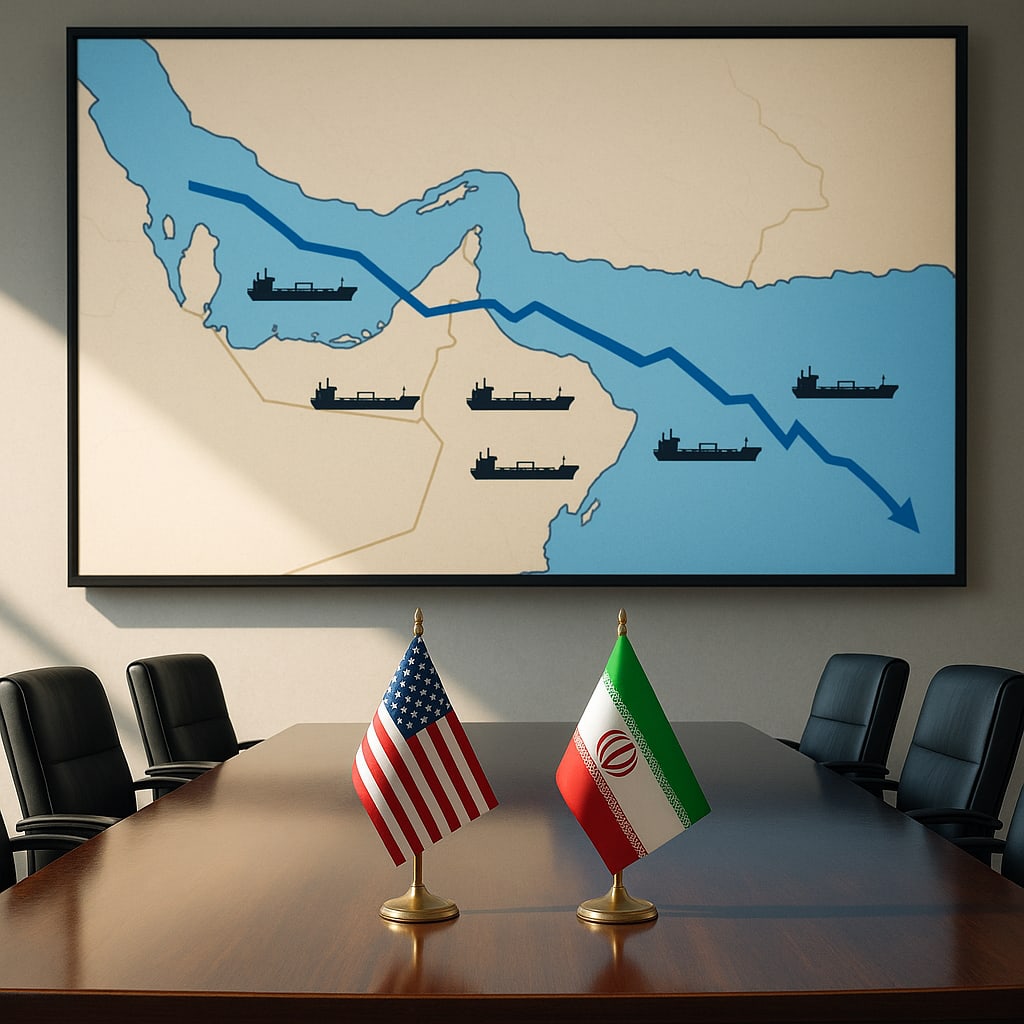
Markets rally as US–Iran framework signals reopening of Hormuz, but normalization expected to be slow
Narrative Snapshot
- Broad alignment: Most outlets report an immediate easing in crude benchmarks and a risk-on move in equities once Washington and Tehran announced a framework and a path to reopening the Strait of Hormuz (Sky News; Times of Israel; The Guardian, 12 and 15 Jun; Middle East Eye, 15 Jun; Folha de S.Paulo).
- Caution on timing and depth: European and German coverage stress that supply normalization could take months due to depleted inventories and logistical recovery, tempering hopes for a rapid return to pre-war pricing (Le Monde; The Guardian, 15 Jun; Deutsche Welle; Al Jazeera English).
- Price floors vs. downside: Russian outlets quote experts with differing near-term Brent baselines—some see $75–80 over the next two months, others doubt a break below $80 in coming days—underscoring uncertainty around the pace of de-escalation and deal implementation (TASS).
- Policy and retail pass-through: US and Latin American reporting highlight strained reserves and delayed relief at the pump, with domestic political and pricing decisions likely to mediate how quickly consumers see benefits (TASS citing CNN on US SPR lows; New York Times; La Repubblica; Clarín; Al Jazeera English).
What Happened
Officials in Washington and Tehran announced a framework to end hostilities and reopen the Strait of Hormuz, with multiple outlets noting a formal signing is slated for Friday in Geneva (Middle East Eye, 15 Jun; La Repubblica). Markets reacted immediately: oil prices fell from recent highs and equities rallied across Asia-Pacific and beyond (Sky News; Times of Israel; Middle East Eye, 15 Jun; The Guardian, 12 and 15 Jun; Folha de S.Paulo). US officials previously indicated Hormuz oil flows had recovered to about half of pre-war levels, and following the US move to lift its naval blockade, Iranian media reported several oil tankers and cargo vessels transiting the strait (Middle East Eye, 12 and 16 Jun). Analysts and European coverage caution that inventories have been drawn down and supply chains will need time to recover (Le Monde; The Guardian, 15 Jun; Deutsche Welle). Separately, the US Strategic Petroleum Reserve is at its lowest since 1983 (TASS citing CNN).
Why It Matters
The Strait of Hormuz is a systemic chokepoint; its reopening shifts global energy risk premia and interacts with already depleted emergency stocks, forcing governments and firms to sequence refilling reserves against price stability goals (The Guardian, 15 Jun; TASS on US reserves). European and German reporting frames this as a multi-month logistics and infrastructure restart rather than an instant supply shock reversal—implicating shipping, insurance, and port throughput (Le Monde; Deutsche Welle). Domestic fuel markets will transmit relief unevenly: US outlets flag months-long lags and political exposure for the White House, while Italian and Argentine reporting point to cautious, delayed pump-price adjustments shaped by national pricing frameworks (New York Times; Al Jazeera English; La Repubblica; Clarín). For policymakers and multilateral actors, implementation details—navigation rules, security guarantees, and dispute management—will test crisis management capacity and influence whether price declines hold or stall (The Guardian, 15 Jun; Middle East Eye, 12 and 15 Jun).
Diverging Narratives
Analysts split on the near-term price floor. TASS cites one view that Brent may entrench in a $75–80 range over two months, while another expects it to stay above $80 in the coming days due to uncertainties over deal terms and Israel’s role (TASS, 15 Jun). Folha de S.Paulo similarly reports skepticism about a return to pre-war ~$70 levels, citing unresolved risks around Hormuz and Israeli decision-making (Folha de S.Paulo). European outlets stress structural frictions—depleted stockpiles and the coming rush to refill them—potentially blunting further price declines despite immediate market relief (The Guardian, 15 Jun; Le Monde). US and German coverage emphasizes that retail fuel normalization will lag as producers ramp up and bottlenecks clear (Al Jazeera English; Deutsche Welle), while Italian and Argentine pieces focus on how domestic pricing policies will meter any pass-through (La Repubblica; Clarín). Governance signals are mixed: Iranian state-linked media insist Tehran is not ceding control over Hormuz (Middle East Eye, 12 Jun), even as initial tanker transits resume after the US lifts its blockade (Middle East Eye, 16 Jun). Earlier volatility—prices rising despite pauses—underscores sensitivity to implementation setbacks (Middle East Eye, 9 Jun; The Guardian, 12 Jun).
What Happens Next
- Deal finalization and scope: Watch for the Geneva signing and clarifications on Israel’s participation and remaining dispute channels (TASS on uncertainty; Middle East Eye, 15 Jun; The Guardian, 15 Jun). Comprehensive participation would support sustained risk-premium compression; ambiguity could cap further downside.
- Maritime operations and throughput: Monitor AIS traffic, insurer guidance, and reported daily transits. Flows rising from “half of pre-war levels” toward prior baselines would validate the supply recovery narrative; stalling would reinforce floor-price theses (Middle East Eye, 12 and 16 Jun).
- Stockpile strategy: Governments’ pace of refilling emergency reserves—amid already low US SPR levels—will shape near-term demand for crude and price elasticity (The Guardian, 15 Jun; TASS citing CNN).
- Retail pass-through and logistics: Indicators include refinery runs, port congestion metrics, and announced fuel price adjustments. Outlets expect months-long normalization in the US and delayed cuts in Europe and Latin America (Al Jazeera English; Deutsche Welle; La Repubblica; Clarín).
- Market ranges: Track whether Brent trades sustainably in the $75–80 corridor or holds above $80 in line with competing analyst views (TASS), alongside equity sensitivity to implementation headlines (Sky News; Middle East Eye, 15 Jun).