
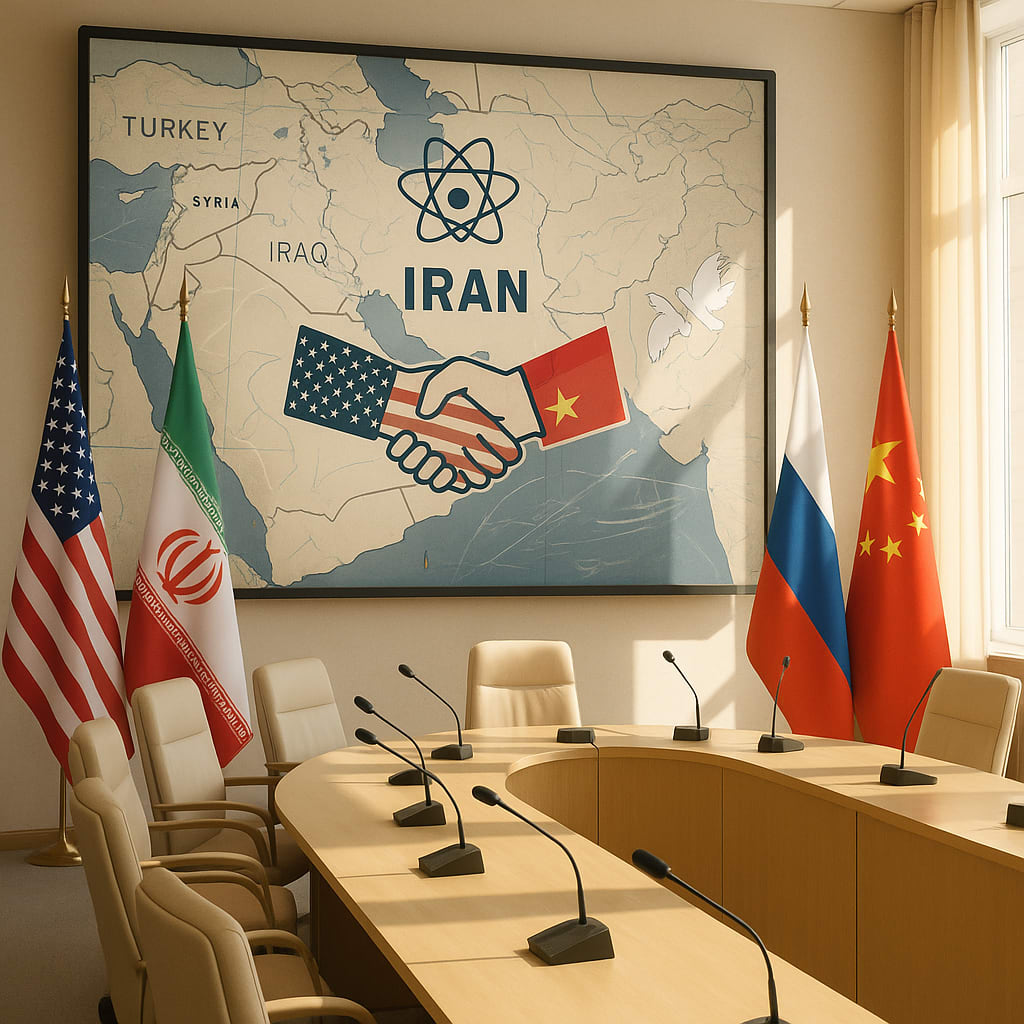
Trump thanks Xi and Putin for ‘neutrality’ as G7 backs an interim US–Iran deal and seeks broader talks
Narrative Snapshot
- US, European, and regional outlets concur that Donald Trump publicly thanked Xi Jinping and Vladimir Putin for staying “neutral,” while also defending an interim US–Iran agreement; the point of emphasis varies: TASS and Middle East Eye (MEE) relay the thanks, whereas the Kyiv Independent frames it as immediately undercutting G7 claims of a cooperative tone.
- European coverage balances endorsement with caveats: the Guardian highlights G7 calls for follow‑on talks on Iran’s missile program with wider actor involvement, while Italian outlets (Corriere della Sera, ANSA, La Repubblica) foreground Trump’s threats to resume bombing if Tehran breaches commitments. The BBC stresses that the text leaves key issues unresolved.
- Regional reporting flags implementation gaps: MEE cites a Lebanese official saying Beirut was not informed of terms or timing, while Al Jazeera carries Iranian figure Mohammad Bagher Ghalibaf arguing talks achieved more than war.
- Parallel strategic context intrudes: the South China Morning Post notes the G7’s move to cut dependence on Chinese rare earths, underscoring that “neutrality” praise for Beijing coexisted with structural de‑risking decisions.
What Happened
After signaling on 14 June that Washington had agreed to a deal that could be signed electronically by him or Vice President JD Vance (per WSJ reporting cited by MEE), Donald Trump and Iran announced an agreement to end 108 days of hostilities, with MEE expecting a 21 June signing in Geneva. G7 leaders convened in Évian to discuss the deal, the Strait of Hormuz, and regional follow‑on issues (Guardian; MEE). On 17 June, Trump defended the accord, insisting Iran would not get a bomb and warning he would resume bombing if Tehran violated it (La Repubblica; Corriere; ANSA). He publicly thanked Xi and Putin for being “neutral” (TASS; MEE; Kyiv Independent). A G7 statement backed the deal but urged wider talks on missiles involving actors including the IAEA (Guardian). ANSA reported Swiss plans for an in‑person signing in Lucerne, contradicting Geneva expectations. MEE reported Lebanon was not informed. On 18–19 June, TASS carried Macron’s doubts about US effectiveness; Al Jazeera amplified Ghalibaf’s claim that talks outperformed war; and the BBC said the initial text leaves key issues to negotiate.
Why It Matters
The G7’s endorsement paired with a push for broader negotiations situates the interim accord within nonproliferation and regional security frameworks that exceed the initial ceasefire (Guardian; MEE). Invoking the IAEA signals a return to institutional monitoring, even as the BBC notes substantial unresolved provisions. Europe’s role is twofold: agenda‑framing and prospective stabilization support, with Germany expressing readiness to contribute to regional efforts (MEE; Guardian). Trump’s threats to resume strikes, reported prominently in Italian and wire coverage, sit uneasily alongside multilateral diplomacy (Corriere; ANSA; La Repubblica). The simultaneous G7 decision to de‑risk rare earths supply chains from China underscores a broader recalibration of economic security, complicating the optics of praising Beijing’s “neutrality” (SCMP). Regionally, gaps like Lebanon’s exclusion from briefings highlight implementation risk (MEE). Iranian media emphasize diplomacy over coercion (Tehran Times), reflecting a narrative contest over the war’s lessons for future engagement.
Diverging Narratives
Trump casts the agreement as preventing an Iranian bomb and credits great‑power “neutrality” (TASS; MEE; Kyiv Independent), while the BBC concludes the text does not meet his stated standard and leaves multiple issues open. European messaging is mixed across outlets: ANSA and Corriere highlight G7 unity and Macron’s supportive tone, but TASS quotes Macron doubting US operational effectiveness and describing pressures on Trump to escalate. The Guardian’s focus on follow‑on missile talks with IAEA involvement underscores that core capabilities were not directly addressed in the memorandum. Implementation frictions surface regionally: MEE reports Lebanon was not informed of terms or timing, even as attention shifts to stabilizing fronts linked to Hezbollah. Media debate the deal’s durability and substance—Sky News frames it as “breakthrough or bluff,” and Al Jazeera stages a “success or disaster” exchange—while Folha de S.Paulo records Trump’s attacks on critics as “envious, bad or stupid.” Process details also diverge: MEE flagged a Geneva signing; ANSA relayed Swiss plans for an in‑person Lucerne ceremony; earlier, Iran denied travel rumors (MEE).
What Happens Next
- Scope and format of follow‑on negotiations: The G7 urges broader talks on Iran’s missile program with wider participation, including the IAEA (Guardian). Watch for formal invitations, an agreed agenda, and whether European leaders or UN bodies are explicitly seated at the table.
- Formalization and text clarity: ANSA cites Swiss plans for an in‑person Lucerne signing, while MEE pointed to Geneva and earlier noted electronic options. Indicators include a finalized venue, public release of the agreed text, and synchronized US–Iran announcements.
- Implementation in the region: MEE reports Lebanon was not informed, and attention is shifting to Lebanese dynamics. Signals to monitor include coordination channels with Beirut, any Hezbollah statements, and de‑escalation mechanisms along Lebanon‑Israel fronts.
- Maritime and economic stabilization: The G7 flagged the Strait of Hormuz (MEE). Watch for notices on shipping lanes, insurance premia moves, and any naval confidence‑building steps.
- Political signaling: Germany’s readiness to support stability (MEE) and Macron’s mixed notes (ANSA/Corriere vs TASS) will shape European engagement. On the US side, Trump’s stated willingness to resume strikes (Corriere; ANSA; La Repubblica) and rhetoric toward critics (Folha) are cues for the administration’s enforcement posture.