
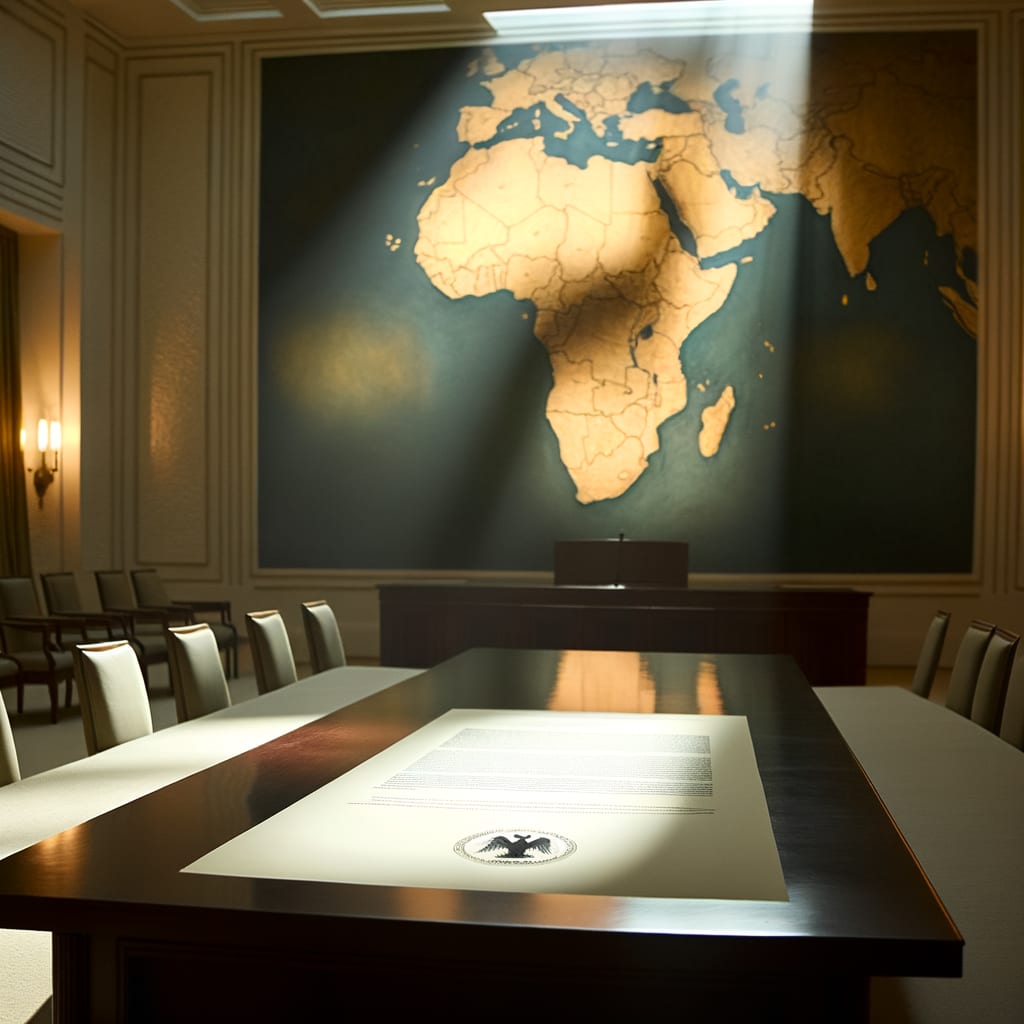
US-Brokered Peace Deal Signed Between Rwanda and DR Congo Amid Ongoing Conflict
In a landmark event, President Paul Kagame of Rwanda and his Congolese counterpart, Félix Tshisekedi, signed a peace accord in Washington, DC, on December 4. The agreement, known as the Washington Accords, was brokered by the United States over an eight-month period and was witnessed by US President Donald Trump. However, skepticism surrounds the feasibility of the agreement as fighting continues in eastern Congo.
Background and Context
The Washington Accords come after decades of conflict and bloodshed between the Democratic Republic of Congo (DRC) and Rwanda. The peace efforts were not only backed by the US but also involved partners such as the African Union and Qatar, culminating in a preliminary agreement in June before the final signing. The agreement was hailed by Trump as a new era of harmony and cooperation.
Key Developments
Despite the high-profile signing ceremony, the reality on the ground remains tense. Hours after the peace deal ceremony, fighting flared up again in eastern DR Congo, with the Rwandan-backed M23 rebel group and government forces trading blame for the renewed hostilities. Bombardments continue, particularly over the control of Kamanyola, which is located on the border of the Democratic Republic of Congo, Rwanda, and Burundi.
The ongoing conflict has had immediate humanitarian consequences, with hundreds of civilians, including children, being killed in the fighting and hundreds more driven across the border into Rwanda.
Implications and Reactions
The agreement, while seen as a major diplomatic milestone, has been met with skepticism and concern. Some observers question the ability of the accord to produce lasting peace, citing the lack of positive changes on the ground and the continued mistrust between Kagame and Tshisekedi.
The deal has also prompted warnings about US interests in securing minerals in the region. However, these concerns have not been explicitly addressed in the accord.
The peace agreement has received international support. Russia hailed the accord while expressing concerns about the ongoing conflict. Former Kenyan President, Uhuru Kenyatta, called it a new dawn
for DR Congo and Rwanda and the wider Great Lakes region.
Current Status
As the Congolese and Rwandan leaders vow to uphold the peace deal, the situation on the ground remains tense. The peace process has begun, but the complexity of the situation and the fresh outbreak of violence raise questions about the effectiveness of the accord in ending one of Africa's longest wars.
As the Great Lakes region watches closely, many are left to wonder whether this peace deal is a breakthrough or another mirage in the long history of conflict between Rwanda and DR Congo.