
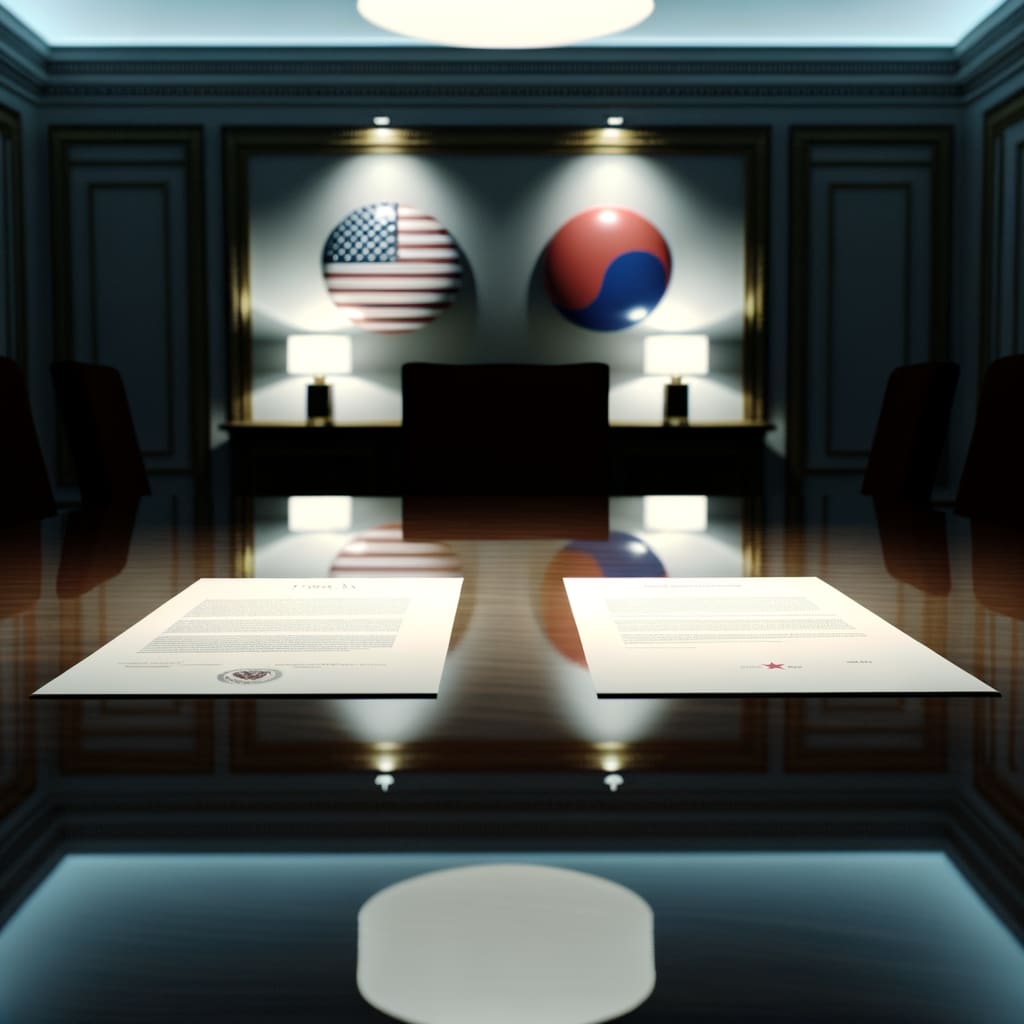
US and Taiwan Finalize Pivotal Trade Deal Amid Rising Tensions with China
In a significant development that may add to the ongoing geopolitical tensions, the US and Taiwan have finalized a crucial trade deal. The agreement, which is set to reduce tariffs and boost the purchase of US goods, comes at a time when the island nation is facing mounting military pressure from China.
Background and Context
The Trump administration reached a trade deal with Taiwan on Thursday, where Taiwan agreed to remove or reduce 99% of its tariff barriers12. This move is expected to immediately eliminate Taiwan's tariffs of up to 26% on many US agricultural imports, including beef, dairy, and corn3. Meanwhile, Taipei has agreed to buy approximately $85 billion worth of US energy, aircraft, and equipment4. The rate of US duties on Taiwanese imports will be maintained at 15%5, and Taiwanese semiconductors and related goods will receive the most favorable treatment when supplied to the United States5.
Defense and Diplomacy in the Crosshairs
While economic ties strengthen, a bipartisan group of senior US lawmakers is urging Taiwan to dramatically boost its defense spending6. The US lawmakers have expressed serious concerns over a proposed special defense budget which is likely to be only partially funded6. The lawmakers have further called for a robust multiyear defense budget that adequately meets the moment and sends a clear signal of Taiwan's will to defend itself6. The calls for increased defense spending come amidst escalating military pressure from China, with lawmakers noting that the threat from China has never been greater
7.
Public Opinion and Future Implications
In the face of these developments, most Americans support the defense of Taiwan8, a sentiment that could be driven both by positive views of Taiwan and anti-China sentiment8.
On the other hand, analysts have warned that there is little chance the US and China would make headway on nuclear arms control during Trump's impending visit1. The Taiwan issue is likely to be “the most critical and contentious” matter, further straining the bilateral relations between the US and China1.
Conclusion
As Taiwan’s president, Lai Ching-te, pushes for a major multiyear defense package aimed at strengthening the island’s asymmetric warfare capabilities6, the US-Taiwan trade deal signals a strengthening of economic ties amidst geopolitical tensions. The deal and the changing defense dynamics are expected to bring Taiwan to the forefront of US-China relations, potentially becoming a primary flashpoint in President Trump's Beijing agenda1.