
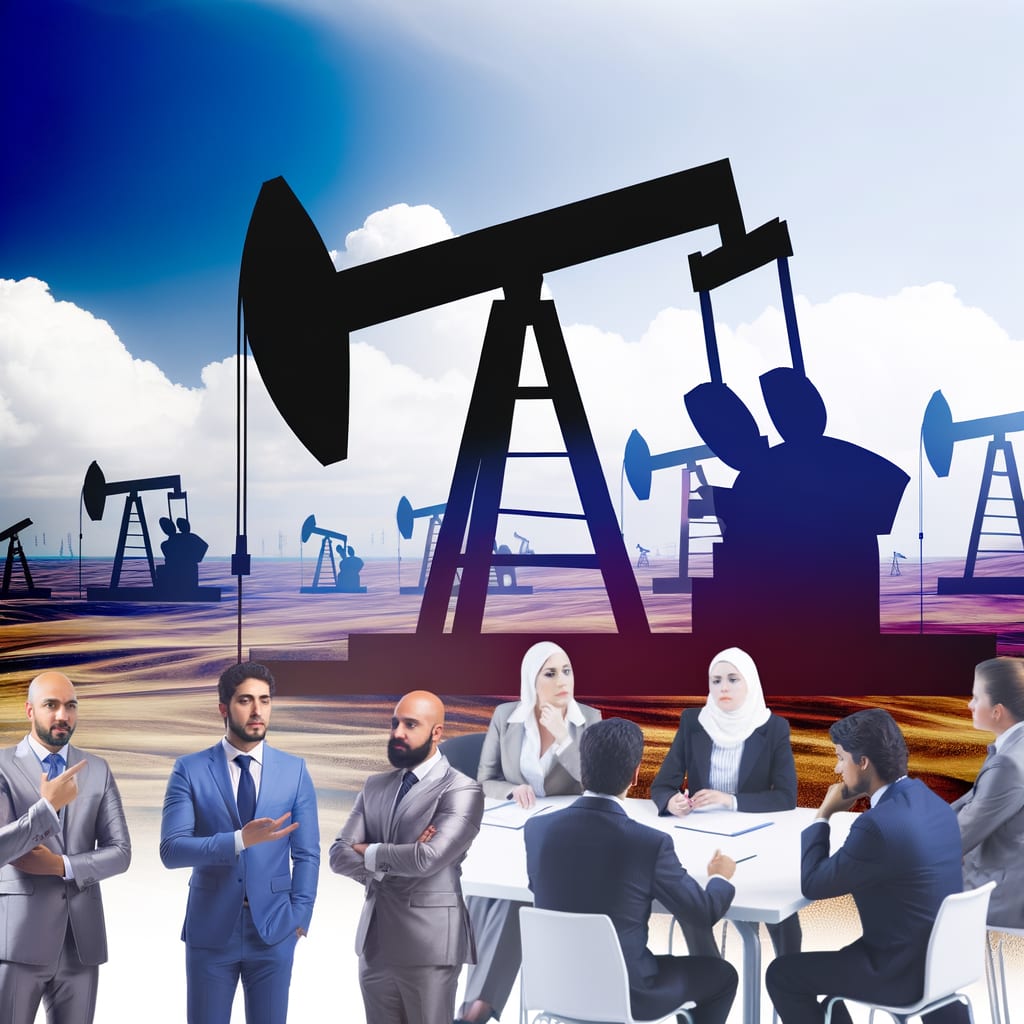
Trump Meets with Oil Executives to Discuss Venezuela's Oil Industry
U.S. President Donald Trump held a meeting with executives from U.S. oil companies on Friday, January 9, to discuss potential investments in Venezuela's vast oil reserves, confirmed by White House spokesperson, Karoline Leavitt. This move is seen as a strategic attempt to reconfigure global energy markets, with particular focus on utilizing Venezuela's oil reserves to reduce U.S. consumer gas prices to $50 per barrel. The ambitious plan, however, has sparked controversy and skepticism among industry stakeholders.
Background and Context
Venezuela, with more than 300 billion barrels of proven oil reserves, has the world's largest oil reserves. Once a major oil producer pumping about 3.5 million barrels a day in the late 1990s, its oil industry has sharply deteriorated, with production falling to roughly 800,000 barrels a day. The country has been under economic sanctions by the U.S., which has seized a pair of sanctioned tankers asserting control over Venezuelan oil.
Key Developments
At the White House meeting, U.S. oil companies demanded 'serious guarantees' from Washington before making large investments in Venezuela. The oil executives, representing 14 companies, are planning to invest at least $100 billion in Venezuela’s oil sector, subject to legal and financial assurances. The discussions also involved representatives of European companies, Vitol and Trafigura.
The Trump administration reportedly aims to exert significant influence over the future of the world’s largest oil reserves, following the dramatic capture of Venezuelan President Nicolás Maduro. The aggressive strategy includes total control of PDVSA's revenues, the arrival of U.S. oil companies, and the reconstruction of Venezuela's electrical infrastructure. However, this plan faces formidable challenges, drawing parallels with Iraq, where oil production took years to recover.
Implications and Reactions
The Trump administration's approach to Venezuela's oil industry has garnered mixed reactions. Late night host Jimmy Kimmel sarcastically remarked, That way we know it will be spent honestly,
while critics have called it modern-day colonialism. The White House is also reportedly seeking control over the country’s oil production and exports, demanding that Venezuela cut economic ties with Russia, China, Iran, and Cuba.
Venezuela’s interim president, Delcy Rodríguez, defended plans to open up her country’s oil market to Washington. Rodríguez said that America’s attack to remove her predecessor, Nicolás Maduro, put a “stain” on the countries’ relations, but added it was “not unusual or irregular” to trade with the U.S, and that Venezuela was “open to energy relations where all parties benefit.”
Conclusion
The U.S. plans to revive Venezuela's oil industry will require years and billions in investment. This endeavor is seen as a gamble that could reshape Venezuela’s energy industry, alter global oil flows, and redefine the balance of influence among major powers long invested in the country’s crude. However, the potential for American energy companies to profit from this venture is countered by the uncertainty and risk involved. President Trump's aggressive strategy is being watched closely by the international community, as the future of Venezuela's oil industry hangs in the balance.