
US-South Korea Nuclear Submarine Deal Provokes Reaction from North Korea and Japan
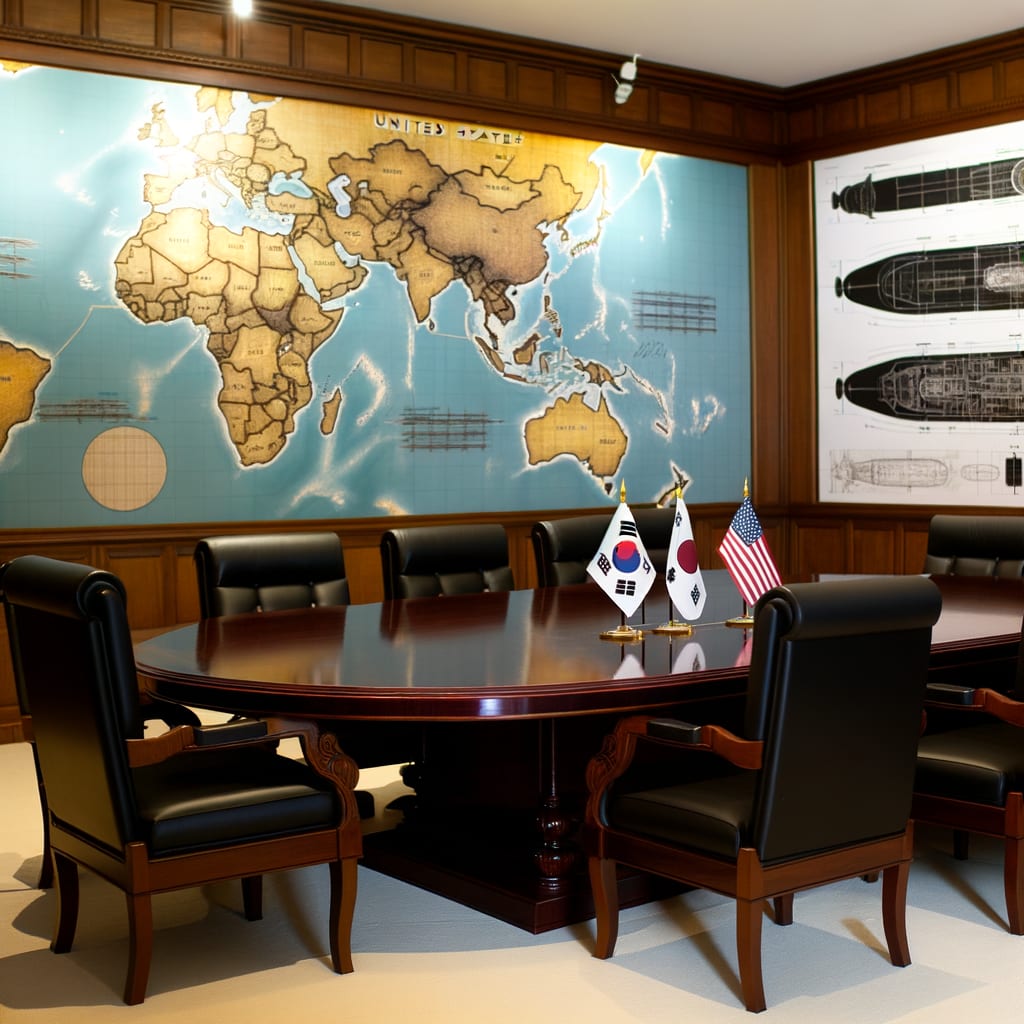
The United States has agreed to grant South Korea the right to build nuclear-powered submarines, sparking reactions from North Korea and Japan. This decision, which is part of a separate agreement that will be formalized through working-level talks starting early next year, was announced by South Korea's national security adviser, Wi Sung-lac, following his visit to Washington.
Background and Context
Seoul has been instrumental in trying to lower tensions on the stalled US-North Korea denuclearization talks. However, efforts to engage North Korean leader Kim Jong-un have met with limited success, with any discussion of North Korea's nuclear program seen as a red line. Meanwhile, Japan, under its new Prime Minister Sanae Takaichi, is reportedly contemplating developing its own nuclear weapons, citing concerns over the reliability of the US nuclear deterrent.
Key Developments
North Korea responded to the US-South Korea agreement by demonstrating its own nuclear capabilities. Kim Jong Un was seen inspecting the construction of an 8,700-ton nuclear-powered submarine, a move seen as a direct response to the US-South Korea submarine deal. State media images reveal a largely completed hull, indicating significant progress in the construction.
Meanwhile, North Korea also conducted a test-firing of a long-range missile, aimed at assessing technology for developing a new type of high-altitude missile. The test successfully destroyed targets in the air from 200 km away.
Reactions and Implications
Kim Jong Un slammed the US-Seoul nuclear submarine deal as an 'offensive act', while the DPRK's defense ministry denounced the US submarine's port call in Busan as a grave act of causing instability and escalating military tensions in the Korean peninsula and the region.
On another front, a senior adviser to Japan's Prime Minister Sanae Takaichi has reportedly told journalists that Japan needs to consider developing its own nuclear weapons, a departure from the country's postwar non-nuclear policy. This statement comes as Japan, the only country to have suffered a nuclear attack, questions the reliability of the US nuclear umbrella.
Current Status
South Korea and the US are set to start working-level talks to formalize an agreement on Seoul's right to build nuclear-powered submarines. Meanwhile, North Korea continues to flex its military muscle, showcasing progress on its own nuclear-powered submarine and conducting missile tests.
In the wake of these developments, South Korea and Russia have recently held closed-door talks in Moscow on North Korea’s nuclear program and other pressing regional security issues. The international community watches on as the situation in the Korean Peninsula continues to evolve, with potential implications for regional security and global non-proliferation efforts.