
US Citizens Urged to Evacuate Middle East as Iran Conflict Escalates
In an escalating conflict with Iran, the US State Department has issued an urgent warning for American citizens to immediately depart from over a dozen Middle Eastern countries due to serious safety risks
. The advisory, amplified by the State Department’s official travel account, has left many Americans scrambling to leave the region amidst canceled flights and closed airspaces.
An Urgent Departure
Assistant Secretary of State for Consular Affairs, Mora Namdar, has urged US citizens to leave from countries such as Bahrain, Egypt, Iran, Iraq, Israel, the West Bank and Gaza, Jordan, Kuwait, Lebanon, Oman, Qatar, Saudi Arabia, Syria, the United Arab Emirates, and Yemen. They have been directed to use available commercial transportation, with the State Department offering assistance for those who need help arranging departures.
U.S. Ambassador to Israel, Mike Huckabee, has recommended that American citizens in Israel utilize the Ministry of Tourism's shuttle bus to Taba, Egypt, due to the limited options available. From Taba, Americans can catch flights or travel to Cairo for further US-bound flights. Huckabee noted the uncertainty about when the Ben Gurion Airport in Tel Aviv would reopen and highlighted that, even when it does, flight options will be very limited.
The Struggle to Leave
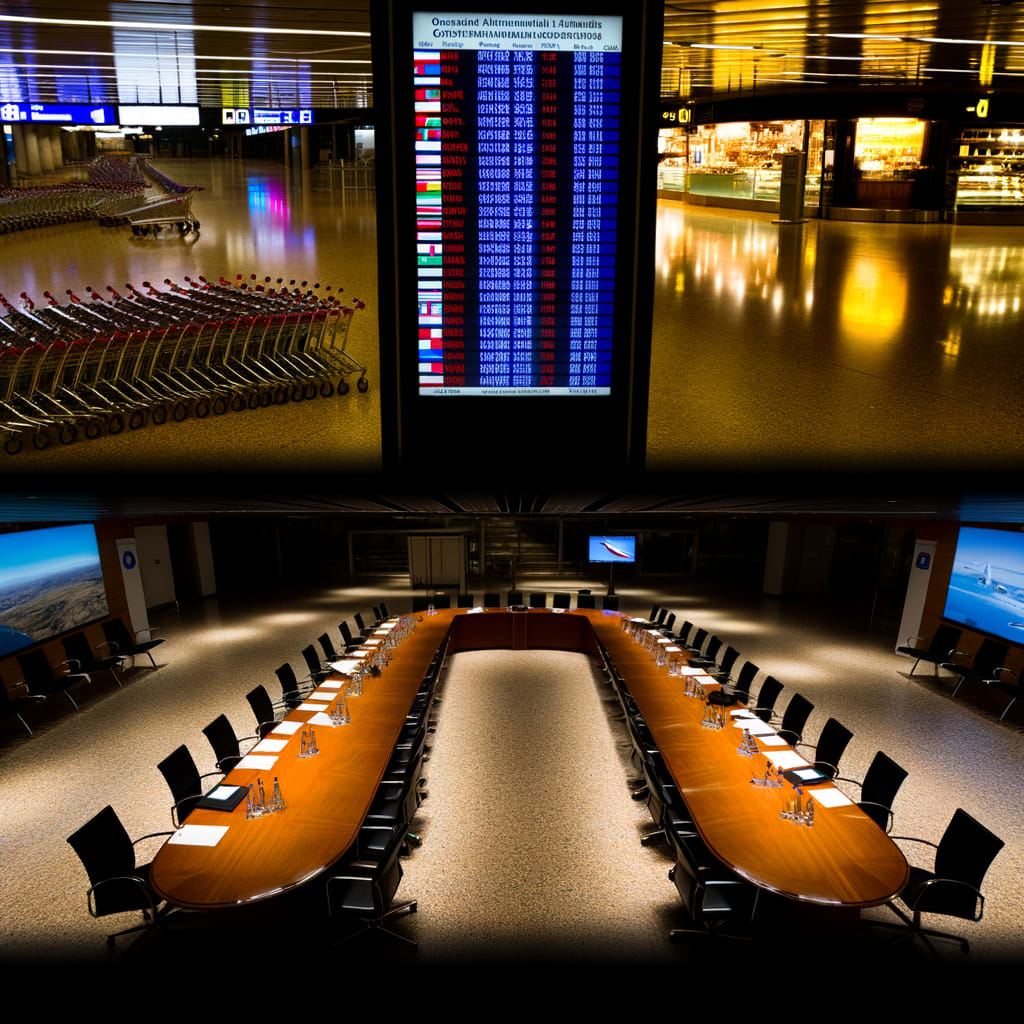
Despite the urgent advisory, many Americans are finding themselves stranded, with key transit hubs in Dubai, Abu Dhabi, and Doha closed, and more than 1,000 flights by major Middle Eastern airlines cancelled. The State Department has so far assisted over 130 Americans in evacuating Israel, with plans to aid almost 500 more.
In response to criticism from Congressional Democrats that the department is refusing to help people leave the region,
Secretary of State Marco Rubio stated that the department is in constant contact
with Congress and that there is no greater priority than the safety of American citizens.
Negotiations Amidst the Conflict
As tensions escalate, crucial talks are set to begin in Geneva between the United States and Iran. The Iranian foreign minister and the special envoy of the United States, Steve Witkoff, will hold mediated meetings with Oman. These talks are taking place in the midst of the largest concentration of US troops in the Middle East since the 2003 US-led Iraq invasion.
The conflict has seen waves of retaliatory strikes between the US, Israel, and Iran. President Trump has suggested that the war could continue for up to a month, while Iran has declared that everything American or Israeli has become a legitimate target for the Iranian armed forces.
Consequences of the Conflict
The killing of Iran's Supreme Leader Ayatollah Ali Khamenei in the latest US-Israeli strikes has triggered a leadership vacuum and a test of whether the Islamic Republic's system can endure. Meanwhile, the conflict continues to disrupt flights across the Middle East, leaving hundreds of thousands of travellers either stranded or diverted to other airports.
As the situation unfolds, US citizens in the Middle East are urged to enroll in the Smart Traveler Enrollment Program (STEP) at step.state.gov to receive the latest security updates from their nearest U.S. embassy or consulate.