
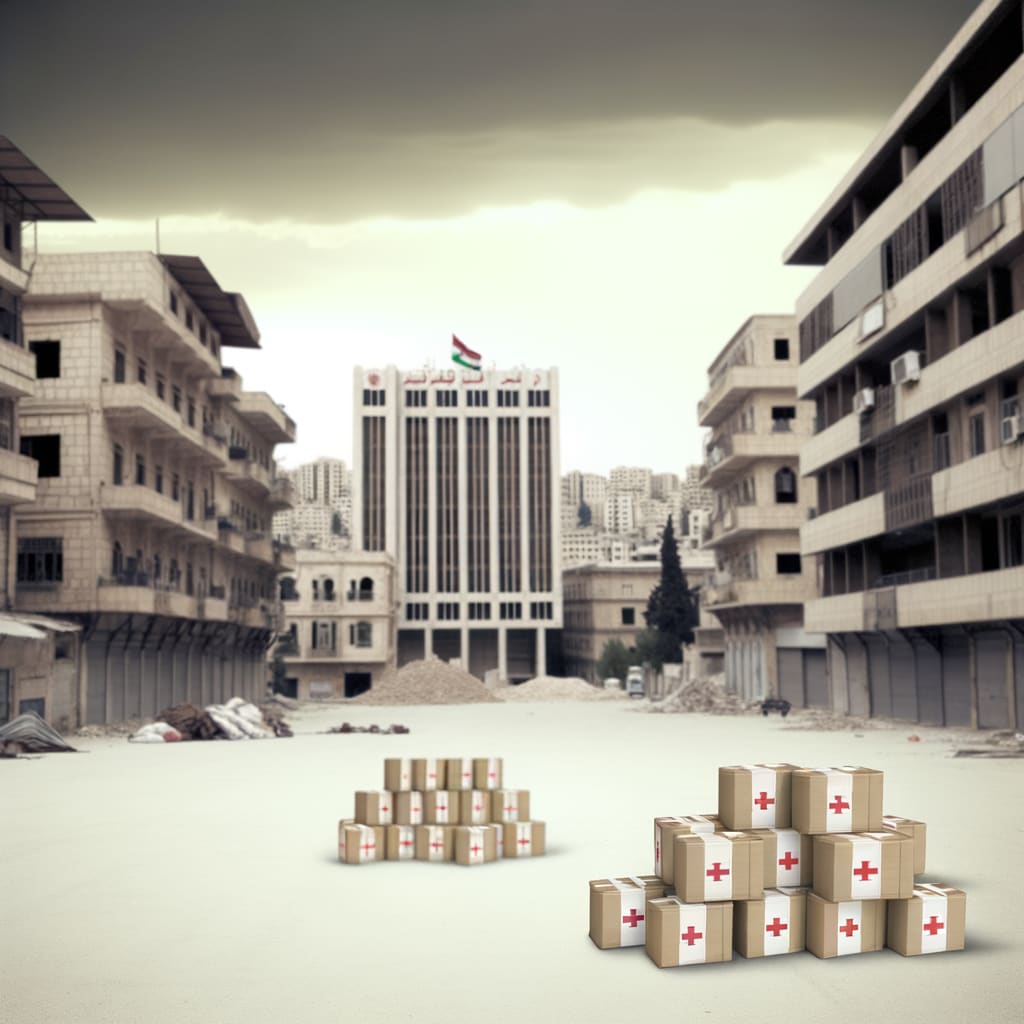
Israeli Offensive in Lebanon Intensifies, EU and G7 Call for Negotiations Amid Rising Civilian Casualties
In a major escalation of the ongoing conflict, Israel has intensified its aerial and ground assaults in Lebanon, leading to a rise in civilian casualties and massive displacement, according to multiple reports from the region. Amid the escalating violence, the EU and several G7 nations have expressed concern and called for a negotiated solution.
Background and Context
The Israeli offensive in Lebanon, now in its third week, has escalated with the destruction of a ten-story building in central Beirut, killing at least ten people, according to Lebanese authorities reported by Folha de S.Paulo. This follows an Israeli warning of a possible ground invasion, a move cautioned against by the EU as reported by Deutsche Welle.
The offensive is seen as a response to a joint attack by Hezbollah and Iran on Israeli military bases, as per The Guardian. The conflict has resulted in a daily average of 30 child casualties, according to UNICEF, while the Lebanese health ministry reports over 900 people killed since the conflict began on March 2.
Recent Developments
Israel has begun limited targeted ground operations
in southern Lebanon, with Division 36 and the 401 Brigade of the Israeli army joining the operations, according to Middle East Eye. The Guardian reported intense ground clashes between Israel and Hezbollah in strategic areas in south Lebanon, focusing around the strategic hilltop city of Khiam.
Israel has also targeted bridges in southern Lebanon, a move criticized as potentially unlawful under international law unless used for military purposes. Israeli Defence Minister Israel Katz claimed the bridges served as a ‘key crossing for terrorists from the Hezbollah terrorist organisation’.
Reactions and Implications
The escalation has led to significant displacement, with over one million people, including approximately 350,000 children, forced to evacuate their homes following Israeli warnings. The Lebanese University campus in Sidon opened its doors to those fleeing the Tyre district, initially without basic supplies, according to Middle East Eye.
The EU and G7 nations, including Rome, have expressed the need for a negotiated solution, with direct talks between Israel and Lebanon expected in the coming days. The talks are expected to focus on ending fighting in Lebanon and disarming Hezbollah, according to Israeli newspaper Haaretz.
Current Status
Despite the international concern, the situation remains volatile. Hezbollah claimed to have destroyed six Israeli Merkava tanks during clashes in southern Lebanon, and Iranian state television announced a new wave of missile attacks targeting Israel. The UN reports over one million displaced in Lebanon as Israeli attacks escalate, with children accounting for one-third.
Heavily populated areas continue to bear the brunt of the violence. Beirut's Basta and Zuqaq al-Blat districts were hit, taking the death toll in the capital to 10, with 27 injured so far, while Israeli raids in southern Lebanon have reportedly resulted in dozens of fatalities over two days.
As the situation continues to unfold, the international community watches closely, with hopes pinned on the upcoming negotiations to bring an end to the conflict and alleviate the humanitarian crisis.