
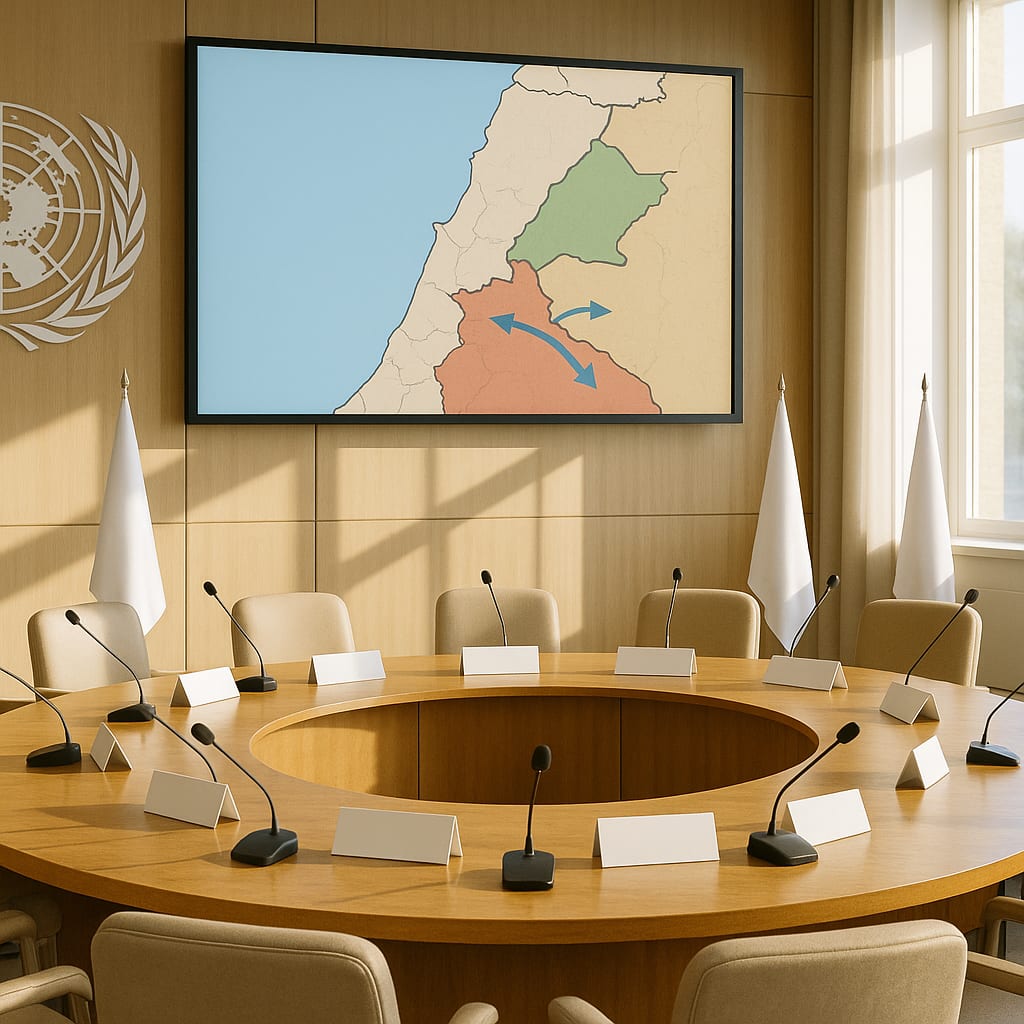
Hezbollah rejects US-brokered Lebanon–Israel ceasefire framework as fighting continues
Narrative Snapshot
- Major international outlets agree the United States announced a framework accepted by Israel and Lebanon’s government that hinges on Hezbollah halting fire first; Hezbollah, not party to the talks, publicly rejected those terms (BBC; Guardian; New York Times; Al Jazeera; DW).
- Israeli and Western reports emphasize sequencing and Israeli security demands near the border, with Israel signaling no immediate pullback from southern Lebanon positions (DW). Hezbollah and Iran-aligned outlets frame the proposal as entrenching occupation and a “shameless surrender” to Washington and Israel (RT; Tehran Times).
- Lebanese political voices diverge: President Joseph Aoun accuses Iran of using Lebanon as leverage with the US (Times of Israel; MEE), while Iran’s foreign minister and Hezbollah officials reject that claim (IRNA; MEE).
- Several outlets link the impasse to broader US–Iran dynamics; some also highlight on-the-ground risks, including reports of Israeli forces operating deep inside Lebanon and repeated breaches of an earlier truce (The Hindu; RT; Al Jazeera).
What Happened
The US announced a renewed ceasefire framework that Israel and Lebanon’s government accepted, but which requires Hezbollah to stop firing first (BBC; Guardian; New York Times). Hezbollah, which was not a party to the negotiations, rejected the conditions as unacceptable and tantamount to surrender (New York Times; Al Jazeera). Israel indicated it would not withdraw from areas near the border under current terms (DW). Hostilities continued as the proposal faltered (New York Times; BBC). In Beirut, President Joseph Aoun called Iran’s role a bargaining ploy with Washington (Times of Israel; MEE), prompting sharp rebuttals from Tehran and Iranian officials labeling Israel the true aggressor (IRNA; Tehran Times). Parliamentary Speaker Nabih Berri voiced support for the withdrawal of both Hezbollah and the IDF from southern Lebanon (Times of Israel). Some reporting noted Israeli troops operating inside Lebanon and daily breaches of a previous April 17 truce (The Hindu).
Why It Matters
The breakdown threatens to widen an already volatile front and complicates parallel US–Iran diplomacy. Coverage ties the ceasefire dispute to efforts to manage US–Iran tensions, with both sides signaling readiness to use force even as talks continue (Al Jazeera). Analyses argue Israeli operations and hard security demands risk prolonging a military footprint in Lebanon and straining Western partners (RT). For Lebanon, the episode underscores a structural dilemma: a state seeking de-escalation while a powerful non-state actor rejects terms it did not negotiate. Domestic politics are exposed, with open disagreement over Iran’s influence and over whether reliance on Washington offers protection or vulnerability (Times of Israel; Tehran Times; IRNA). On the ground, reports of ongoing strikes and incursions underscore immediate risks to civilians and the difficulty of enforcing any truce while sequencing and territorial control remain unresolved (New York Times; The Hindu; DW).
Diverging Narratives
- Sequencing and sovereignty: US, Israeli, and several Western outlets stress that the framework begins with Hezbollah ceasing fire, treating this as a prerequisite for broader de-escalation (BBC; Guardian; New York Times). Hezbollah and sympathetic outlets depict that sequencing as a bid to legitimize an Israeli presence in southern Lebanon (DW; RT), with Hezbollah’s deputy leader calling it a “shameless surrender” (RT).
- Who speaks for Lebanon: Coverage highlights a split between President Aoun, who accuses Iran of instrumentalizing Lebanon (Times of Israel; MEE), and Iranian officials who reject the charge and redirect blame to Israel (IRNA; Tehran Times). Hezbollah figures likewise deny serving as Iran’s bargaining chip (MEE).
- Ground reality vs. diplomacy: While the framework is described as accepted by Israel and Lebanon’s government (BBC; Guardian), reporting of Israeli forces operating inside Lebanon and daily breaches of the prior truce raises questions about enforceability and facts on the ground (The Hindu). Some analysis portrays US leverage over Israel as limited (RT).
- Framing the stakes: Opinion and analysis differ sharply—some criticize Lebanese leaders for “surrendering” to US–Israeli designs (MEE opinion), while others cast the proposal as the “last chance” for a comprehensive truce (MEE live update).
What Happens Next
Several tracks remain open but unresolved. Lebanese officials suggested a ceasefire could take effect quickly if all parties approve and called the proposal a last chance for a comprehensive truce (MEE). Hezbollah has not signaled any change to its rejection, and Israel maintains it will not withdraw from border-adjacent positions under current terms (DW). US efforts continue amid broader attempts to manage ties with Iran, with both Washington and Tehran keeping military options visible even as talks proceed (Al Jazeera; Guardian). Inside Lebanon, debate over Iran’s role and over simultaneous withdrawals by Hezbollah and the IDF persists (Times of Israel; MEE). Fighting has not stopped, and some outlets report ongoing cross-border strikes and incursions while diplomacy seeks a viable formula (New York Times; The Hindu).