
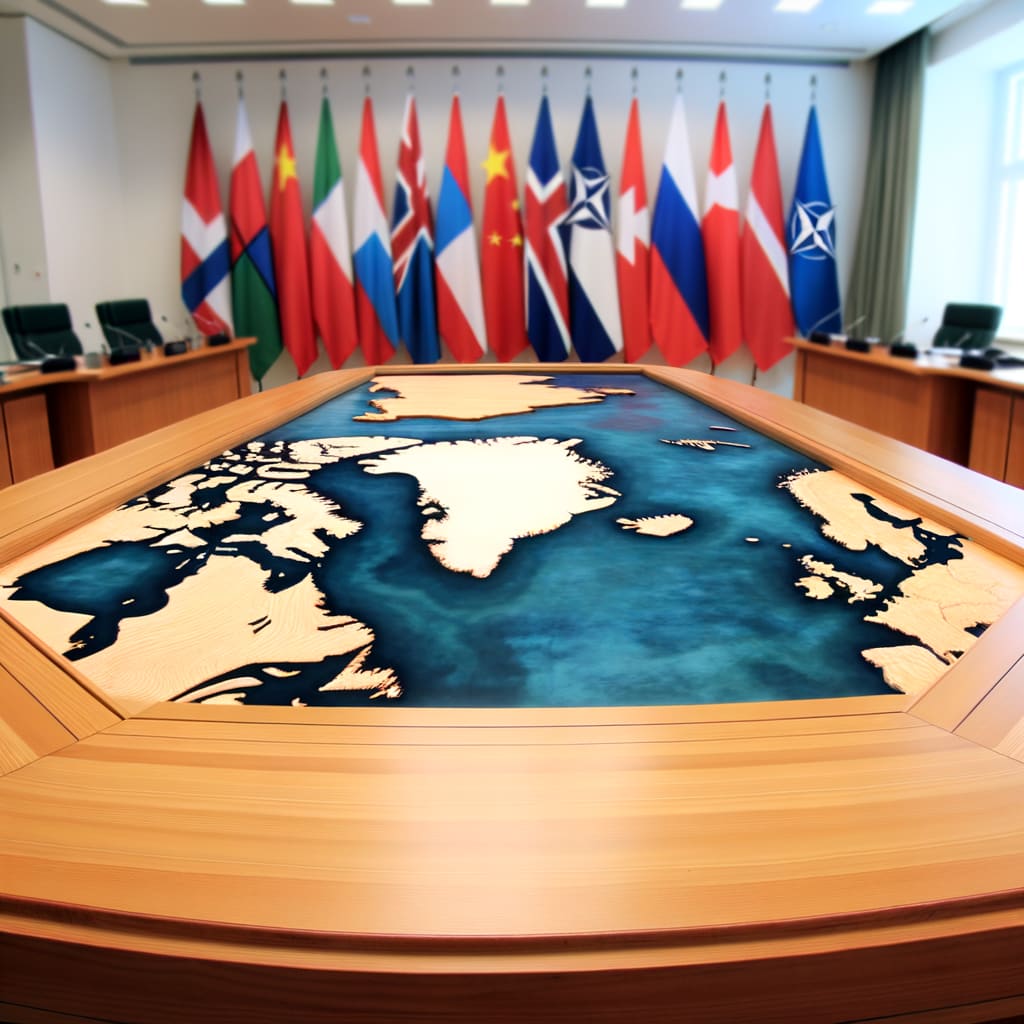
US Push for Greenland Control Reveals Tensions Among NATO Allies and Global Powers
In a move that has sparked international debate, President Donald Trump has increasingly signaled his intention to acquire Greenland, an autonomous Danish territory. The US President argues that the island is critical to national security, specifically for the building of the proposed Golden Dome missile defense system. However, this territorial ambition has drawn mixed reactions globally and escalated geopolitical tensions.
Background and Context
Greenland, the world's largest island with a population of around 56,000 residents, is a semi-autonomous territory of Denmark. Despite its sparse population, the island has gained strategic importance due to its geographical location, climate change implications, and access to key natural resources. According to Trump, the acquisition of Greenland would mark the single largest expansion of US territory, potentially placing the US second only to Russia in territorial size.
In the past, many US presidents have acknowledged Greenland's strategic importance and have sought to acquire it without success. If Trump were to succeed, it would be viewed as a significant achievement for his administration. However, the push for acquisition has been met with resistance from Denmark, NATO allies, and even within the US Congress.
Key Developments and Details
Trump's interest in Greenland has been met with widespread opposition both domestically and internationally. A group of House Democrats has moved to block Trump's plans to acquire Greenland, introducing a bill to prevent the use of federal funds for this purpose. Meanwhile, Denmark has repeatedly reaffirmed its sovereignty over Greenland, warning that any attempt to seize the island against its will could lead to the collapse of NATO unity.
The acquisition of Greenland has also raised concerns among other global powers. China and Russia have both expressed concerns about the potential US takeover. In a bold move, Denmark has reportedly begun deploying additional military assets to Greenland, with servicemen from other EU nations expected to join the Danish forces.
Implications and Reactions
Analysts suggest that Trump's push to acquire Greenland could have significant implications for NATO and the global geopolitical landscape. Some argue that a forceful US takeover could effectively end NATO unity, while others believe it would represent a significant expansion of American territory and influence.
Greenland's leadership has also expressed its preference to remain a Danish territory over becoming part of the US. The island's Prime Minister, Jens-Frederik Nielsen, stated, We choose Denmark,
highlighting the geopolitical crisis and the island's united stance with Denmark.
Conclusion
As the debate continues, the future of Greenland remains uncertain. While Trump's administration insists on the need for the island for national security purposes, the international community largely opposes the idea of a forceful annexation. The situation's resolution hinges on ongoing diplomatic discussions and the broader geopolitical dynamics at play.