
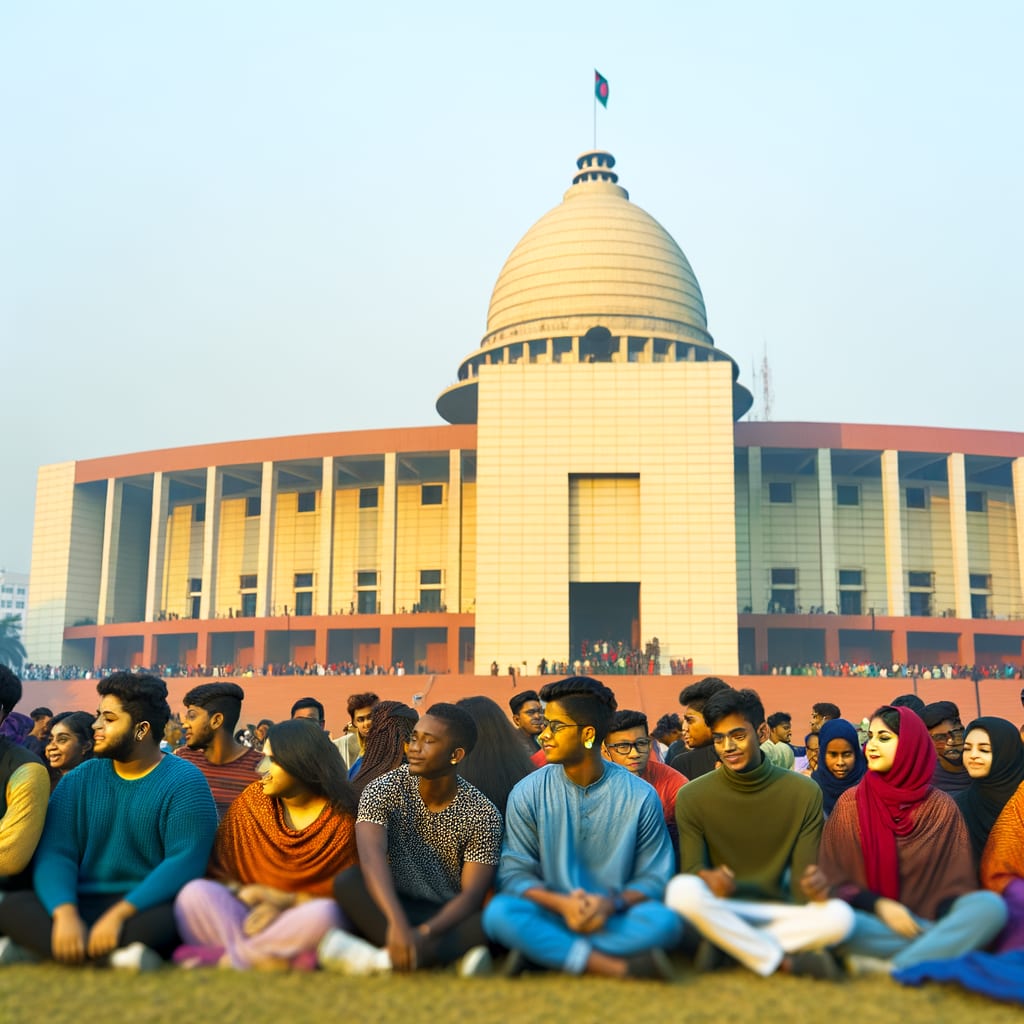
Bangladesh Nationalist Party Sweeps to Victory in Historic General Elections
In a pivotal event for Bangladesh's democratic future, the Bangladesh Nationalist Party (BNP) has claimed a significant victory in the country's first election since the Gen Z-driven uprising of 2024, which ended the 15-year reign of the Awami League led by former Prime Minister Sheikh Hasina.
Background and Context
The landmark election and accompanying constitutional referendum come 18 months after mass protests, led by Generation Z protesters, toppled the authoritarian regime of Sheikh Hasina. The chief adviser of the interim government, Muhammad Yunus, had pledged a peaceful transfer of power in Dhaka. The Awami League, which ruled Bangladesh for a quarter century, was barred from contesting the polls by the interim administration.
Election Details and Results
The election saw a turnout of around 59.44%, according to the Election Commission. Of the nearly 127.7 million registered voters, about 56 million, or roughly 44% of the electorate, were between 18 and 37, with nearly 5 million heading to the polls for the first time.
BNP, led by Tarique Rahman, secured a commanding majority, with at least 212 out of 300 seats in Bangladesh’s parliament, the Jatiya Sangsad. A minimum of 151 seats is required for a simple majority. The party has promised to form a government by Sunday.
Alongside the general election, a referendum proposing electoral and judicial reforms, including a two-term limit for prime ministers, also reportedly received a simple majority.
Reactions and Implications
The elections have been largely hailed as a return to democracy after years of political turmoil under Sheikh Hasina's rule. Young voters in Bangladesh have urged the new BNP-led government to deliver meaningful reform, echoing the spirit of the 2024 uprising for justice, transparency, and equal opportunities.
However, concerns have been raised over the political sustainability of the results, with the absence of the Awami League from the polls. The election also saw the representation of women and minorities at a two-decade low, raising questions about inclusivity in the country's democratic process.
Conclusion
This election marks a significant turning point in Bangladesh's political landscape, signaling a potential reset of the country's democracy. As the BNP, a staunch rival of Hasina’s Awami League, takes power, the world watches closely to see whether the new government will honor its commitment to democratic values and the aspirations of its young voters.