
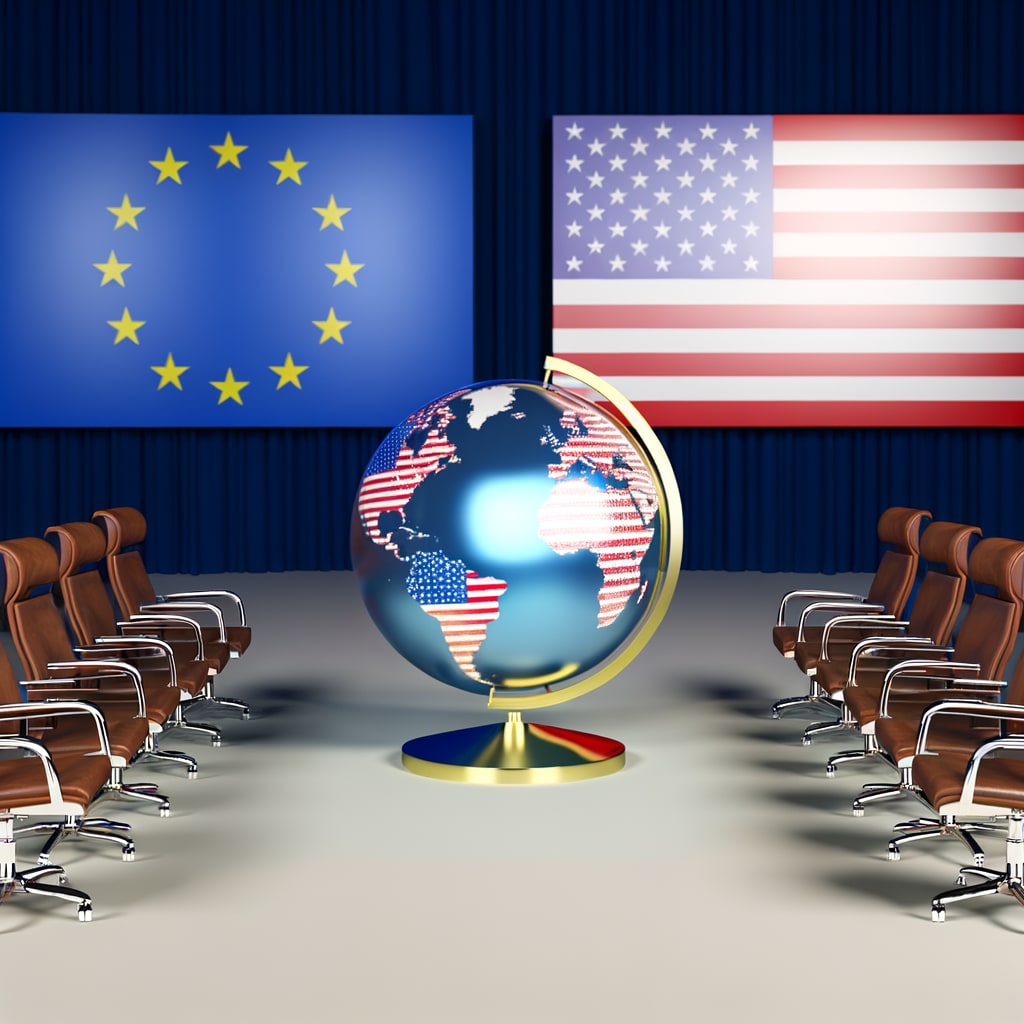
Munich Security Conference Exposes Transatlantic Rift, Calls for Europe to Become a Geopolitical Power
The Munich Security Conference saw European leaders expressing concerns over the widening divide between Europe and the United States, with calls for the revival of transatlantic trust and the need for Europe to assert itself as a geopolitical power.
A Deep Transatlantic Rift
German Chancellor Friedrich Merz, during his speech at the conference, acknowledged a deep rift
with the US under the Trump administration, stating that the post-war order no longer exists. Merz emphasized the need for Europe to rapidly adapt to the new reality, even suggesting massive defense spending to bolster the EU's security capacity[RT (Russia Today)]. He also began talks with France on a European nuclear deterrent[The Times of Israel].
French President Emmanuel Macron echoed these sentiments, urging Europeans to be proud of their accomplishments and encouraging Europe to become a true geopolitical power[Le Monde][Deutsche Welle]. Europe has to become a geopolitical power,
Macron said[The Times of Israel].
Europe's Response to US Unpredictability
Amid President Trump's unpredictability, European leaders were also talking about de-risking
from the United States[New York Times]. This year's Munich Security Conference comes at a time of strained ties between Europe and the United States[Japan Times].
Merz called to “repair trust” between the US and Europe[Al Jazeera English]. He also urged a new 'partnership' with the US[Deutsche Welle]. These appeals for rebuilding relationships came alongside criticisms of the Trump administration's America-first rhetoric and policies[ANSA][Corriere della Sera].
The Future of the EU
The conference also brought to light the ongoing debates about the future direction of the EU. Leaders grappled with economic and strategic issues, such as how to kick-start the EU economy, whether to issue joint debt, and how to reduce reliance on China and the United States[South China Morning Post].
Macron and Merz's calls for a more assertive Europe reflect a growing sentiment among European leaders that the continent must be ready to take on a larger role on the global stage[Corriere della Sera].
Conclusion
The Munich Security Conference served as a platform for leaders to voice their concerns over the changing world order and the need for Europe to step up as a geopolitical power. There's an increasing sense of urgency to repair the transatlantic rift and build a stronger, more independent Europe in the face of global uncertainties[Tehran Times]. As the world enters a new era of great-power struggle, the path Europe chooses to take will undoubtedly have significant implications for global politics and security[RT (Russia Today)][BBC News].