
Global Impact of the Iran War on Energy Prices and the Shift Towards Renewable Energy
The ongoing US-Israel war on Iran has caused a significant disruption to the global oil supply chain, leading to soaring gas prices and economic uncertainty. As the conflict enters its third week, the spike in oil prices is having a profound effect on motorists, economies, and energy markets worldwide. In Detroit, for instance, drivers are feeling the pinch at the pump, with gas prices reaching $4.19 per gallon1. This surge in oil prices is not just a local issue, but one that is reverberating across global energy markets234.
The Global Energy Crisis
The war has crippled significant portions of the oil supply chain, leading to dramatic increases in fuel prices1. Simultaneously, European markets are feeling the weight of over one thousand billion dollars in losses3. The spike in gas prices has led to increasing costs for some economies, while others benefit2. Individual investors are making bets on oil prices, attracted by the volatile global energy markets5.
In addition to the financial implications, the war has also underscored the dangers of relying on fossil fuels6. Simon Stiell, Executive Secretary of the UN climate change arm, has warned of the risks that fossil fuel dependency poses to national security and sovereignty6. The situation has exposed Europe's vulnerability
and dependence on fossil fuels7.
The Shift Toward Renewable Energy
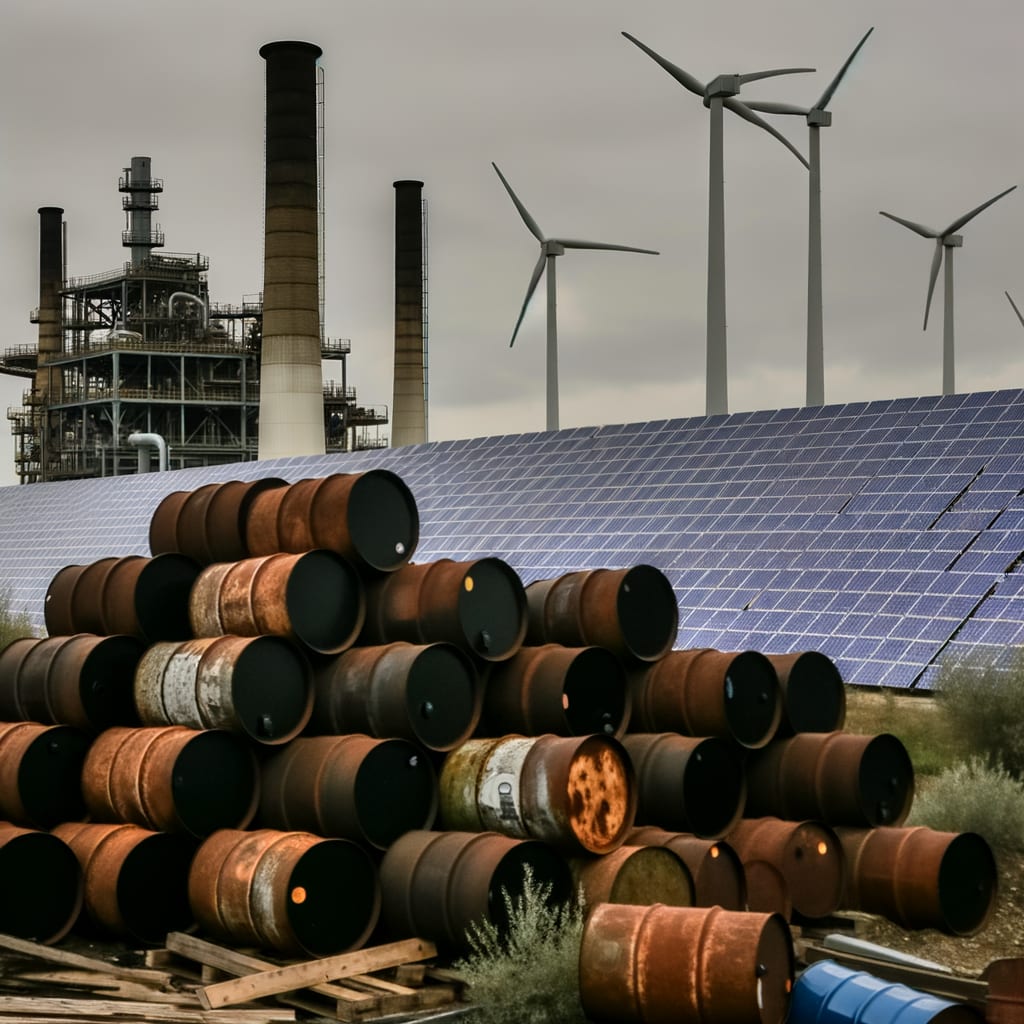
The war in Iran is prompting a shift towards clean energy, emphasizing the importance of reducing the use of fossil fuels and transitioning to renewable energy sources8. Ursula von der Leyen, EU chief, has admitted that Europe's retreat from nuclear energy was a strategic mistake
9. Meanwhile, former US secretary of state John Kerry has argued for energy independence through renewable resources and nuclear energy10.
However, the crisis is not only pushing toward renewables but also towards coal8. The US has been producing more oil and gas than ever since 2022, and Steve Moore from Fox News suggests that the best way to protect from foreign supply disruptions is to generate every barrel of oil possible at home11.
Current Status and Future Implications
While the conflict continues, the global energy crisis is exacerbating. Iran has warned that any strike on its energy infrastructure will provoke a severe retaliation12. On the other hand, Donald Trump has suggested that the war could end 'very soon', causing oil prices to tumble from their four-year highs13.
In the midst of this, countries worldwide are grappling with the crisis in different ways. Australia, for instance, is releasing its stockpile of fuel14, while Bangladesh has shut universities as part of emergency measures to conserve fuel15.
The repercussions of this conflict emphasize the need for a global shift toward renewable energy. As the war continues and the energy crisis escalates, the world is forced to confront the realities of fossil fuel dependence and the necessity for sustainable alternatives.