
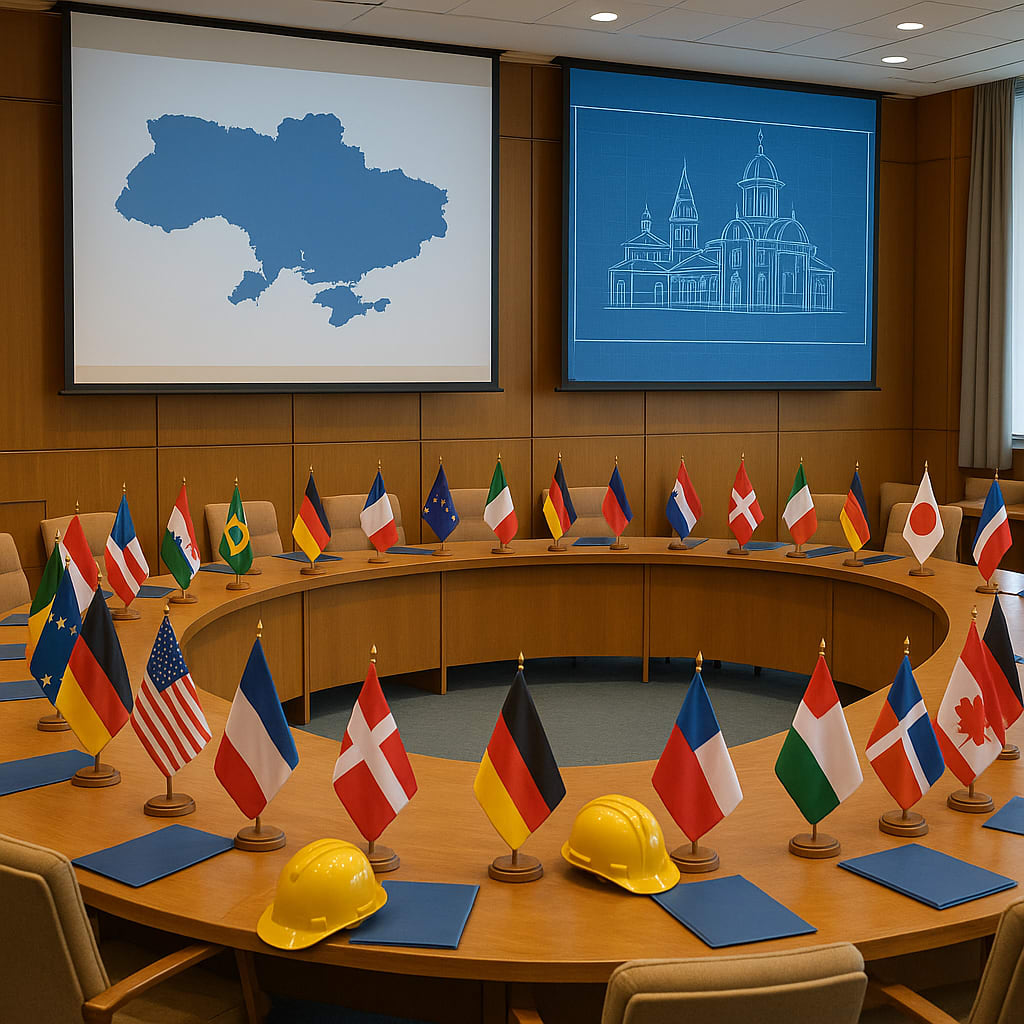
Mass strikes across Ukraine leave dead in Kyiv and Kharkiv as fire engulfs Kyiv-Pechersk Lavra’s Dormition Cathedral
Narrative Snapshot
- Broad consensus: a large overnight barrage hit multiple cities, with Kyiv’s UNESCO-listed Kyiv-Pechersk Lavra suffering a roof fire at the Dormition Cathedral and civilian casualties reported in Kyiv and Kharkiv (DW; Al Jazeera; The Guardian; CBC). Casualty totals vary by outlet, from nine nationwide to at least eleven (ANSA; Sky News; Le Monde; The Times of Israel; Clarin).
- Framing diverges between heritage protection and battlefield effects. Several outlets lead with the UNESCO status and international condemnation, including Emmanuel Macron’s pledge to cooperate with Ukrainian heritage authorities (ANSA; The Guardian live). Others highlight operational tempo, interceptor performance, and strain on Ukraine’s air defenses (Kyiv Independent).
- Attribution is contested: Ukrainian officials call it a deliberate Russian strike; Moscow denies and claims the cathedral was hit by a malfunctioning or “expired” Patriot interceptor (Corriere della Sera; ANSA; La Repubblica).
- The assault lands amid diplomatic and escalation cross-currents: Zelensky said he spoke with U.S. President Donald Trump and is set to attend the G7, where Ukraine is on the agenda (Japan Times; The Times of Israel; The Guardian live). Russia reported fatalities from a Ukrainian drone attack, while Ukraine has stepped up strikes on Russian oil infrastructure (DW; The Hindu).
What Happened
Overnight into June 15, Russia launched a mass missile-and-drone attack against Ukrainian cities, including Kyiv and Kharkiv. In Kyiv, the Dormition Cathedral within the UNESCO-listed Kyiv-Pechersk Lavra caught fire, heavily damaging the roof; a bishop said many sacred items were retrieved (DW; New York Times). Local authorities reported four fatalities in the capital and five rescuers killed in Kharkiv after a secondary strike, with additional injuries in both cities (Sky News; ANSA; CBC; South China Morning Post). UNESCO warned of “significant” interior and exterior damage at the cathedral (ANSA). President Volodymyr Zelensky visited the site and condemned the strike; President Emmanuel Macron decried the attack on “our universal heritage” and offered French cooperation on heritage protection (Corriere della Sera; The Guardian live). Kyiv said Russia fired 34 ballistic missiles nationwide and that Patriot batteries intercepted most aimed at the capital, while Russia reported three deaths from a Ukrainian drone attack (Kyiv Independent; DW).
Why It Matters
The burning of a UNESCO-listed cathedral places cultural-property protection at the center of a high-intensity air campaign, testing international mechanisms designed to safeguard heritage in war. UNESCO’s early damage assessment and Macron’s offer of cooperation point to potential multilateral engagement on cultural protection alongside ongoing security assistance (ANSA; The Guardian live). Operationally, Ukraine’s reported interceptor success came with warnings of depleted Patriot stocks and the need for alternatives—an issue likely to shape allied resupply decisions and air-defense posture (Kyiv Independent). Diplomatically, the strikes precede G7 deliberations where Ukraine is on the agenda and follow Zelensky’s call with U.S. President Donald Trump; leaders’ statements may signal future commitments on air defenses, reconstruction, and heritage protection (Japan Times; The Times of Israel; The Guardian live). The parallel reporting of Russian casualties from Ukrainian drones and Kyiv’s attacks on Russian oil infrastructure underscores an entrenched cross-border strike pattern (DW; The Hindu).
Diverging Narratives
- Cause of the cathedral fire: Ukrainian officials and multiple outlets link the blaze to Russia’s overnight barrage; Zelensky called it a deliberate attack (Al Jazeera; The Guardian; Corriere della Sera). Moscow denies responsibility and asserts the site was struck by an “expired” U.S.-made Patriot interceptor launched by Ukraine (ANSA; La Repubblica). None of the cited reporting provides independently verified forensic evidence resolving the claim.
- Human toll: National fatality figures differ—nine in several European outlets and at least eleven in others—while sub-totals converge on four killed in Kyiv and five rescuers in Kharkiv (ANSA; Le Monde; Sky News; The Times of Israel; Clarin; CBC; SCMP).
- Battlefield performance vs. vulnerability: Kyiv reports high interception rates, including against ballistic and 3M22-class missiles, yet acknowledges Patriot shortages (Kyiv Independent). Simultaneously, the scale of damage to civilian housing and a UNESCO site foregrounds the limits of defense in the face of large salvos (CBC; DW; Al Jazeera).
- Context of reciprocity: Some coverage situates the events amid near-daily Russian strikes and stepped-up Ukrainian attacks on Russian oil infrastructure and drone incidents causing deaths in Russia (The Hindu; DW), while other pieces stay narrowly focused on the Kyiv cathedral and domestic casualties.
What Happens Next
- G7 signaling: Watch for statements on air-defense resupply and cultural-heritage protection, given leaders’ agenda and Macron’s offer to cooperate with Ukrainian authorities (The Guardian live; The Times of Israel). Concrete pledges would indicate increased allied capacity-building for Ukraine’s air defenses and heritage safeguarding.
- Air-defense sustainability: Kyiv’s reported Patriot shortages and search for alternatives create a decision point for partners on interceptor transfers or substitute systems. Indicators include announced deliveries, training timelines, and subsequent interception data (Kyiv Independent).
- Heritage response: UNESCO’s assessment and any requested technical missions, alongside potential bilateral French-Ukrainian cooperation, will shape emergency stabilization and documentation of damage (ANSA; The Guardian live).
- Attribution and accountability: Expect official investigations or public evidence releases regarding the cathedral strike, as Kyiv labels it deliberate and Moscow alleges a Patriot malfunction (Corriere della Sera; ANSA; La Repubblica). Analysts should track forensic reporting and any calls for international monitoring.
- Escalation dynamics: Continued Ukrainian strikes on Russian infrastructure and Russian long-range salvos, including reported casualties in Russia from drones, will influence targeting patterns and risk thresholds (The Hindu; DW).