
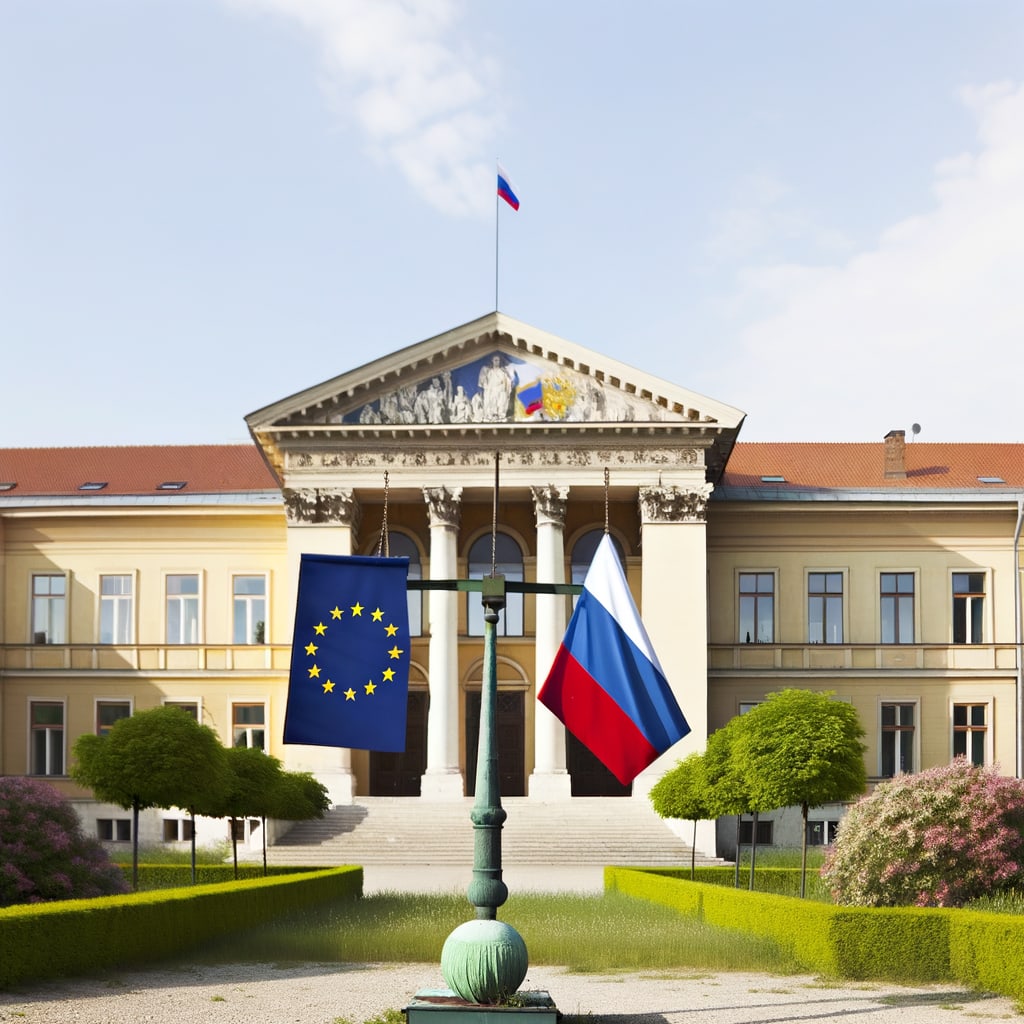
Hungary's Election Showdown Raises Stakes on Ukraine Stand
Hungary's upcoming parliamentary elections are drawing international attention as Prime Minister Viktor Orban and his main competitor Peter Magyar outline divergent visions for the country's future, particularly concerning the crisis in Ukraine.
Background
Prime Minister Orban, a long-time pro-Russia figure, is facing his first serious challenge in years from Peter Magyar, a 44-year-old former insider in Orban's Fidesz party. Magyar has pledged to mend ties with European partners, potentially ending an era of Orban’s pro-Russia stance.
Key Developments
In the run-up to the April 12 elections, both politicians held rallies on Hungary's national day, drawing tens of thousands of supporters to the streets of Budapest. The rival rallies have highlighted Hungary's divide over Ukraine and Europe.
According to Deutsche Welle, there are signs that Russia is working to secure Orban's reelection, seemingly turning Hungary’s election into a referendum on whether voters want to be closer to the EU or Russia. Ukrainian President Volodymyr Zelensky accused Orban's government of 'spreading an anti-Ukrainian sentiment' within Hungary, as reported by Le Monde.
Orban, in his address to supporters at the 'Peace March' in Budapest, accused Brussels of dragging the European Union into a direct war with Russia through potential troop deployments to Ukraine. He said, Brussels has taken 'the war upon itself' and was pursuing a wartime economic policy. 'They do not want to keep trouble at a distance - they want to march into it: more money, more weapons, more soldiers. Our sons will not die for Ukraine; they will live for Hungary,
as quoted by RT.
Implications and Reactions
Orban's stance appears to be in stark contrast with Magyar's approach, who has positioned himself as a pro-European candidate aiming to mend ties with European partners. Observers see this election as a significant one, as it could potentially shift Hungary's foreign policy orientation.
Meanwhile, Ukraine has urged Hungary not to drag Kyiv into its election campaign. The Ukrainian government has expressed its willingness to work with any Hungarian leader who is not an ally of Putin
, as stated by Zelensky in Le Monde's report.
Current Status
With less than a month to go before the elections, Hungary's rival parties continue to drum up support in the country's national debate over its stance on the Ukraine crisis. The election results could have significant implications for Hungary's foreign policy and its relations with both the European Union and Russia. Despite the heated campaigns, the outcome remains uncertain as the nation gears up for one of its most contested elections in years.