
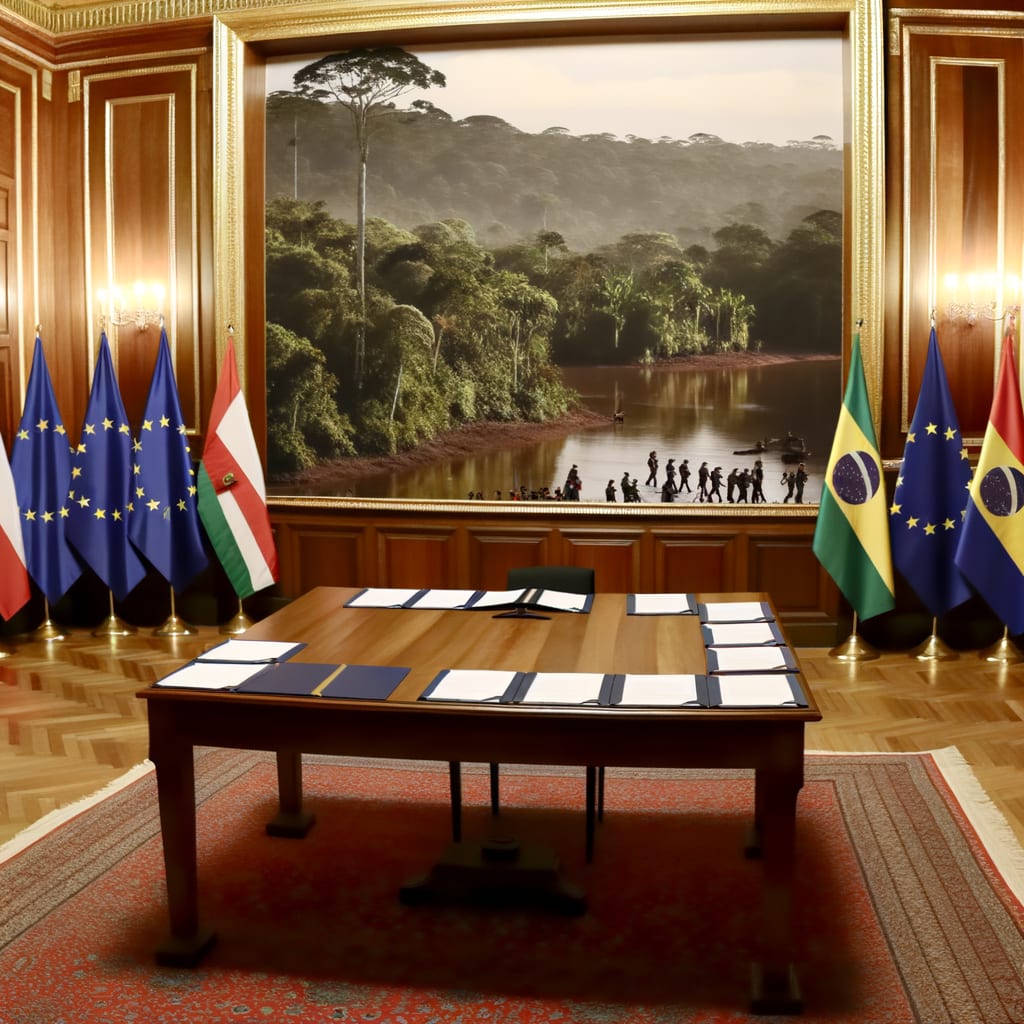
Historic EU-Mercosur Trade Deal: A Victory of Multilateralism Amidst Environmental and Procedural Concerns
After a wait of over 25 years, the European Union (EU) and the Mercosur trading bloc, encompassing five Latin American nations, have successfully signed a sweeping trade pact, creating one of the most ambitious free trade zones in the world. This agreement, hailed as a victory of multilateralism by key figures such as Brazil's President Luiz Inácio Lula da Silva and European Commission President Ursula von der Leyen, could impact 720 million people.
Background and Context
The EU-Mercosur agreement has been a long time coming, enduring 26 years of impasses before finally leaving the paper on Saturday (17), signed in Paraguay. This move comes as an alternative to trading with the US and China and is seen as a step against Brazil's isolation. Despite its ambitious scope, the agreement has encountered obstacles, particularly from the European side, with protests from farmers, electoral calendar conflicts, and growing opposition.
The Landmark Agreement and Its Potential Outcomes
The EU-Mercosur deal, touted as the 'agreement of a generation' by Von der Leyen, is more than a specific treaty. It promises to function as a political catalyst favorable to global integration. It may offer unexplored opportunities, such as unlocking access to critical raw materials like lithium and nickel, essential for the energy transition. However, critics have raised concerns about potential environmental fallout, questioning whether such issues are being sidelined in the quest for economic growth.
Reactions and Implications
The trade deal has been celebrated by leaders of both the EU and Mercosur. President Lula and President Von der Leyen lauded the agreement as a victory of multilateralism and understanding between countries. Von der Leyen has also indicated that the EU is seeking an agreement with Brazil to explore critical minerals essential for the energy transition. Despite the optimistic outlook, the deal has not been without controversy. Critics, particularly from Europe, have voiced concerns about environmental impacts and procedural issues.
Current Status and Future Steps
Following the approval from the EU Council on January 9, 2026, the agreement was officially signed on January 17 in Paraguay. However, it still faces challenges and will have to navigate through protests and opposition, particularly from European farmers. As a comprehensive and ambitious agreement, its implementation will require careful handling of both economic and environmental concerns. As the EU's share in the global market slips, the Mercosur deal could be a pivotal point in its economic strategy. However, the full implications of the agreement will only be evident as it gradually comes into effect.