
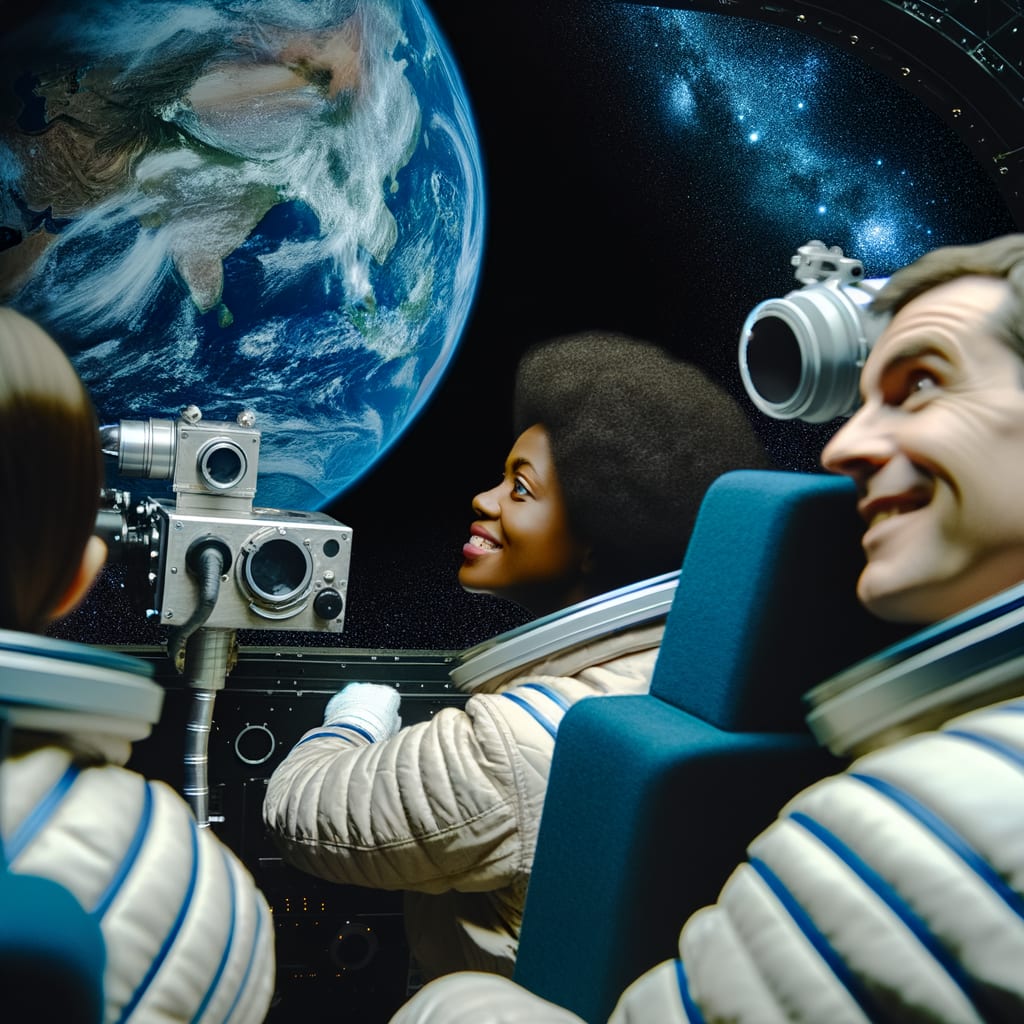
NASA's Artemis II Mission Makes History with Earthset Photo and Furthest Human Journey from Earth
The Artemis II crew, comprised of three NASA astronauts, Reid Wiseman, Victor Glover, Christina Koch, and Canadian Space Agency astronaut Jeremy Hansen, have ventured further from Earth than any humans before them in a historic lunar flyby. The mission, which marked the first crewed journey beyond low-Earth orbit in more than 50 years, was hailed by President Donald Trump as a feat by modern-day pioneers
. One of the key highlights of the mission was the capturing of the first-ever photo of Earth from the moon’s far side, a moment compared by NASA to the iconic Earthrise
photo taken by astronaut Bill Anders from the Apollo 8 mission nearly 60 years ago.
Mission Background and Context
Launched aboard the Space Launch System rocket, the Orion spacecraft first entered Earth's orbit before following a precise path known as a free-return
trajectory. This path, designed to carry the spacecraft around the far side of the moon and back home without requiring major course corrections, saw the crew traveling farther into space than any humans since the Apollo era.
During the mission, the crew experienced a planned and highly anticipated 40-minute communication blackout as the Moon's body blocked radio and laser signals between the Earth-based Deep Space Network and the Orion spacecraft. Despite this, the astronauts focused on their scientific objectives, including photographing and observing the lunar far side.
Key Developments and Details
The crew of the Artemis II mission encountered several key moments, including the capturing of the first-ever photo of Earth from the moon’s far side. These images, termed as Earthset,
were a callback to the 1968 Earthrise
photo and were shared by The White House with the caption, Humanity, from the other side
.
The photos taken by the Artemis II crew are expected to significantly boost research and future lunar journeys. They include images of Earth disappearing behind the Moon and a solar eclipse, viewed from the Orion spacecraft's window. Some cities on Earth were also visible in these photos.
Implications and Reactions
The images and the mission itself have been met with awe and admiration. The commander of Artemis 2 found 'no adjectives' to describe the lunar flyby. President Trump took a call with the astronauts, saying, Today you’ve made history and made all of America really proud. Incredibly proud.
NASA Chief Jared Isaacman stated that the Artemis II mission would not have been possible 'if it wasn't for President Trump'. The Artemis II mission was also hailed as a demonstration of humanity's capabilities, with CSA astronaut Jeremy Hanson telling mission control, Humanity has once again shown what we are capable of, and it's your hopes for the future that carry us now on this journey around the moon.
Conclusion and Current Status
The Artemis II crew has begun their journey back home after the historic lunar flyby. The mission's achievements, particularly the unprecedented Earthset
photo and the record-breaking distance traveled from Earth, will undoubtedly remain etched in the annals of space exploration history. As the world awaits the crew's safe return, the success of the Artemis II mission underscores the continued human endeavor to explore the mysteries of the universe.