
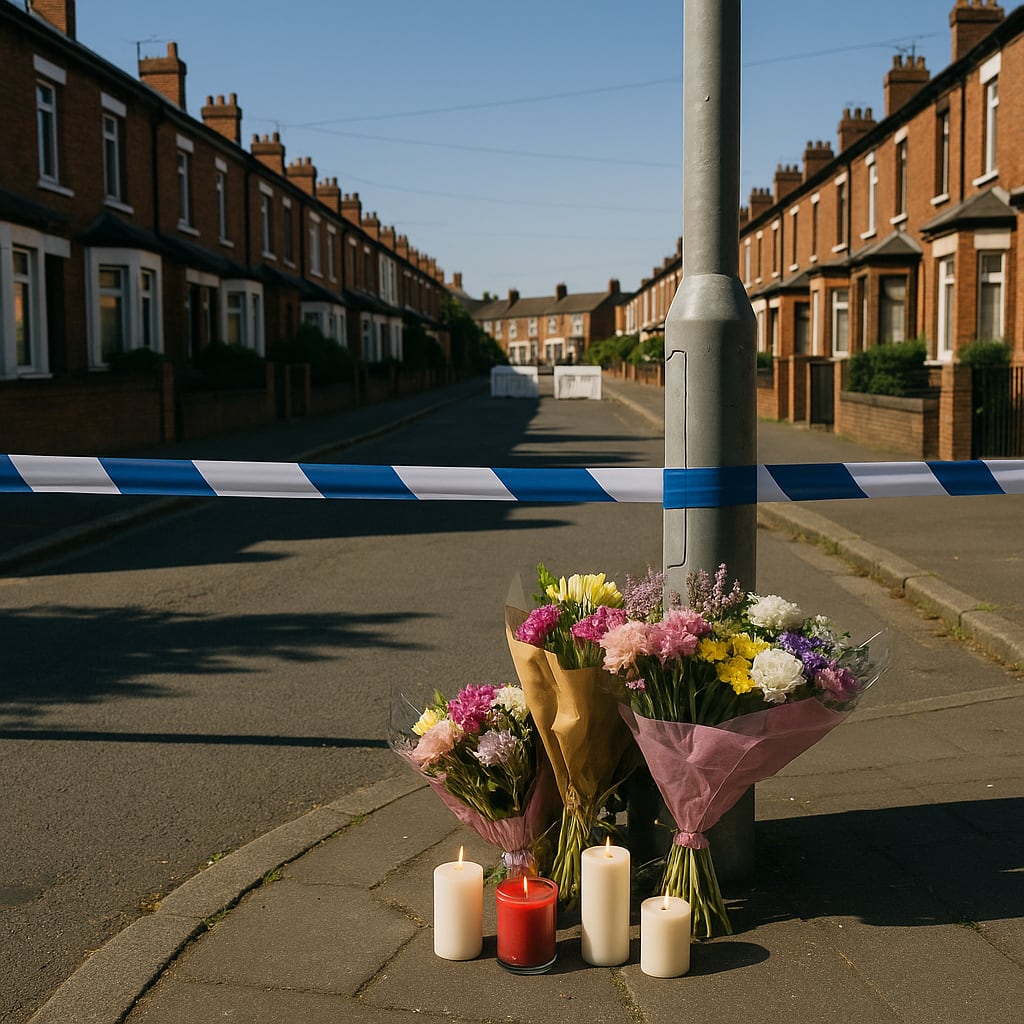
Belfast anti-immigration riots follow stabbing; Sudanese suspect charged with attempted murder
Narrative Snapshot
- Across outlets there is consensus that graphic videos of the attack circulated widely and preceded rapid calls for calm from police and UK leaders; coverage also agrees that protests escalated into arson and road blockages in Belfast (SCMP, DW, The Hindu, Al Jazeera, Clarin).
- Language diverges: several outlets describe an “attempted decapitation” or “attempted beheading” (La Repubblica, Corriere della Sera, RT), while others use more clinical terms such as “stabbing” and stress that the motive remains unclear and the incident is not being treated as terrorism (The Times of Israel, DW).
- Emphases split between valorizing bystander intervention and injury severity (Fox News; Corriere della Sera on the loss of an eye) versus focusing on anti-immigrant violence targeting homes and minority families (Middle East Eye; The Times of Israel).
- Coverage of mobilization channels varies: some foreground social media amplification and calls to protest, including posts by Elon Musk (The Guardian) and WhatsApp/Telegram organizing messages (Corriere della Sera), while ANSA singles out Nigel Farage’s role in rallying protesters.
What Happened
Police in Belfast arrested a Sudanese man after a street attack captured on video left a victim in his 40s with severe injuries; bystanders intervened and the suspect was detained on suspicion of attempted murder (SCMP; Fox News; DW). The incident occurred on Monday, with anti-immigration protests erupting Tuesday evening, when vehicles and buildings were torched and major roads blocked despite official appeals for calm (The Hindu; SCMP; Al Jazeera; Corriere della Sera). UK Prime Minister Keir Starmer’s office and Northern Irish police urged restraint (SCMP; DW). The victim reportedly lost an eye (Corriere della Sera). On Wednesday, a 30-year-old Sudanese suspect appeared in court and was remanded into custody on attempted murder charges (SCMP; DW). Police stated the motive was unclear and the incident was not being treated as terrorism (The Times of Israel). Reports documented attacks on homes amid the unrest (Middle East Eye; The Times of Israel).
Why It Matters
The episode tests the UK’s and Northern Ireland’s public-order capacity amid repeated migration-linked street disorder; DW notes similar unrest the previous June, underscoring a pattern of flash mobilization around migration grievances. The rapid spread of graphic content and organizing calls across X, WhatsApp, and Telegram (The Guardian; Corriere della Sera) places pressure on platform governance and law-enforcement coordination, with implications for the UK’s evolving online safety and counter-disinformation approaches. Politically, the framing of the incident—whether as a criminal case, a terrorism matter (which police discount), or a catalyst for anti-immigration mobilization—shapes national debate on asylum and integration (The Times of Israel; ANSA; Fox News). For community relations, targeted intimidation of minority households (Middle East Eye; The Times of Israel) raises risk of retaliatory cycles and challenges to local authorities’ ability to protect vulnerable groups while maintaining legitimacy across communities.
Diverging Narratives
- Characterization of the attack: Italian outlets and RT emphasize an “attempted decapitation” and publish graphic video frames (La Repubblica; Corriere della Sera; RT), while others keep to “stabbing” and focus on procedural updates and restraint in motive attribution (DW; The Times of Israel).
- Causality and responsibility: Some reports frame the unrest as spontaneous community outrage amplified by social media—including explicit calls for protests by high-profile figures (The Guardian)—and coordinated via messaging apps (Corriere della Sera). Others spotlight individual agency in the attack (a Sudanese refugee/asylum seeker) and “heroic” intervention by bystanders (Fox News), an emphasis that can recast the episode primarily as a public-safety failure rather than an online-mobilization phenomenon.
- Targets of violence: Several outlets detail buses, vehicles, and public infrastructure set ablaze (Al Jazeera; Corriere della Sera; Clarin), while Middle East Eye and The Times of Israel stress attacks on private homes and families perceived as immigrants or non-white, reframing the unrest as racially targeted rather than purely anti-immigration protest.
- Political framing: ANSA highlights Nigel Farage as leading protest energy, a note largely absent elsewhere. Meanwhile, authorities’ line—calls for calm and confirmation that the case is not being treated as terror—seeks to decouple public-order management from securitized migration narratives (SCMP; DW; The Times of Israel).
What Happens Next
- Criminal proceedings: The suspect has been charged and remanded (DW; SCMP). Analysts should watch charging adjustments, judicial assessments of motive, and any change to terrorism classification, which police currently rule out (The Times of Israel). Each would recalibrate political rhetoric and policing posture.
- Public order and community protection: Further mobilization cues on WhatsApp/Telegram (Corriere della Sera) or high-profile online calls (The Guardian) are indicators of renewed unrest. Police deployment levels, protection of targeted residences, and arrest patterns for arson and intimidation (Middle East Eye; Al Jazeera) will signal whether containment strategies are working.
- Political response: Monitor whether UK and Northern Irish leaders sustain a de-escalatory line or align with protesters’ migration framing (SCMP; DW; ANSA). Statements linking the case to asylum policy would indicate a shift from incident management to policy contestation.
- Platform governance: Any moderation or law-enforcement liaison steps announced by major platforms cited in coverage (The Guardian; Corriere della Sera) will shape the information environment around future mobilizations.