
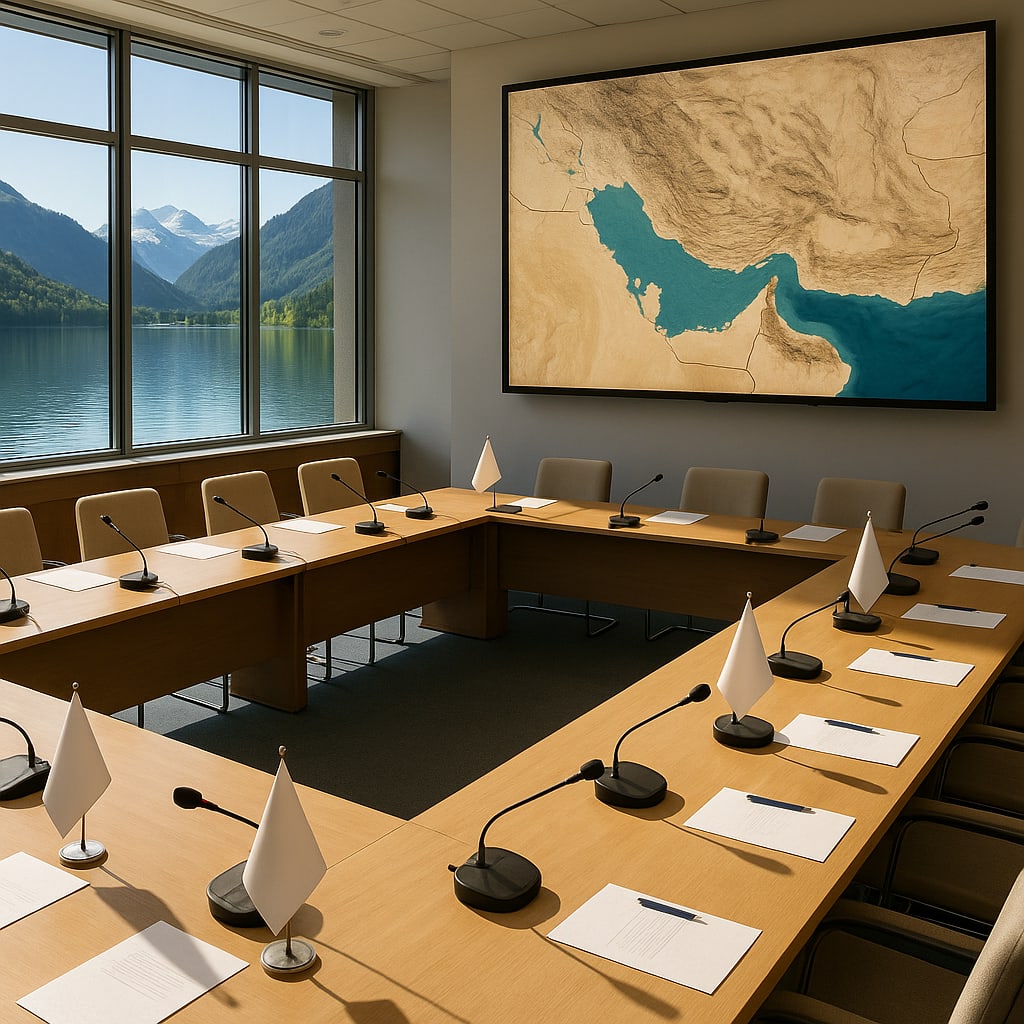
Pakistan announces US–Iran ceasefire accord with Geneva signing slated for June 19
Narrative Snapshot
- Broad convergence: Multiple outlets report the parties are at or near agreement on an initial accord to end hostilities, with Pakistan saying a final text exists and a signing is planned in Geneva on June 19; both sides signal the understanding covers Lebanon and maritime traffic through the Strait of Hormuz (Al Jazeera, DW, SCMP, CBC, TASS, Folha, Clarin; Middle East Eye).
- Competing frames: US-aligned reporting stresses nuclear constraints and no “cash” to Tehran, while Iranian and state-linked accounts emphasize mechanisms for accessing frozen assets and “formalising battlefield gains” (Times of Israel; Middle East Eye).
- Timelines and messaging discipline diverge: Pakistan and US leaders gave near-term signing dates as Iranian officials cautioned against premature timelines and denied travel rumors (DW, BBC, TASS; Middle East Eye).
- Implementation risk sits at the Lebanon–Israel front and at Hormuz: Iranian officials describe an “immediate” Lebanon ceasefire while US sources underscore Israel’s retained right of self-defense; signals on Hormuz reopening vary by source and timing (Middle East Eye; Times of Israel; Al Jazeera, Corriere, RT; The Guardian).
What Happened
By June 12, mediators in Pakistan and officials in Tehran and Washington said a ceasefire understanding was within reach, with Pakistan’s prime minister asserting a “final, agreed upon text” had been produced (Al Jazeera; DW; The Hindu; Middle East Eye). While President Trump suggested a Sunday signing, Iran’s Foreign Ministry pushed back on that timing, saying a signing was possible “in the next few days” (BBC; TASS; ANSA; DW). On June 14, Prime Minister Shehbaz Sharif announced a deal had been reached and set a June 19 signing ceremony in Geneva, with Switzerland offering to host and US officials expected to attend (DW; SCMP; Folha; Clarin; Middle East Eye). Public statements indicate the accord would terminate military operations “on all fronts,” explicitly including Lebanon, and enable reopening of the Strait of Hormuz for shipping (DW; TASS; Al Jazeera; Middle East Eye; The Guardian).
Why It Matters
If implemented, the accord would de-escalate simultaneous flashpoints—inside Iran, along the Israel–Lebanon axis, and in strategic maritime corridors—reducing risks of miscalculation and supply shocks tied to Hormuz (Al Jazeera; DW; The Guardian). It also pilots a sequencing model: an initial memorandum to halt fighting, followed by focused negotiations on nuclear and related files, including enriched uranium stockpiles, over a defined window (Le Monde; Middle East Eye). The process elevates Pakistan as a consequential mediator outside traditional P5/EU channels and positions Switzerland as facilitator for an interim framework (Al Jazeera; DW; Middle East Eye). For US partners, especially Israel, reported provisions that both include Lebanon and preserve Israel’s right to self-defense test alliance management (Times of Israel; The Guardian). European actors are signaling roles from demining support to potential sanctions adjustments, tying implementation to broader transatlantic policy choices (Corriere della Sera; La Repubblica; Middle East Eye).
Diverging Narratives
- Terms and scope: A senior US official told the Times of Israel the understanding “leads to” Washington obtaining Iran’s enriched uranium and includes Lebanon while affirming Israel’s self-defense. Iranian accounts emphasize nuclear “limits” and asset-release mechanisms without specifying uranium disposition, and describe the memorandum as consolidating “battlefield gains” (Times of Israel; Middle East Eye). President Trump also claimed Iran agreed not to develop or acquire nuclear weapons, a point not independently detailed in other outlets (Middle East Eye).
- Money flows: Iranian and regional reporting point to mechanisms for frozen funds and a figure of $12 billion to be released, while US officials insist no funds move before Iranian steps and the vice president says the deal will not hand Tehran cash; the UAE publicly denied moving Iranian funds (Middle East Eye).
- Timelines and optics: Pakistan repeatedly forecast imminent finalization and a Geneva event, while Iran rejected a Sunday signing and denied delegations traveling abroad before a deal (DW; TASS; ANSA; Middle East Eye). Trump accused Iran of leaking false details, underscoring asymmetric information campaigns around the talks (BBC).
- Implementation signals: Iran’s Supreme National Security Council reportedly says an immediate ceasefire in Lebanon is part of the deal, yet Israeli strikes in Beirut continued as of June 14, with Washington urging restraint (Middle East Eye; The Guardian). On maritime traffic, CENTCOM was cited as saying Hormuz was open even as Trump publicly targeted a Friday reopening, producing mixed operational cues (RT; Al Jazeera; Corriere della Sera; Middle East Eye).
What Happens Next
- Signing logistics and text disclosure: Watch for confirmation of the June 19 Geneva ceremony, the level of US representation (reports point to the vice president), and publication of the memorandum’s text. Attendance and textual clarity will shape domestic buy-in and allied alignment (DW; Middle East Eye).
- Ceasefire enforcement across theaters: Key indicators include verifiable cessation of fire in Lebanon and along other “fronts” named by officials, as well as US statements on Israel’s self-defense posture versus reports of continued strikes (DW; TASS; Times of Israel; The Guardian).
- Hormuz normalization: Monitor navigational advisories, insurer guidance, and CENTCOM or presidential statements on reopening timelines; alignment between policy signals and on-water activity will determine freight and energy risk recalibration (Al Jazeera; Corriere della Sera; RT).
- Nuclear and follow-on talks: Outlets report a dedicated, time-bound phase to address uranium stocks and related issues; look for formal launch, scope, and any reference to material transfer or capping—points variously framed by US, European, and Iranian sources (Le Monde; Times of Israel; Middle East Eye).
- Sanctions and funds sequencing: Track whether any tranche of frozen assets is unlocked, the conditions attached, and European positions on sanctions relief or demining assistance, given explicit denials and conditionality from US and Gulf actors (Middle East Eye; Corriere della Sera; La Repubblica).