
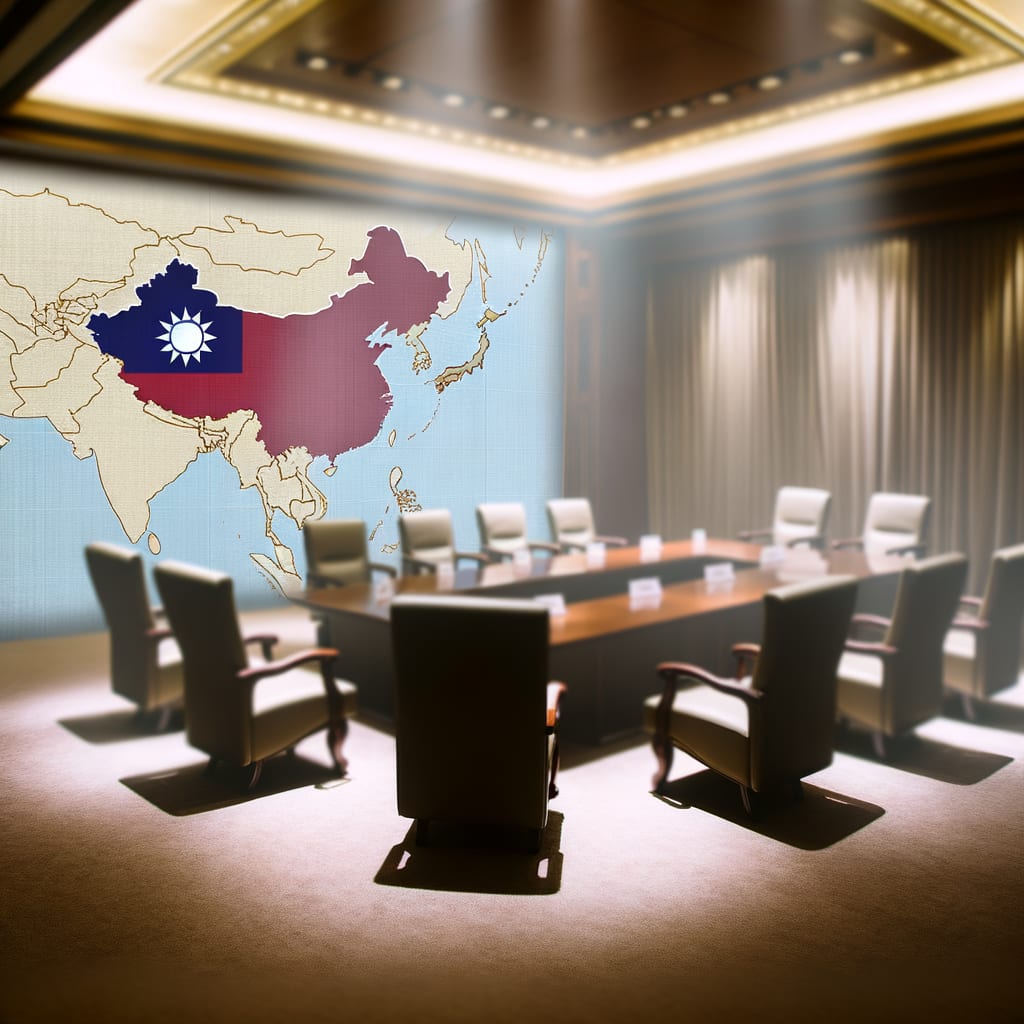
China and Taiwan Tensions Stir Japan, Prompting Diplomatic Turmoil
In an escalating sequence of events, China has been urging European allies to take its side against Japan in a diplomatic row involving Taiwan. Meanwhile, Japan continues to contend with the fallout from Prime Minister Sanae Takaichi's contentious remarks on Taiwan. Amid the geopolitical tussle, Taiwan's ambitious $40 billion defense spending plan has been blocked by opposition lawmakers, sparking additional uncertainty in the region.
A Shared Wartime History
China has been appealing to Britain and France for support against Japan, referencing their shared history as World War II allies1. Meetings with top Russian, British, and French officials are seen as part of an attempt by Beijing to rally support for its cause2. This diplomatic campaign comes in the wake of Japan's stance on Taiwan, which has caused a diplomatic uproar and sent Japan-China ties to new lows3.
Taiwan's Defense and Japan's Stance
Taiwan's opposition lawmakers blocked a proposed $40 billion special defense budget from being placed on the agenda for review, leading to protests from the ruling independence-leaning Democratic Progressive Party4. The suspension injects fresh uncertainty into Taiwanese leader William Lai Ching-te's ambitious military modernisation plan4.
This disruption coincides with the Japan Times' report that Taiwan charges Tokyo Electron in a TSMC secrets theft case, escalating a dispute involving two Asian linchpins of a chip industry increasingly vital to national and economic security5.
Japanese Prime Minister Sanae Takaichi's remarks about a potential Taiwan emergency have caused a diplomatic uproar3. Despite the controversy, Takaichi reaffirmed that Japan’s position on Taiwan remains unchanged6.
Japan-China Tensions Spill Over
Tensions between Japan and China have also been felt in the cultural industry, with the release of Japanese films and musical performances in China being postponed or cancelled7. Furthermore, Goldman Sachs sees these tensions potentially weighing on Japan’s GDP via a hit to tourism8.
China and Russia, meanwhile, have reached a high degree
of strategic consensus on issues related to Japan and jointly oppose the revival of Japanese militarism
9.
Global Reactions and Implications
In the United States, the State Department welcomed Taiwan’s announcement of a new $40 billion special defense procurement budget10. They also commended Taipei for its commitment to increase defense spending to at least 3% of GDP by 2026 and 5% of GDP by 203010.
In contrast, China urged the US to halt official contacts with Taiwan11. This request underscores the delicate balance of power in the region.
Conclusion
The current geopolitical situation presents a dynamic and complex landscape. As Japan and China grapple with their respective stances on Taiwan, the global community watches closely. The unfolding narrative has far-reaching implications for diplomacy, economics, and security in the region.