
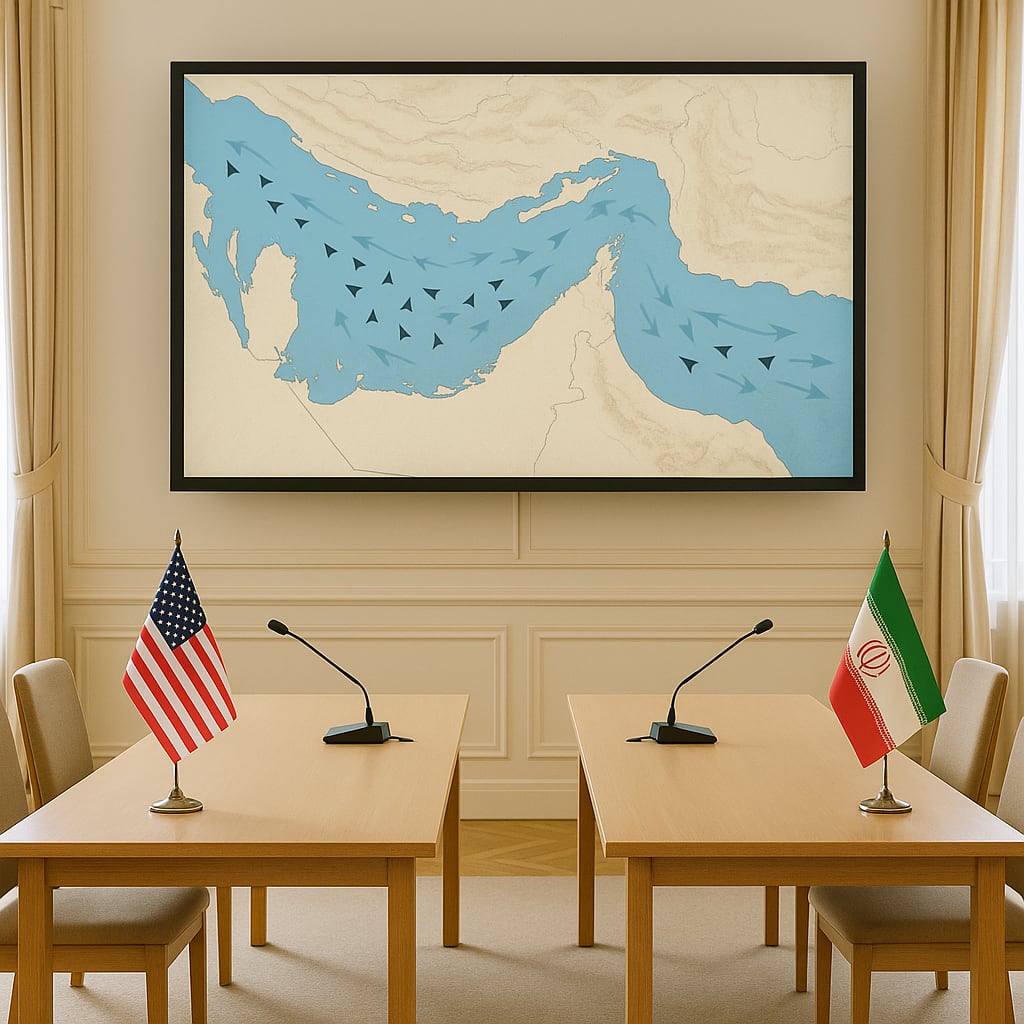
US and Iran move toward a Geneva memorandum as Hormuz control, frozen funds, and regional fronts shape the terms
Narrative Snapshot
- Economic stakes are quantified by the New York Times’ report of more than 500 ships stranded in the Gulf and a World Bank warning that the Iran war is weakening global growth via higher energy prices. Iranian and regional outlets stress sovereignty and security control over Hormuz, while Western analysts warn that who controls the strait will define strategic leverage.
- Italian outlets center diplomatic choreography: Pakistan’s claim of an agreed text, rumors of a Geneva signing, and Donald Trump’s split message that Europe was “irrelevant” to reaching a deal but could assist afterward. Iranian officials publicly confirm a draft yet pair it with deterrent messaging.
- On substance, claims diverge over money and nuclear terms: Iran-linked reporting points to a frozen-funds mechanism in the memorandum; US officials deny any “cash” for Tehran. Trump says Iran agreed not to develop or acquire nuclear weapons; Iranian state media instead emphasizes red lines around Hormuz.
- Coverage of US signaling is mixed: the BBC highlights inconsistent presidential messaging, while regional reporting records US strikes, continued drone activity around Hormuz, and a claimed lull between Israel and Iran.
What Happened
After US strikes on Iran beginning June 9–10 following the crash of a US Army Apache helicopter off Oman, Tehran warned foreign forces faced constant risk of being caught in crossfire. As maritime tensions mounted, the New York Times reported over 500 ships stranded in the Gulf and, separately, that the World Bank sees the conflict slowing global growth via energy prices. By June 11–12, diplomatic moves accelerated: Pakistan said a common US–Iran text was reached, with Italian media reporting a possible weekend signing in Geneva. Iran’s foreign minister said the parties were closer than ever, and Middle East Eye reported the memorandum would end fighting on all fronts, including Lebanon. Trump claimed Iran agreed not to develop or acquire nuclear weapons, while Iranian state media insisted Tehran would not cede control of the Strait of Hormuz. The US vice president said any deal would not hand Iran cash; the UAE denied moving frozen Iranian funds even as Iran suggested a mechanism for such funds. CENTCOM reported shooting down several Iranian drones targeting commercial vessels near Hormuz.
Why It Matters
The prospective memorandum touches multiple structural fault lines. Economically, the World Bank’s warning and the NYT’s shipping data underscore how a prolonged Hormuz disruption transmits quickly into inflation and growth headwinds. Strategically, control and operational rules in the Strait are central: Iranian outlets reject external security arrangements, while a former CIA director told Corriere that if Tehran controls the chokepoint, “they will have won,” highlighting the leverage contest. Politically, Trump’s statements to Italian media and on TV about Europe’s role reveal stress in transatlantic crisis management even as Europe remains exposed to energy shocks. Regionally, reports that the memorandum would end fighting “on all fronts, including Lebanon,” link any US–Iran understanding to Israel–Hezbollah dynamics; yet other coverage questions Washington’s leverage over Israel. Diplomatically, Pakistan’s facilitation spotlights the importance of non-Western brokers in de-escalation channels. For decision-makers, the memorandum’s text on maritime security, regional theaters, nuclear pledges, and financial channels will determine both enforcement and spillover risks.
Diverging Narratives
- Terms and enforcement: Middle East Eye reports Trump saying Iran agreed not to develop or acquire nuclear weapons, but Iranian state media foregrounds sovereignty over Hormuz rather than detailing nuclear provisions. Italian coverage adds that “much remains to clarify” before a final deal, echoing unresolved points flagged by ANSA.
- Money flows: US officials say the agreement would not hand Tehran cash, and the UAE denies moving frozen Iranian funds. Iranian reporting, by contrast, says the memorandum includes a mechanism for such funds—leaving ambiguity over whether any financial relief is indirect, phased, or contingent.
- Maritime control: Tehran-linked outlets insist Iran will not cede control of Hormuz and frame external forces as unable to ensure regional security. Western commentary, including Leon Panetta’s remarks, treats effective control of the strait as the core strategic prize. Meanwhile, the NYT’s account of 500+ stranded ships highlights ongoing commercial exposure despite de-escalation talk.
- US signaling and leverage: The BBC characterizes Trump’s Iran messaging as mixed, and the South China Morning Post reports skepticism about his claimed sway over Israel. Italian outlets capture Trump calling Europe “irrelevant” in reaching peace even as he says European allies could help after an accord. La Repubblica argues new Iranian leaders emerged strengthened by the conflict, contrasting with US claims of having “won the war.”
- Battlefield-to-diplomacy gap: CENTCOM’s report of downing Iranian drones near Hormuz and Iran’s warnings about crossfire risks sit alongside Pakistan’s assertion of an agreed text and reports of an imminent Geneva signing—illustrating divergence between tactical friction at sea and high-level diplomacy.
What Happens Next
- Geneva signing window: Reports suggest a possible weekend signature in Geneva, with the US vice president expected to travel. Indicators: official confirmation of travel, publication of a signing schedule, and release of the memorandum text. If the signing slips, ANSA’s note about “remaining clashes on points” signals unresolved issues.
- Hormuz governance and security: Iran states it will not cede control; Western analysts warn control equates to strategic victory. Indicators: explicit language on rules of navigation, escort or deconfliction mechanisms, and any joint or third-party monitoring provisions. Absent clarity, NYT-documented shipping delays may persist.
- Regional fronts linkage: Iranian sources say the memorandum would end war on all fronts, including Lebanon. Indicators: sustained halt of Israeli raids noted by Italian coverage, reduced cross-border fire with Hezbollah, and US–Israeli alignment amid outside skepticism about Washington’s leverage.
- Financial provisions: Iran cites a mechanism for frozen funds; US and UAE deny cash movements. Indicators: textual references to funds, banking compliance notices, and public guidance from the US vice president consistent with no direct cash transfers.
- Operational de-escalation at sea: CENTCOM reported intercepting Iranian drones near commercial vessels. Indicators: incident frequency around Hormuz, risk advisories to shipowners, and whether the backlog of 500+ ships begins to clear following any agreement terms.