
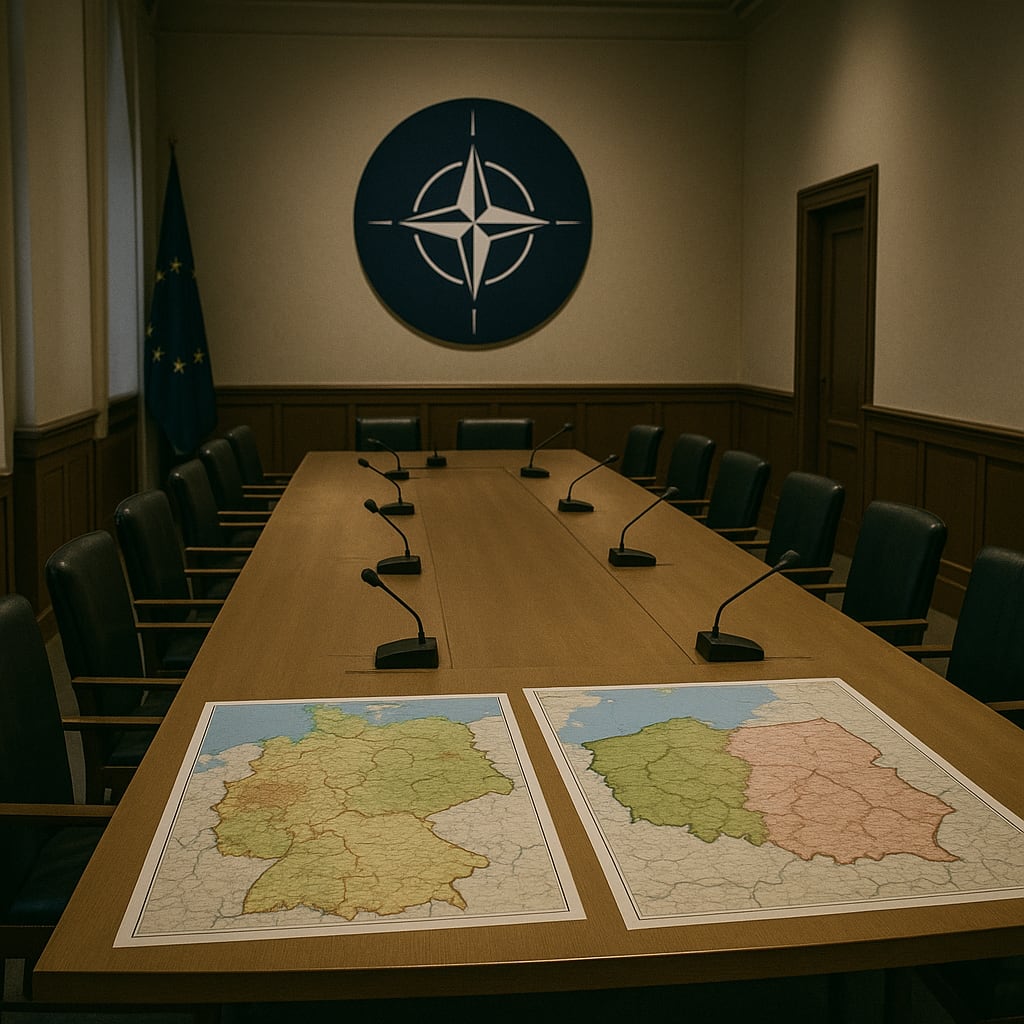
US Troop Movement to Poland Deepens European Uncertainty
The US decision to deploy 5,000 troops to Poland while simultaneously planning to withdraw the same number from Germany has sown confusion and uncertainty among European NATO partners.
Background and Context
In a series of unexpected policy shifts, former US President Donald Trump announced the deployment of additional troops to Poland, surprising NATO allies. This move came just hours before a NATO Foreign Ministers' meeting held in Sweden, further deepening the divisions within the alliance over the Iran war and other issues.
The US's plans for troop withdrawal from Germany, its decision to suspend the project to deploy Tomahawk missiles in Germany, and a review of forces deployed in Poland have added to the uncertainty in Europe. The news of the troop movement to Poland has been met with mixed reactions. While Poland's right-wing president welcomed the decision, European leaders remain wary.
Key Developments
US Secretary of State Marco Rubio has indicated that the US troop presence in Europe will be adjusted. Despite this, he also warned that the United States would continue to reduce their presence in Europe. This comes at a time when Rubio has criticized Spain for refusing to allow the Trump administration to use its military bases during the US-Israeli war on Iran, questioning Spain's role in NATO.
I know why NATO is good for Europe, but why is NATO good for America? Because it gives us bases in the region that allow us to project power during a contingency in the Middle East or somewhere else,
Rubio told reporters.
Implications and Reactions
The US's unpredictable policy shifts have left European NATO partners unsure about which areas they should prioritize. Moreover, these moves have prompted European nations to accelerate their military preparations discreetly while attempting to reassure Washington.
According to Nawrocki, the Polish president's advisor, the strengthening of NATO in Poland sends an important signal as Poland is on the frontline. However, he believes that other allied countries should do more.
Former Italian Prime Minister Romano Prodi criticized Europe's response to the US's decisions, suggesting that Europe should have a unified capacity for intervention. We behave like servants in front of Trump,
Prodi stated.
Conclusion
As the situation evolves, European NATO partners are trying to defuse the criticisms before the future NATO summit in Ankara. Meanwhile, Russia advocates for equitable security without diktat or pressure, emphasizing that such an international security system should create conditions for truly mutually beneficial cooperation.
With the US's troop movement plans and the future of its military involvement in Europe remaining uncertain, the NATO allies have been left to navigate the shifting geopolitical landscape.