
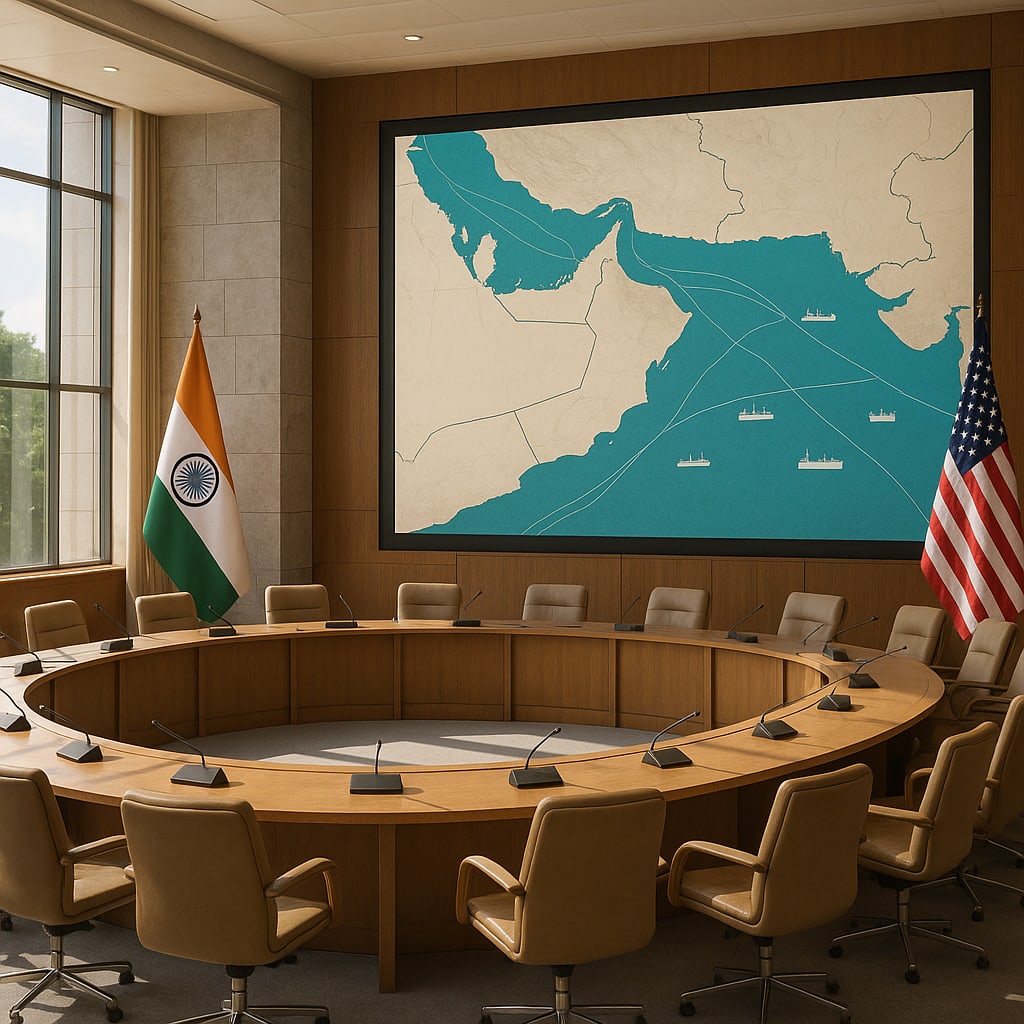
India protests U.S. strike off Oman that killed three Indian seafarers; Washington cites blockade
Narrative Snapshot
- Convergence: Most outlets report three Indian sailors were killed off Oman and that New Delhi lodged a formal protest and escalated consular and maritime protections; families’ accounts humanize the losses (The Guardian; The Hindu; NYT; BBC; Al Jazeera English; SCMP).
- Framing gap: U.S. sources and some international coverage foreground Washington’s claim that the vessels violated a U.S. “blockade” of Iranian ports and ignored instructions, while Iranian and some regional outlets denounce the action and contest its legality (NYT; The Guardian; IRNA; Middle East Eye).
- Multilateral lens: The UN Secretary‑General condemned the attack and underscored navigational rights, a legal framing that neither assigns blame nor validates blockade enforcement (The Hindu).
- Diplomatic stakes: Reporting highlights both immediate Indian démarches and prospective high‑level engagement with U.S. principals, suggesting parallel tracks of protest and relationship management (Middle East Eye; SCMP).
What Happened
Three Indian seafarers were killed on 10 June in an incident off Oman that Indian and international outlets attribute to U.S. fire; Oman’s military rescued dozens more Indian crew from stricken ships (The Hindu; NYT). Washington said targeted vessels violated its blockade of Iranian ports and failed to comply with instructions; U.S. strikes continued after the fatalities (NYT; The Guardian). New Delhi issued a “strong protest,” summoned the top U.S. diplomat, and circulated a maritime alert to protect seafarers and Indian commercial interests (The Guardian; Middle East Eye). Iran condemned the reported U.S. attacks, with its foreign ministry spokesperson calling them “state piracy” (IRNA; Middle East Eye). The UN Secretary‑General condemned the tanker attack and stressed respect for navigational rights (The Hindu). A U.S. lawmaker called the killings “very unfortunate” (SCMP). India also raised the issue with Senator Marco Rubio (Middle East Eye). Families of the deceased publicly mourned (BBC; Al Jazeera English; SCMP).
Why It Matters
The episode collides maritime safety, coercive enforcement, and freedom of navigation. The UN’s emphasis on navigational rights contrasts with Washington’s assertion of a blockade around Iranian ports, spotlighting the legal and practical risks when unilateral interdictions intersect with civilian shipping (The Hindu; NYT; The Guardian). For India, an extensive seafaring workforce and trade exposure make seafarer protection a domestic and commercial imperative; New Delhi’s alert, evacuations, and high‑level démarches signal that priority (Middle East Eye; NYT). The incident also stress‑tests India‑U.S. ties already described as strained over the past year, even as reporting points to possible leader‑level engagement to stabilize relations (SCMP). Regionally, Oman’s rescues and Iran’s denunciations reflect wider Gulf sensitivities around shipping security and escalation control (NYT; IRNA). For multilateral actors, the UN statement frames a norms‑based reference point amid competing narratives (The Hindu).
Diverging Narratives
- U.S. rationale: The Pentagon’s position, relayed in international reporting, is that the targeted ships were breaching a U.S. blockade of Iranian ports and ignored instructions; operations continued after the deaths (NYT; The Guardian). This frames the strikes as enforcement action.
- Iranian rebuttal: Tehran condemned the reported U.S. attacks on Indian commercial vessels and labeled them “state piracy,” rejecting any legitimacy to the use of force (IRNA; Middle East Eye).
- Indian response: Delhi issued a strong protest, summoned the senior U.S. diplomat, and announced measures to protect seafarers, while domestic and international outlets alike described the fatalities as caused by U.S. fire (The Guardian; Middle East Eye; The Hindu). Coverage does not show India endorsing either the U.S. blockade claim or Iran’s characterization.
- International/legal framing: The UN Secretary‑General condemned the attack and stressed navigational rights without attributing responsibility (The Hindu).
- Attribution beyond the strike: In parallel to coverage of the U.S. action, former U.S. President Donald Trump accused Iran of attacking Indian ships that week; Tehran called the charge “baseless,” and Indian reporting notes three Indian‑crewed vessels were attacked during the period, one causing the three deaths (The Hindu). This mix of claims underscores unresolved questions about causation and legal basis across multiple incidents.
What Happens Next
- Diplomatic management: India’s summoning of the U.S. envoy and its engagement with Senator Marco Rubio, alongside reporting of a possible Modi–Trump meeting at the G7, set up choices between de‑escalatory assurances and harder public stances. Watch for joint statements, language on seafarer safety, and whether Delhi characterizes the incident beyond a protest (Middle East Eye; SCMP).
- Operational posture at sea: With U.S. strikes reported to have continued and India evacuating crews, indicators include any pause or refinement of U.S. interdictions, updated Indian maritime advisories, and further evacuations or rescues (NYT; Middle East Eye).
- Multilateral and legal avenues: The UN’s condemnation and emphasis on navigational rights create space for additional statements or discussions; monitor whether Delhi or others seek formal UN engagement or clarifications on the asserted blockade (The Hindu).
- Narrative contestation: Track any U.S. disclosure of instructions or evidence underpinning blockade claims, and Iranian diplomatic moves reinforcing its “state piracy” charge (NYT; IRNA).