
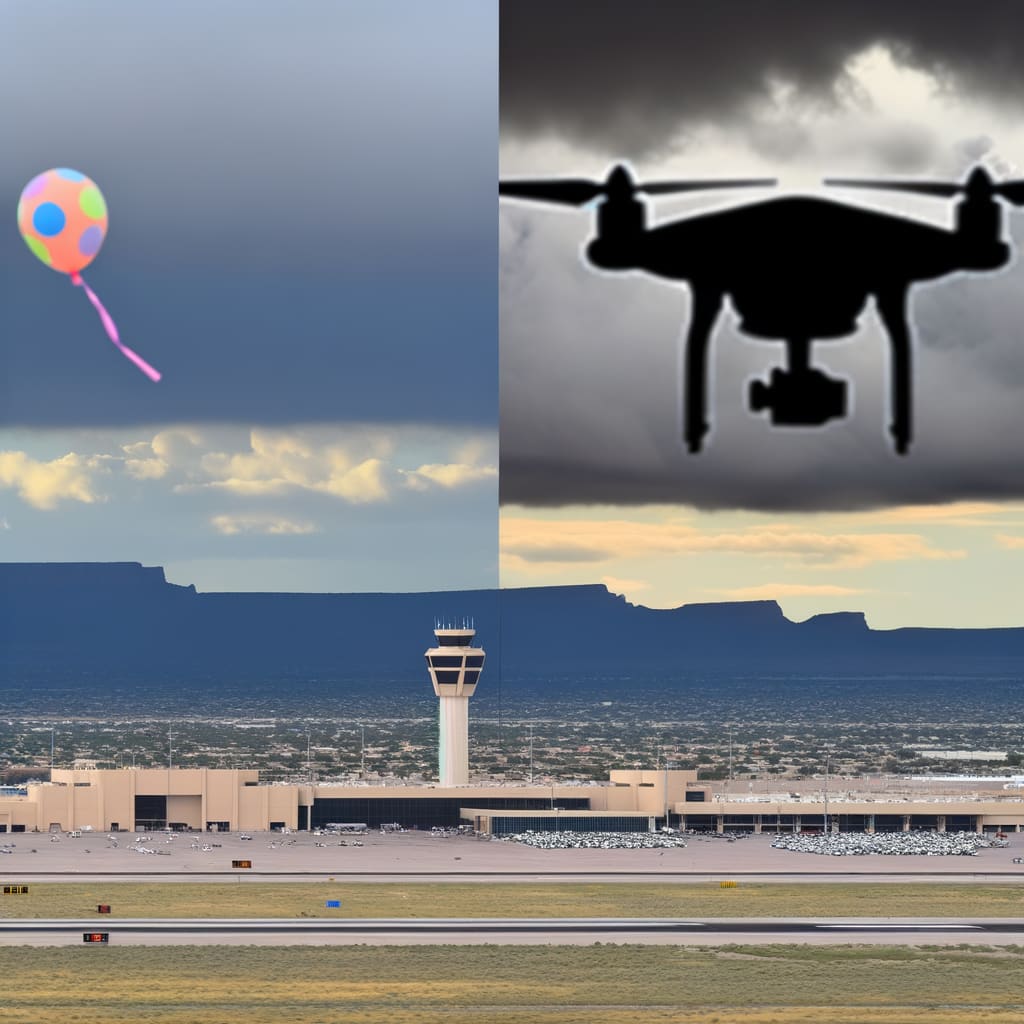
US Closes El Paso Airspace Over Suspected Mexican Cartel Drone Activity
The airspace over El Paso International Airport in Texas was abruptly closed for several hours on February 11 due to what was perceived as a drone threat, alleged to be Mexican cartel-operated. The closure, originally announced to last for 10 days, ended after just a few hours following the neutralization of the perceived threat by the Trump administration.
Background of the Incident
The Federal Aviation Administration (FAA) closed the airspace late Tuesday due to special security reasons,
grounding all flights from El Paso International Airport. The U.S. military soon disabled the drones suspected of breaching American airspace, according to Fox News. However, a U.S. official later confirmed that what was initially assessed as a possible foreign drone turned out to be a party balloon.
The threat's neutralization led to the lifting of the airspace restriction on Wednesday, as confirmed by Transportation Sec. Sean Duffy. The FAA and DOW acted swiftly to address a cartel drone incursion,
he stated. The threat has been neutralized, and there is no danger to commercial travel in the region.
The Drone Controversy
While the U.S. officials warn that cartel-operated drones on the border pose a major threat, Mexican officials are less certain. The Mexican President Claudia Sheinbaum stated that her government has no information indicating drone activity along the U.S.-Mexico border.
The incident has drawn attention to the increasing use of drones by organized crime groups in Mexico, as reported by The Guardian. However, it also highlighted the disagreement over the Pentagon testing of counter-drone technology and the tension between the FAA and the Pentagon.
The Anti-Drone Laser System
The Pentagon had granted border patrol access to a hi-tech secret weapon, a military laser-based anti-drone system, whose use caused chaos in the skies. This led to the brief shutdown of El Paso airport by the FAA because of safety concerns. The top Democrat on the Senate's commerce committee called the shutdown unacceptable.
Furthermore, it was revealed that the experimental laser system used by the military can pose a serious risk to commercial aviation, as reported by TASS.
Reaction and Aftermath
Both Republicans and Democrats demanded to hear more from the government about the anti-drone laser that led to the airport's closure. The incident has also highlighted gaps in America's drone defense industry, despite billions of dollars being spent on developing counter-drone technology.
The Trump administration, without specifying where, announced that the United States would conduct 'ground strikes' against cartels. This statement by Donald Trump, suggesting that 'the cartels are running Mexico', further amplified the tension.
Conclusion
As it stands, the airspace over El Paso International Airport has reopened, and normal flights have resumed. The incident has, however, sparked a debate over the use of drones by Mexican cartels and the measures in place to counter such threats. With tension between the FAA and the Pentagon, and controversy over the use of the military laser-based anti-drone system, the incident has raised more questions than answers.