
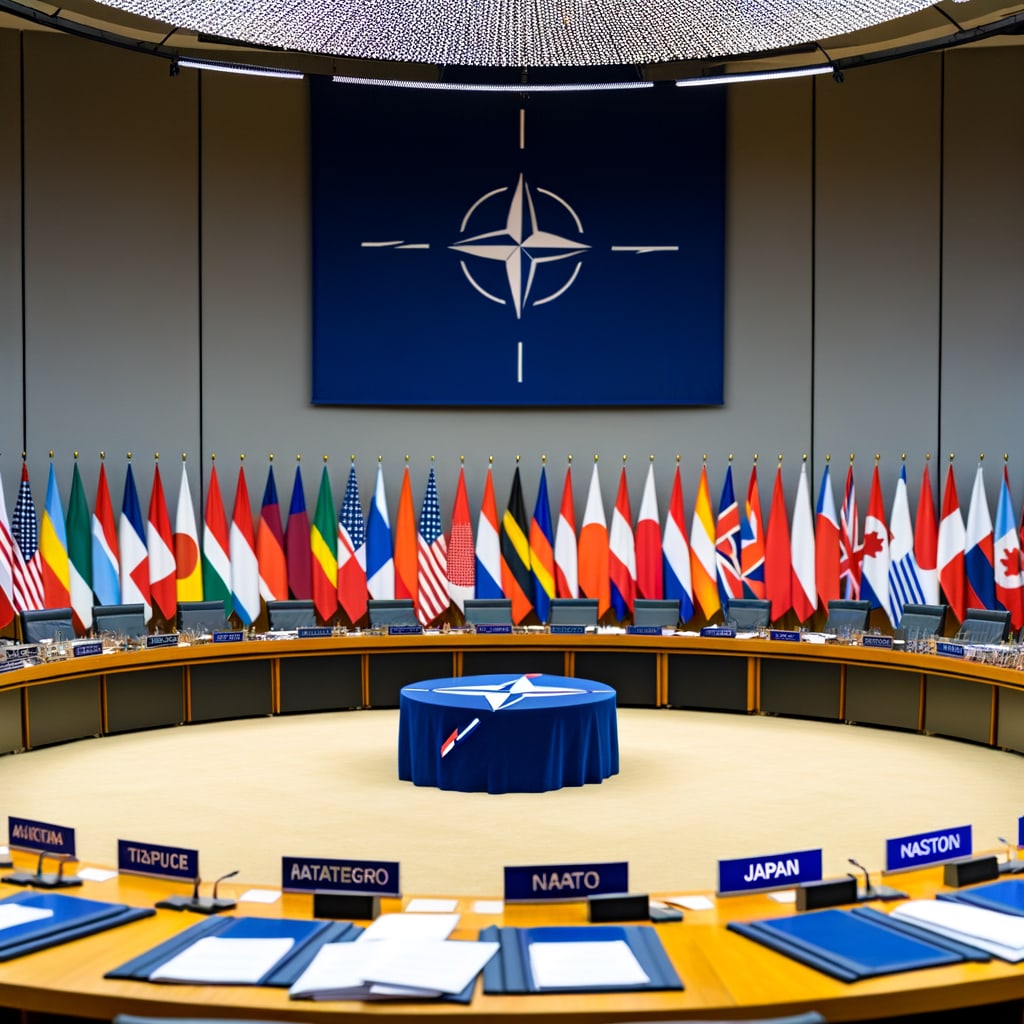
European NATO Members Flex Their Independence Amid US Pressure
In response to increasing pressure from the United States, European NATO members and Japan are making significant strides towards self-sufficiency in terms of defense capabilities. While US ambassador to NATO, Matthew Whitaker, has likened these nations to children expected to grow up,
they are already demonstrating their ability to stand on their own two feet.
Background and Context
For years, Europe has thrived under the security umbrella of the United States, prioritizing integration and prosperity over hard power. However, as the Trump administration focuses on defending the US Homeland and deterring China,
European nations are feeling the push towards self-reliance. In tandem, the ongoing issues concerning the Americanization of the Finnish telecom giant, Nokia, have ignited fears in the European telecom sector over the influence of the United States.
Key Developments
In an attempt to emancipate from American military technology, European countries have significantly advanced their internal capacities. A Franco-German fighter jet project has already met its goals, while another project involving the UK, Italy, Spain, and Japan is also under development. Notably, Berlin is reportedly considering joining this project, as reported by Japan Times.
This development comes as NATO shakes up its military command structure, moving responsibility from the US to Europe. The three Joint Force Commands will now be led by Europeans, as detailed by TASS. Moreover, Corriere della Sera reports that the US is stepping back from its bases in Naples and Norfolk, handing them over to Rome and London respectively.
Implications and Reactions
These moves have not been without controversy. Ambassador Whitaker's comments have been met with mixed responses, as he calls for Europe to take over the conventional defense of the continent. The Trump administration's push to acquire Greenland further complicates matters, as Vice President JD Vance suggests the US should benefit from protecting the vast landmass.
The European Commissioner for Defense, Andrius Kubilius, responded by emphasizing the need for Europe to scale up its defense production lines. Similarly, disagreements over Greenland and the downplaying of the role of Western European countries in the Afghanistan military campaign have led to a reevaluation of relations with the US.
Current Status
As the Munich Security Conference looms, the state of European security is at a crossroads. With the Trump administration's world order hanging over Europe, and the US expecting its allies to do more,
the push for European military autonomy is gaining momentum. However, this path is not without its obstacles, as European nations grapple with internal divisions and the potential ramifications of their newfound independence.
In conclusion, Europe's shift towards self-reliance in defense capabilities signifies a significant transition in global military dynamics. As the US reduces its commitments in Europe to focus on the Pacific, Europe's effort to increase its defense autonomy may reshape the traditional power structures within NATO. The coming months will undoubtedly be telling for the future of European defense and international relations.