
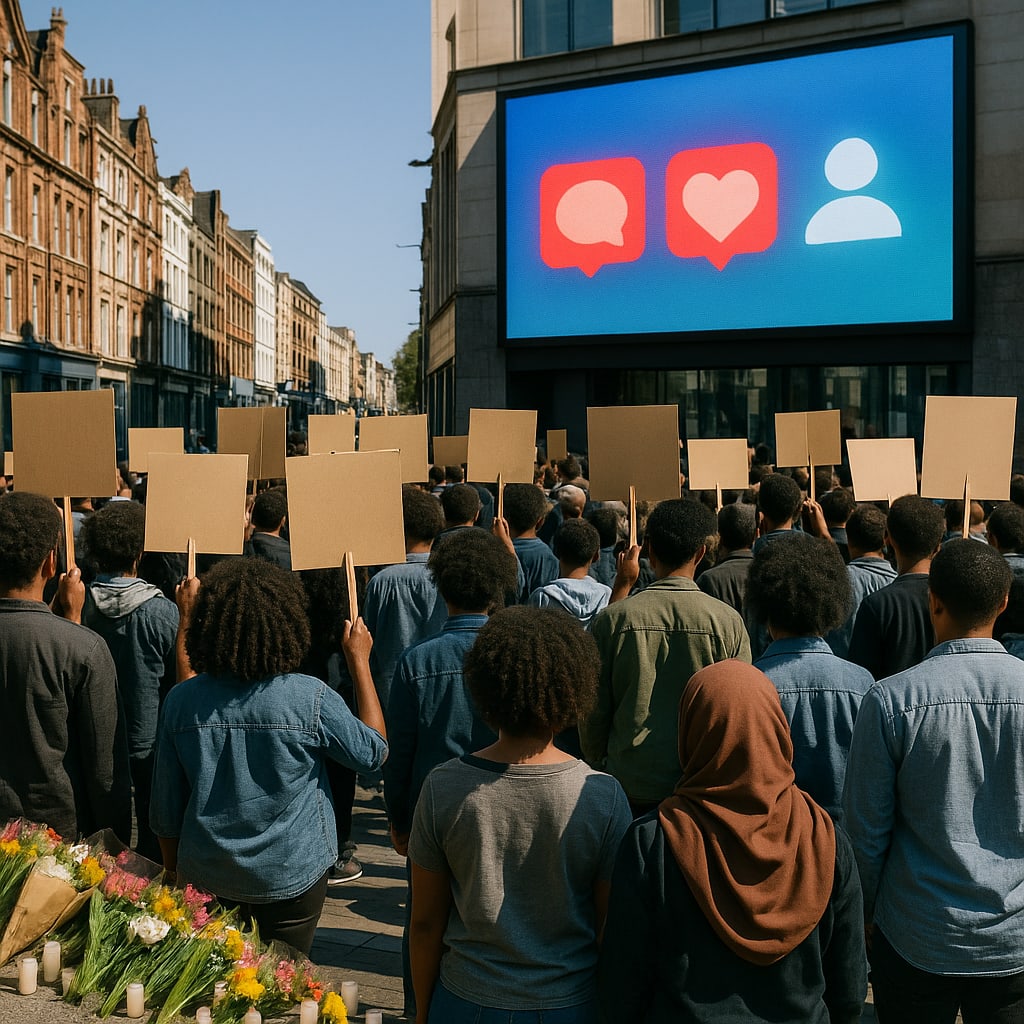
Belfast anti-immigrant riots spur UK-wide counter-mobilization and scrutiny of online incitement and policing
Narrative Snapshot
- Broad agreement that graphic footage of a stabbing catalyzed two nights of anti-immigrant violence in Belfast, with minority residents and properties targeted and vehicles torched (Al Jazeera; DW; BBC; Le Monde; NYT). Several outlets foreground prior warning signs: a “hit list” of addresses circulated for months (The Guardian; Middle East Eye).
- Emphases diverge on framing. Some center racist targeting and organized far-right activity (The Guardian; Al Jazeera; DW; Le Monde; NYT). Others stress the brutality of the index crime and link it to migration debates (Fox News; RT), while noting police say motive remains unclear and the case is not treated as terrorism (The Times of Israel).
- Coverage outside Northern Ireland highlights rapid nationwide spillover—anti-racist rallies and scattered clashes in multiple cities (The Guardian; Al Jazeera; DW; RT)—and the use of counter-terrorism border powers against a prominent activist (The Guardian; South China Morning Post).
- What is most at stake across reports: protection of minority communities, state capacity to pre-empt digitally coordinated violence, and the boundaries of public order and counter-terrorism authorities (The Guardian; DW; CBC; SCMP).
What Happened
After a graphic video circulated of a knife attack in north Belfast, a Sudanese man was charged with attempted murder and remanded into custody (DW; SCMP; Fox News). Police and political leaders called for calm (DW; Al Jazeera; The Times of Israel). On Tuesday night and into a second night, anti-immigrant rioters burned vehicles and attacked properties linked to ethnic minorities; residents reported being targeted for their skin color and asked “where they come from” (Al Jazeera; DW; BBC; The Guardian; NYT). The UK government condemned “racist thuggery” after at least 16 arrests and 12 police injuries, with arrests later rising to 19 (The Guardian). Monitoring groups had warned PSNI for months about a circulating list of migrant addresses later attacked (The Guardian; Middle East Eye). Thousands then joined anti-racism rallies in Belfast and across UK cities, with some clashes in Glasgow, Liverpool, Sheffield, and Brighton (Al Jazeera; DW; CBC; The Guardian; Le Monde; Middle East Eye; RT).
Why It Matters
The unrest tests the UK’s ability to deter and disrupt racially targeted violence that appears to leverage online mobilization and doxxing, amid warnings that authorities had prior notice of specific risks (The Guardian; Middle East Eye). It reopens questions about institutional capacity: PSNI’s readiness to act on digital intelligence; coordination between devolved authorities and London; and the Home Office’s framework for countering extremism and hate crime in the shadow of sectarian legacies (DW; The Guardian; RT analysis). The rapid counter-mobilization underscores civil-society resilience but also the risk of recurring confrontations across multiple cities (Al Jazeera; The Guardian; DW). The use of counter-terrorism border powers against a high-profile activist linked to online amplification signals an expansive security posture with implications for civil liberties and platform governance debates (SCMP; The Guardian). Internationally, the episode exemplifies how single incidents can trigger transnational information cascades and offline harm (CBC; DW).
Diverging Narratives
Several outlets attribute causation primarily to racist organization and online incitement—emphasizing doxxing, coordinated targeting, and “bad faith actors” external to Northern Ireland (The Guardian on the address “hit list” and long-standing warnings; The Guardian citing Justice Minister Naomi Long; Al Jazeera; DW; NYT). Others give greater prominence to the severity of the index crime—detailing injuries, courtroom developments, and descriptions such as an “attempted beheading” drawn from video accounts—tying the unrest to a broader migration-crime debate (Fox News; RT). Yet police and some coverage stress that the attack’s motive was unclear and not treated as terrorism, complicating securitized framings (The Times of Israel; DW).
On scale and momentum, multiple sources highlight “thousands” at anti-racism rallies (Al Jazeera; DW; CBC; Le Monde; Middle East Eye), while reporting of counter-protests sometimes focuses on smaller groups and localized clashes (The Guardian; RT on Glasgow). Assessments of political response also diverge: firm condemnation and “no tolerance” messaging from London (DW; Folha de S.Paulo; Al Jazeera) versus scrutiny of operational shortcomings—both the policing of online precursors and the adequacy of real-time protection for targeted communities (The Guardian; BBC; Al Jazeera feature).
What Happens Next
- Policing online mobilization and doxxing: PSNI and UK authorities face decisions on enforcing against those circulating “hit lists” and inciting violence, after documented prior warnings (The Guardian; Middle East Eye). Indicators: arrests or takedowns linked to specific address-sharing; legislative or guidance updates on online harms signaled by MPs already criticizing failures (The Guardian).
- Public order posture and legal proceedings: Outcomes in prosecutions of both rioters and the stabbing suspect (remanded, charged with attempted murder) will shape deterrence and community trust (DW; SCMP; Fox News). Watch charging decisions that apply hate-crime aggravation and sentencing signals from courts (The Guardian; DW).
- Scope of counter-terrorism powers: The Heathrow stop and device seizure under the Counter-Terrorism and Border Security Act foregrounds potential expansion or scrutiny of border-search authorities (SCMP; The Guardian). Indicators: oversight-body engagement, Home Office statements, or legal challenges.
- Street dynamics: Nationwide anti-racism mobilization versus far-right rallies could recur (The Guardian; Al Jazeera; DW; RT). Indicators: police conditions set for assemblies, city-level bans or restrictions, and organizer messaging (e.g., Stand Up to Racism “reclaim the streets,” RT citing Glasgow; The Guardian on multi-city protests).