
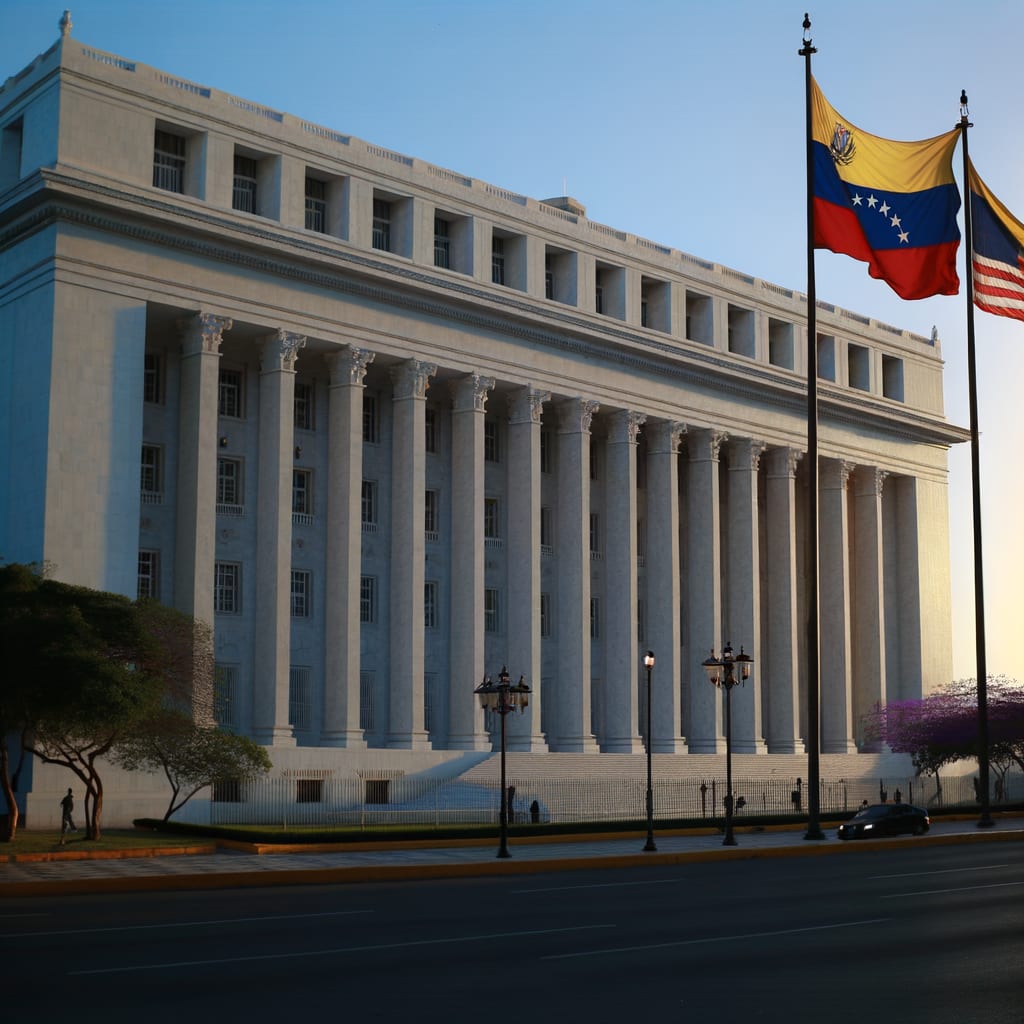
United States and Venezuela Restore Diplomatic Relations
In a landmark move, the United States and Venezuela have agreed to restore diplomatic and consular relations, two months after U.S. forces captured the former Venezuelan president, Nicolás Maduro. The agreement, announced by the U.S. State Department, signals a significant thawing of relations between the two countries and a shift towards a more constructive dialogue.
Background
The reestablishment of diplomatic ties follows the fall of Nicolás Maduro, who was captured by U.S. forces and brought to a jail in New York. This marked the end of a diplomatic freeze that began in 2019 when Maduro severed relations with the U.S. After his downfall, interim President Delcy Rodríguez assumed power and has since aligned Venezuela's government with the interests of the U.S. Administration.
Key Developments
The U.S.'s renewed diplomatic interest in Venezuela is not solely political. US Interior Secretary Doug Burgum recently visited Caracas, focusing on the potential for greater access to Venezuela's mineral wealth, including its large reserves of rare earths, gold, and other valuable minerals.
The United States and Venezuela’s interim authorities have agreed to reestablish diplomatic and consular relations,
the State Department said in a statement. Our engagement is focused on helping the Venezuelan people move forward through a phased process that creates the conditions for a peaceful transition to a democratically elected government.
Venezuelan Foreign Minister Ivan Gil Pinto also expressed readiness for a new stage of constructive dialogue with Washington
. The restoration of diplomatic relations is seen as an integral part of efforts to promote stability, support economic recovery, and advance political reconciliation in Venezuela.
Implications and Reactions
The reestablishment of diplomatic relations has been widely hailed as a positive step towards the economic recovery of Venezuela. The U.S. State Department claims that this move will support Venezuela's economy, particularly following the U.S. issuing a limited license for Venezuelan gold, encouraging outside investment in the country's resource sector.
On the ground, Venezuelans have reportedly experienced a sense of relief following Maduro's removal. NPR correspondent Eyder Peralta reported that locals felt a weight has been lifted
. Opposition groups are now holding public meetings and street protests, indicating a shift towards democratic practices.
Conclusion
The restoration of diplomatic relations between the U.S. and Venezuela marks a significant turning point in the history of the two nations. With a shared focus on promoting stability and economic recovery, the future holds promise for a peaceful transition to a democratically elected government in Venezuela. However, the trajectory of this transition and its long-term impact on the Venezuelan people remains to be seen.