
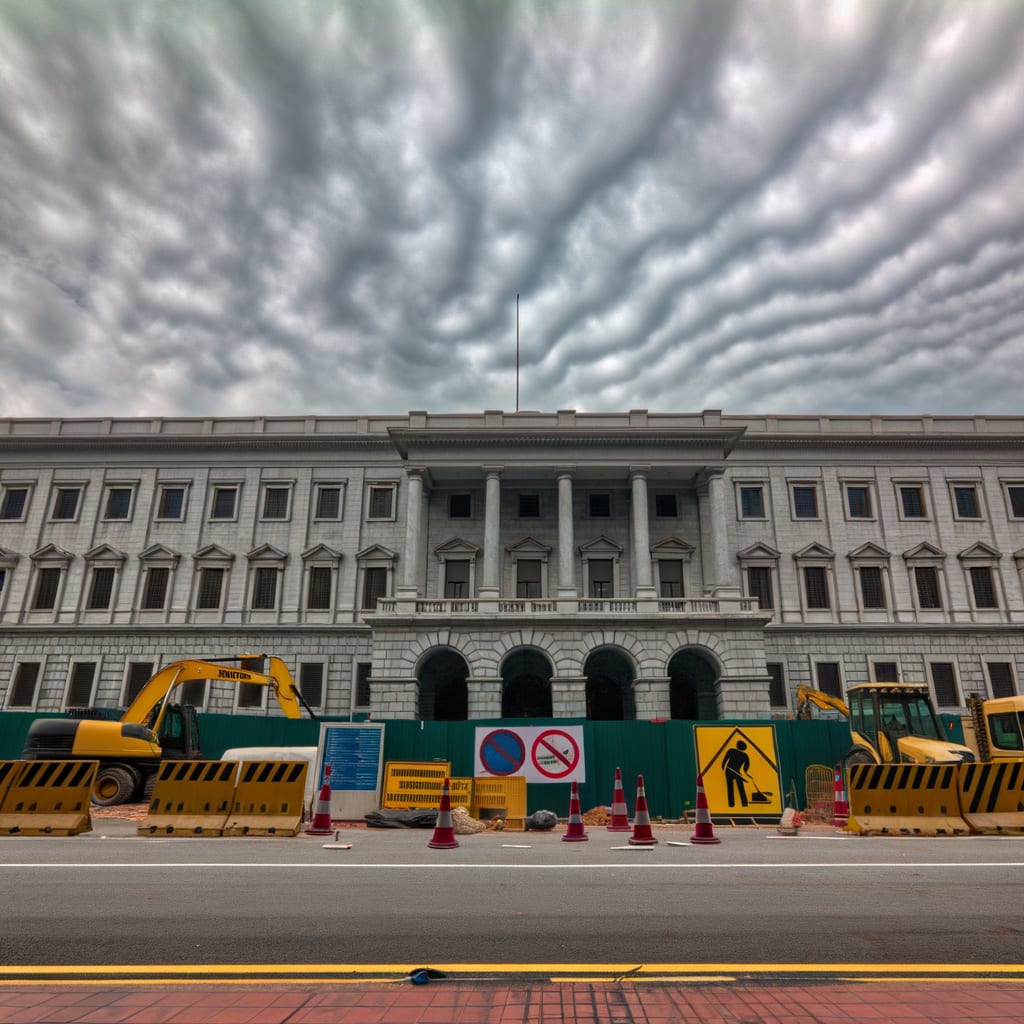
US Judge Temporarily Halts Trump's $400M White House Ballroom Project
In a significant ruling, a US federal judge on Tuesday suspended construction of President Donald Trump's ambitious $400 million ballroom project in the White House. The judge, Richard Leon, placed an injunction on the project, stating that it requires congressional approval before proceeding. The judge has delayed enforcement of the injunction for 14 days, acknowledging the Trump administration's plan to appeal the ruling.
Background
President Trump initiated the high-profile project as part of his efforts to remodel the American seat of power. The project involved the demolition of the White House's East Wing to make way for a 90,000-square-foot ballroom. The lawsuit against the project was brought by the National Trust for Historic Preservation, a non-profit organization that argued the project violated federal law and required congressional authorization.
Judicial Ruling
In his ruling, Judge Leon emphasized that the President is the steward
of the White House, but not the owner
. He wrote, The President of the United States is the caretaker of the White House for future presidential families. However, he is not the owner!
Furthermore, he noted that no statute comes close to giving the President the authority he claims to have,
according to the ruling. The judge recognized that the case “raises novel and weighty issues, that halting an ongoing construction project may raise logistical issues.”
Reaction and Appeal
Despite the judge's order, President Trump suggested that work on the ballroom could continue. The Department of Justice is expected to appeal the ruling on behalf of the Trump administration. The judge acknowledged this in his order, stating, I will therefore delay enforcement of the injunction for fourteen days,
allowing time for the administration to seek immediate appellate review.
Conclusion
The decision temporarily halts one of President Trump's most visible efforts to reshape the White House. The ruling has left the Trump administration seething, and it is expected that they will appeal the decision. However, for now, the construction of the $400 million ballroom remains in limbo until Congress provides statutory authorization. The case highlights the complex issues surrounding alterations to historic buildings and the balance of power between the Executive branch and Congress.