
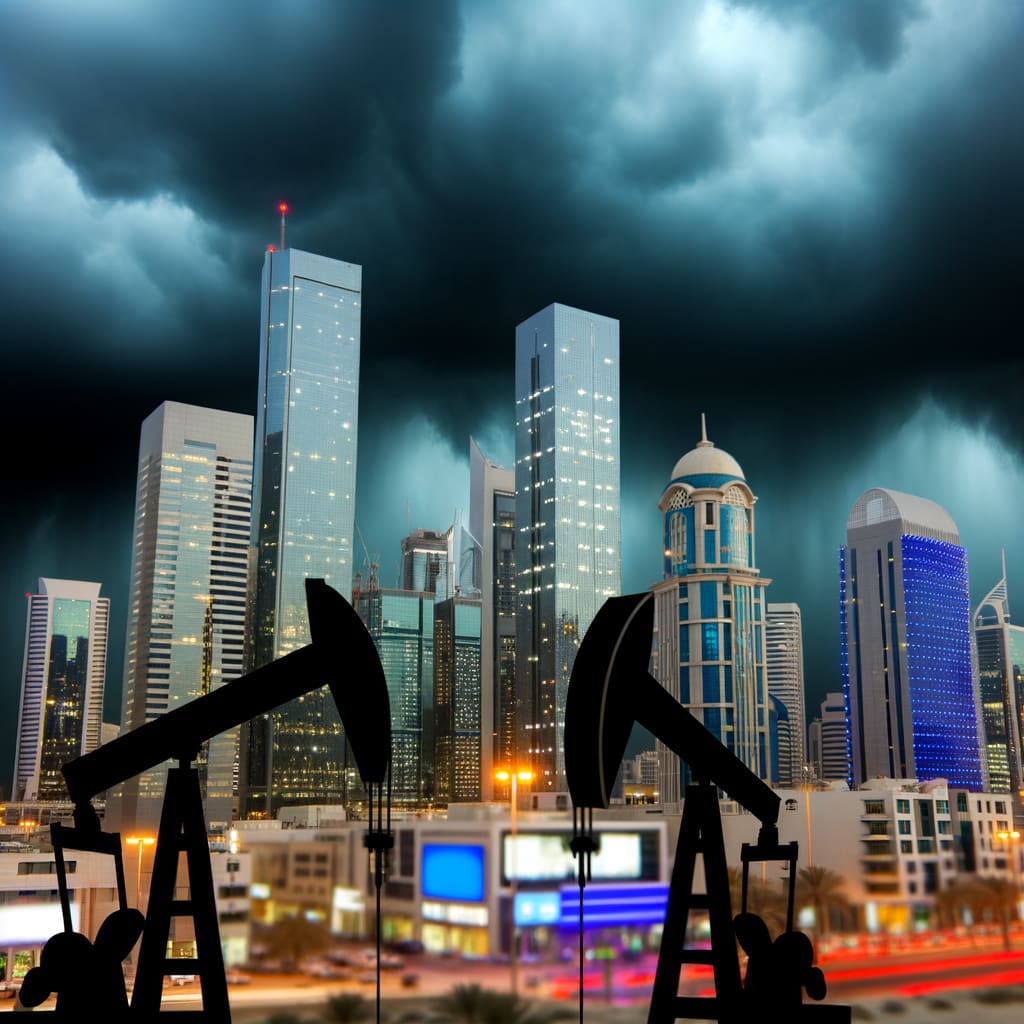
Global Markets Tumble Amid Rising Oil Prices and Middle East Tensions
Global markets took a sharp downward turn on Monday as escalating tensions between the United States, Israel, and Iran led to a surge in oil prices, sparking widespread fear among investors. Asian markets, including Japan's Nikkei 225, Hong Kong’s Hang Seng Index, and Shanghai stocks, saw significant drops, as did European and US stock markets. Oil prices, meanwhile, soared to above $118 per barrel, according to ANSA.
A Fluctuating Oil Market
The oil market has been in flux due to the conflict in the Middle East and fears over access to the strategic Strait of Hormuz. Oil prices opened at $106 per barrel on Sunday night, according to Folha de S.Paulo, but quickly rose to $113.70 and later to $118, as reported by ANSA and La Repubblica. The US has responded by relaxing Venezuela oil sanctions in an effort to increase the global oil supply, according to The Hindu.
Stock Market Instability
Stock markets around the world felt the ripple effects of the rising oil prices and escalating conflict. The Nikkei 225 decreased by more than 3.1% during early Monday trading, with TASS reporting a further drop to 3.55%. The Guardian reported that the Dow lost over 400 points on Friday, with the S&P 500 slipping 1.5% and the Nasdaq down 2%. European markets were also affected, with Germany's DAX dipping 2% and Milan seeing a drop of -2.5%, according to Deutsche Welle and ANSA.
Geopolitical Factors
The current volatility can largely be attributed to geopolitical factors. Tension between the US and Iran escalated following President Donald Trump's threat to obliterate
Iran's power plants unless the Strait of Hormuz is opened, as reported by The Guardian. Iran has responded with threats of attacks on energy infrastructure throughout the region, according to Al Jazeera English. The US is reportedly considering a naval blockade or seizure of Iran's Kharg Island, as per Axios.
Market Winners Amid the Chaos
Despite the overall downturn, some markets have fared better than others. Malaysia, for instance, has become a sweet spot
for global investors, according to the South China Morning Post, due to a rare period of political stability and investments in higher-value manufacturing and data centers.
The Current Situation
As the situation continues to evolve, markets remain on edge. The US Treasury Secretary Janet Yellen has suggested that Washington may ease restrictions on Iranian oil to provide temporary relief and stabilize global markets, as reported by Middle East Eye. However, the uncertainty of the situation continues to hold sway over the global economy, with fears of further escalation and potential disruption to crucial shipping routes.
With oil prices and the potential for conflict in the Middle East remaining as key concerns, it is clear that the global economy will continue to face challenges in the days and weeks to come.