
US and Iran exchange strikes after disputed helicopter incident, with Washington threatening further attacks
Narrative Snapshot
- Across outlets, there is broad agreement that US forces struck targets in Iran and that the IRGC launched retaliatory strikes against US or US‑linked sites in the region, with both sides threatening further action (BBC; TASS; RT; Middle East Eye; Deutsche Welle).
- Accounts diverge on the Apache incident that triggered escalation: some describe a crash near the Strait of Hormuz (RT; South China Morning Post), while others relay President Trump’s claim that Iran shot the helicopter down (Middle East Eye; Al Jazeera; Times of Israel).
- US messaging is split between coercive pressure and near‑term dealmaking. Trump and senior officials vow to “hit very hard” and even discuss seizing oil infrastructure (Fox News; Deutsche Welle; The Hindu), while Trump and Vice President Vance also say a deal is close or could come within months (The Guardian; RT; Le Monde; South China Morning Post).
- Iranian officials frame their actions as retaliation and deterrence, warn foreign forces near Iran of risk, and urge regional governments to halt US‑Israeli attacks (Middle East Eye; TASS; RT).
What Happened
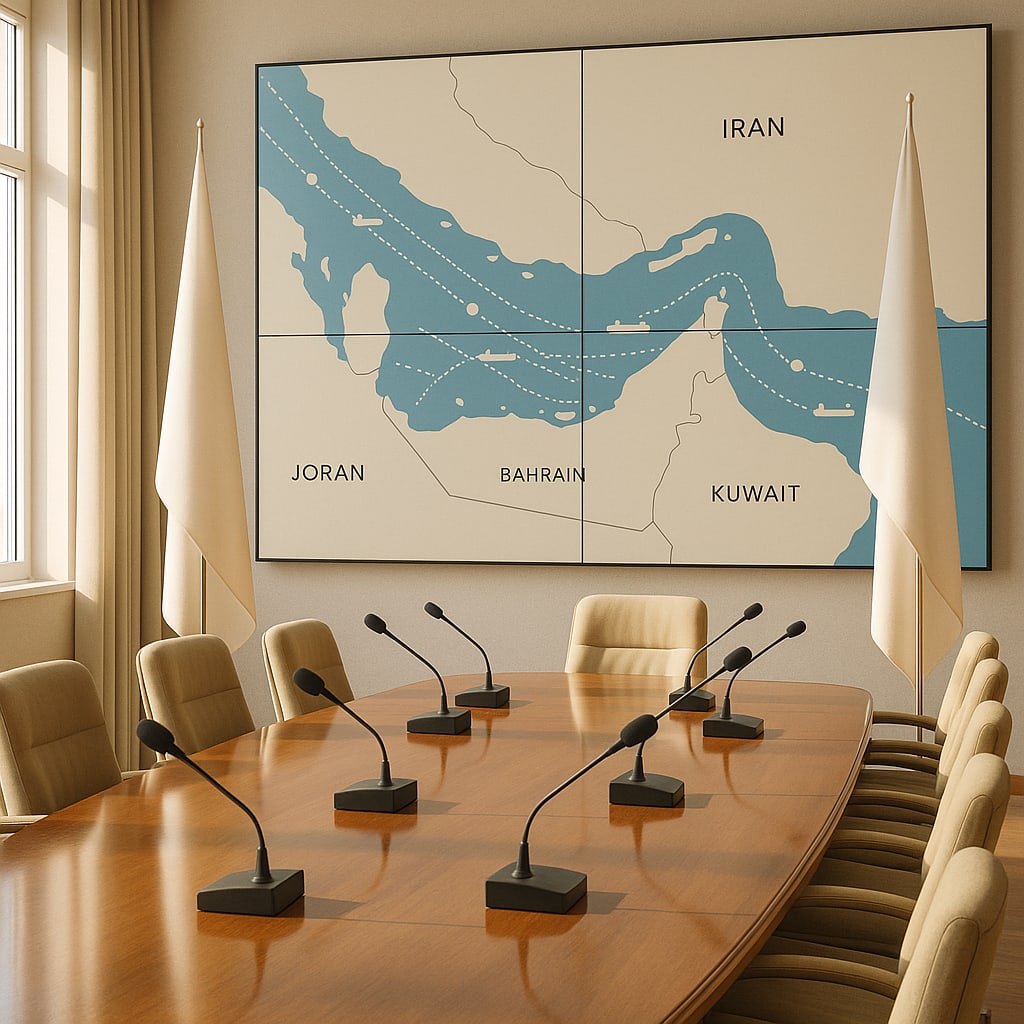
Following earlier US strikes on Iran’s Qeshm Island described as “defensive” against an “immediate” drone threat (RT, 6 Jun), a US Army Apache went down near the Strait of Hormuz on 9 June. Trump said Iran shot down a “highly sophisticated” helicopter, with the crew rescued (Middle East Eye; RT; Al Jazeera; South China Morning Post). US Central Command then conducted “self‑defense strikes” against Iran (Middle East Eye, 10 Jun). In response, the IRGC launched missile attacks on US or US‑linked military sites in Bahrain, Jordan, and Kuwait (TASS, 10 Jun; RT, 10 Jun). US officials vowed additional “very hard” strikes within hours (TASS, 10 Jun; Fox News; Deutsche Welle; Le Monde), while the Treasury announced new Iran sanctions (South China Morning Post, 10 Jun). Trump alternately claimed Iran’s military was “completely defeated” (TASS, 10 Jun; Al Jazeera, 10 Jun) and threatened to target civilian infrastructure and seize oil facilities (Al Jazeera, 10 Jun; Deutsche Welle, 11 Jun; The Hindu, 11 Jun).
Why It Matters
The exchanges strain an already fragile ceasefire (Middle East Eye, 11 Jun) and raise acute energy‑security risks. Trump himself warned that wide‑scale US strikes could trigger a months‑long closure of the Strait of Hormuz (TASS, 9 Jun), and financial coverage noted oil‑market sensitivity to renewed strikes (TASS, 11 Jun). The US pairing of kinetic “self‑defense” actions with expanded sanctions (South China Morning Post, 10 Jun) signals a coercive‑bargaining posture that directly implicates host nations for US basing—Bahrain, Jordan, and Kuwait—now within the IRGC’s declared strike envelope (TASS; RT, 10 Jun). Proposals to rebuild Iran in exchange for oil or to “take total control” of its oil production (TASS, 9 Jun; Deutsche Welle, 11 Jun) test norms of sovereignty and resource ownership. For governments and multilateral bodies, the mix of ongoing talks and escalatory military signaling complicates crisis management, maritime security planning, and any prospective diplomatic off‑ramp.
Diverging Narratives
US officials say their strikes were “self‑defense” responses (Middle East Eye, 10 Jun), while Tehran presents its missile salvos as retaliation and deterrence, with a pledge that no attack or threat will go unanswered (Middle East Eye, 9–10 Jun; TASS, 10 Jun). The Apache incident remains contested: Trump asserts a shoot‑down (Middle East Eye; Al Jazeera; Times of Israel), but other reporting described a crash with rescued crew (RT; South China Morning Post). On strategic effects, Trump’s claim that Iran’s military is “completely defeated” and that the regional “bully is dead” (TASS, 10 Jun; RT, 10 Jun) stands against evidence of active IRGC missile operations against US‑linked sites (TASS; RT, 10 Jun). Motives for escalation are also framed differently: US sources accuse Iran of prolonging talks and warn it will “pay the price” (BBC; Fox News; Le Monde), while RT highlights a former CIA analyst alleging US‑Israeli efforts to “sabotage” negotiations (RT, 10 Jun). Finally, targeting policy is ambiguous—Trump has both threatened civilian infrastructure (Al Jazeera, 10 Jun) and signaled reluctance to hit it due to prospective reconstruction burdens (The Hindu, 11 Jun).
What Happens Next
- US strike decision and target set: Officials promised more “very hard” attacks “tonight” and “in the coming hours” (Fox News; Deutsche Welle; TASS, 10 Jun). Indicators: CENTCOM operational statements; whether strikes remain narrowly “self‑defense” (Middle East Eye, 10 Jun) or expand to infrastructure (Al Jazeera, 10 Jun; The Hindu, 11 Jun).
- Iranian retaliation posture: The IRGC has demonstrated willingness to hit US‑linked bases in Bahrain, Jordan, and Kuwait (TASS; RT, 10 Jun). Indicators: further missile launches; warnings to regional hosts; Tehran’s view that the ceasefire is “meaningless” (Deutsche Welle, 11 Jun).
- Energy and shipping risk: Trump warned broad strikes could close Hormuz for months (TASS, 9 Jun). Indicators: maritime advisories, tanker routing changes, and oil‑price reactions tied to strike announcements (TASS, 11 Jun).
- Negotiations and pressure track: Vice President Vance floated a deal within weeks to months (The Guardian, 9–10 Jun), while Washington increased sanctions (South China Morning Post, 10 Jun). Indicators: shifts in public timelines from US principals; additional Treasury designations; any regional mediation signals or Israeli military posturing (Times of Israel; Middle East Eye, 10 Jun).