
Three Lebanese Journalists Killed in Israeli Airstrike
Three Lebanese journalists were killed in an Israeli airstrike on Saturday in southern Lebanon as they were covering the ongoing conflict. The deceased journalists have been identified as Ali Shoeib, a correspondent for Hezbollah-affiliated Al Manar TV, and Fatima Fattouni, a correspondent for Al Mayadeen TV, along with her brother and cameraman Mohammad Fattouni.
The Airstrike and its Aftermath
The Israeli military confirmed the killing of Ali Shoeib, claiming without evidence that he was a member of Hezbollah’s elite Radwan Force. This claim has been refuted by Lebanon's president, Joseph Aoun, who insisted that all three victims were journalists and strongly condemned the blatant crime
. The Israeli airstrike reportedly targeted their car, killing all three journalists instantly.
The Saturday bombardment left at least 18 people dead, including the three journalists and six medics, and wounded 29 across several towns and areas in Lebanon. The Israeli military has been accused of targeting media professionals in an attempt to silence reporting on the conflict.
Reactions and Condemnations
The killing of the journalists has sparked international outcry. Iran's foreign minister, Abbas Araghchi, decried the attack as a targeted assassination
and a clear violation
of international law, stating that it was an attempt by Israel to terrorise the truth
.
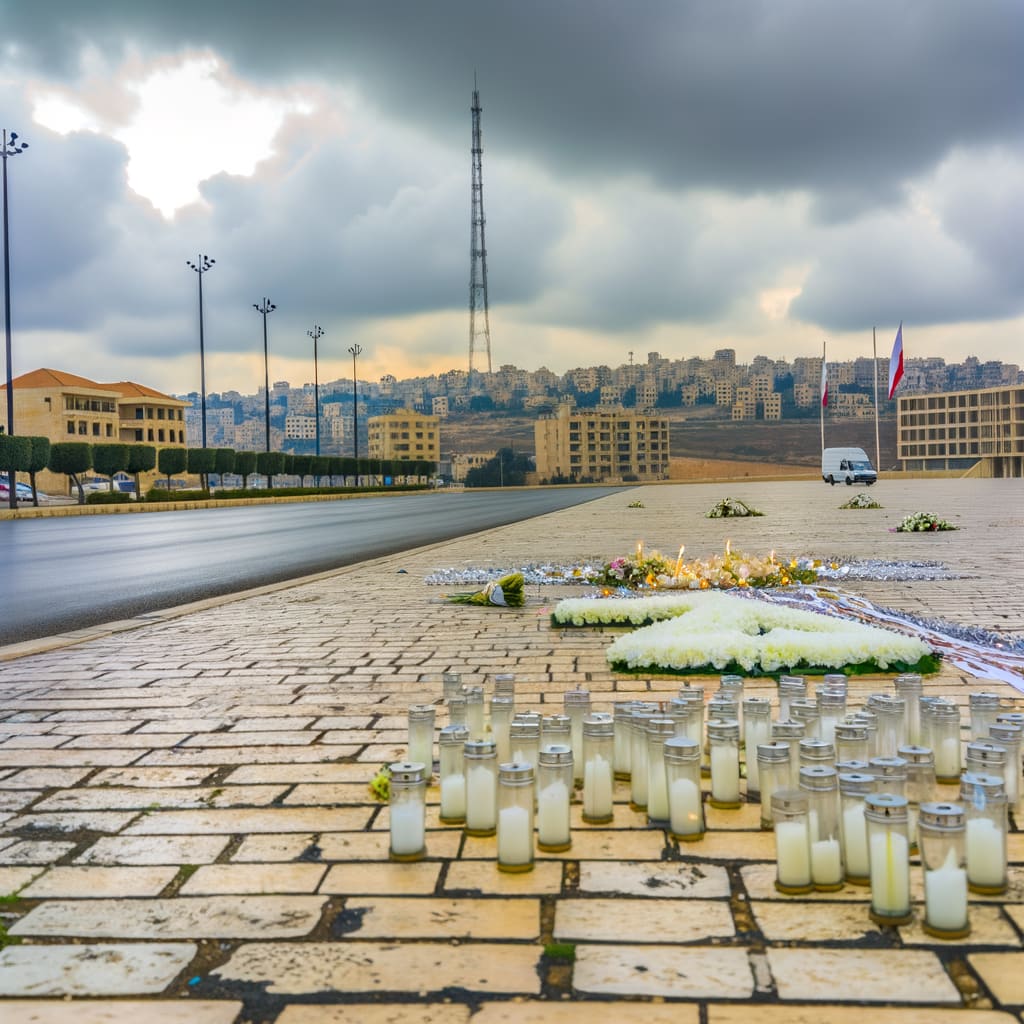
In Beirut, hundreds of mourners gathered in the pouring rain for the funerals of the three journalists. Their colleagues, friends, and relatives bid farewell to them at the Plaza de Los Mártires, labeling the attack as a war crime
.
The Lebanese government has also condemned the killings, with President Aoun calling it a blatant war crime
. Al Araby TV criticized the attack on its Tehran office located in a civilian commercial building, labelling it as a violation of international law.
Ongoing Tensions
The deaths of the journalists come amid escalating tensions in the region. The Israeli military's actions have come under scrutiny, with reports of three UN observers killed within 24 hours in south Lebanon. The Israeli Defense Forces (IDF) stated it was investigating whether its fire was responsible for these deaths.
The ongoing conflict has resulted in significant loss of life and raised questions about the safety and protection of journalists in conflict zones. As the international community continues to react to these events, the current situation remains fraught with tension and uncertainty.