
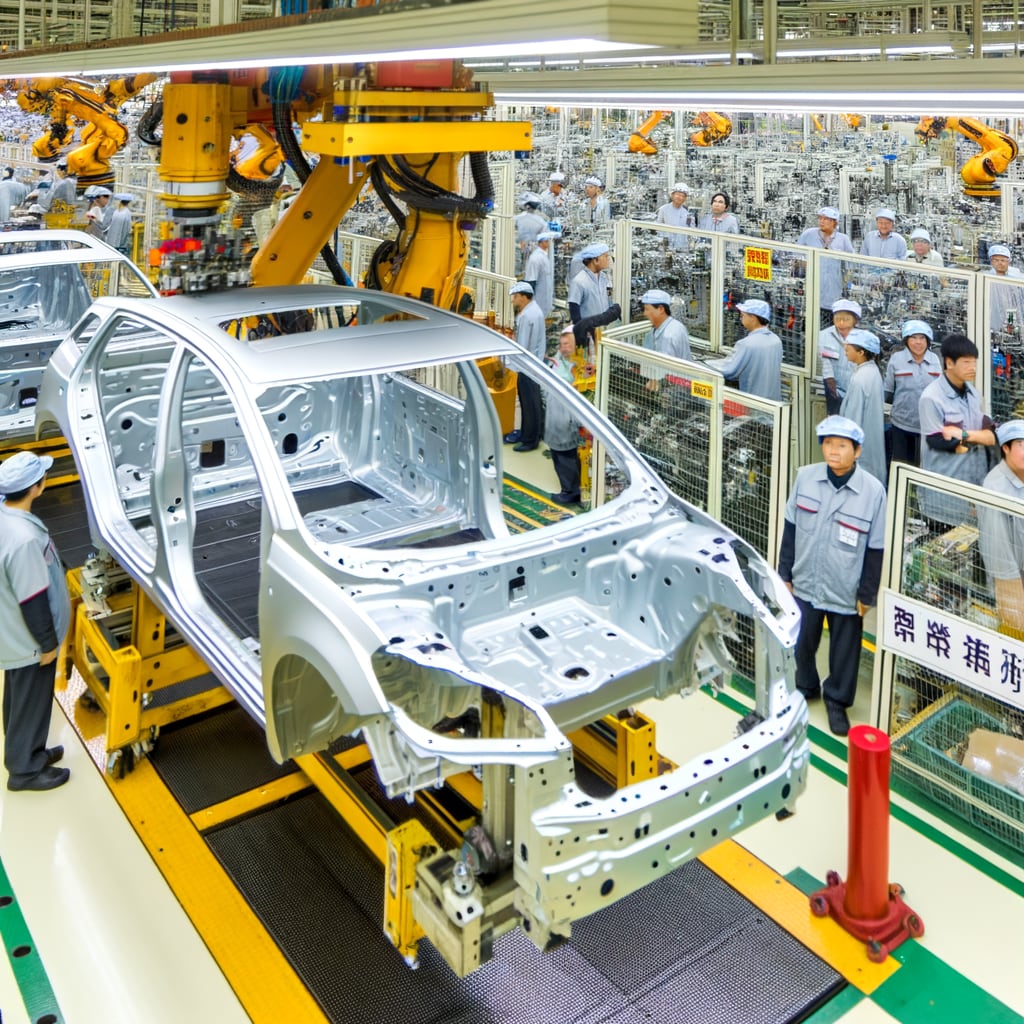
China's Electric Vehicle Market Faces Challenges Amid Global Volatility
Despite a recent slowdown in China's electric vehicle (EV) market, there are signs of potential recovery, mixed with a cautious outlook for future performance. As the world's largest manufacturer of EVs, BYD's recent profit drop indicates further challenges ahead, even as government initiatives aim to invigorate the industry.
The State of the EV Market
BYD's CEO, Wang Chuanfu, warned of future difficulties in the Chinese electric car industry, after the company presented its third consecutive quarter of disappointing results, according to Brazilian newspaper Folha de S.Paulo. However, the South China Morning Post (SCMP) reported a strong rebound in Chinese EV sales in March, due to local government subsidies and aggressive financing incentives, which attracted first-time buyers.
Global Factors at Play
The ongoing US-Israel war against Iran has led to surging oil prices which could potentially accelerate global adoption of EVs, thereby widening China's EV lead over global rivals, as reported by SCMP. On the other hand, the war has also created global supply volatility. China's Premier Li Qiang has responded by calling for faster development of a new-type power system
to accelerate the green transition and expand the use of artificial intelligence (AI) in the sector.
A Competitive Market
Despite these challenges, China's competitive advantage in the EV market remains strong. A study conducted by consulting firm Zag Work found that Chinese assemblers benefit from lower costs in areas of research and development, sales, and administration, rather than relying on subsidies. This advantage has allowed Chinese brands to enter the top 10 in car sales for the first time, as reported by Argentine newspaper Clarin.
The Road Ahead
The upcoming Auto China show in Beijing is expected to stimulate fresh demand for EVs, with dozens of new models set to debut. However, according to Le Monde, rapid progress in renewable energies, driven by a significant drop in costs, has led to increased use of solar energy and EVs in emerging countries, posing potential competition for China.
Conclusion
The future of China's EV market remains uncertain, with global volatile situations and increased competition posing significant challenges. However, the government's initiatives and the industry's competitive advantage provide some hope for recovery. As the world continues to grapple with climate change and the need for renewable energy, the EV market's significance only grows, making its future performance critical for global economic and environmental health.