
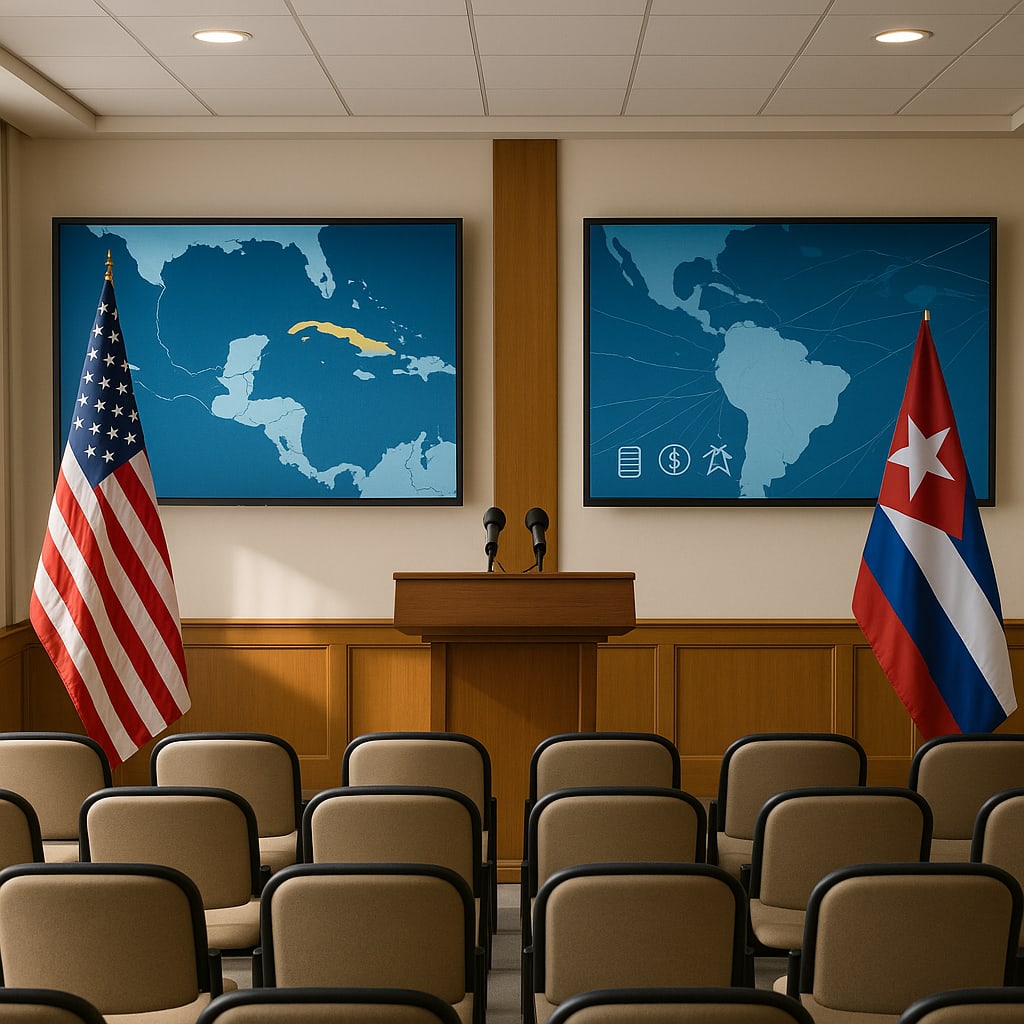
Hegseth’s Guantánamo visit pairs military warning to Havana with intensified sanctions — as UN flags humanitarian harm
Narrative Snapshot
- Convergence on the facts, divergence on framing: US and international outlets broadly agree that Defense Secretary Pete Hegseth used a Guantánamo stop to warn Cuba against acquiring weapons, amid a broader pressure campaign. US-focused reporting highlights deterrence and policy mechanics; several international outlets center the “oil blockade” and civilian costs (New York Times; Deutsche Welle; Al Jazeera; Guardian; Corriere della Sera; Folha de S.Paulo).
- Humanitarian/legal lens: The UN human rights chief’s critique of US measures is foregrounded by the Japan Times and amplified by RT with more forceful language, while the White House defense of sanctions is noted without elaboration by Japan Times (and contrasted in tone by RT).
- External pushback and linkage politics: Beijing’s accusation that Washington “invented” terrorism charges to justify the blockade (South China Morning Post) and Fox News’ coverage of new US designations linked to Cuba-focused networks illustrate how the Cuba file is embedded in wider geopolitical and domestic enforcement narratives.
- Risk and timing: The Guardian ties Cuban fears of escalation to the World Cup’s proximity (matches in Miami), adding a near-term risk window absent from straight policy reporting.
What Happened
US Defense Secretary Pete Hegseth visited troops at Guantánamo Bay on June 10 and warned Cuba against acquiring weapons that could threaten US territory (New York Times; Deutsche Welle; Al Jazeera; Folha de S.Paulo). The visit comes amid a US “oil blockade,” as described by the Guardian and Corriere della Sera, and a ramp-up of sanctions and political pressure (New York Times; Guardian; Corriere della Sera). Days earlier, the US sanctioned Cuba’s president, with President Donald Trump stating the US wants Cuba “to be a nicely run country” (The Hindu). Secretary of State Marco Rubio announced sanctions on Cuban groups and warned US organizations against dealings with designated entities (Fox News). Beijing accused Washington of using “invented” terrorism allegations to justify the blockade (South China Morning Post). The UN high commissioner for human rights warned the measures are harming access to essential goods, while the White House defended the policy (Japan Times). The Guardian reports Cuban fears of disruption around World Cup fixtures in nearby Miami.
Why It Matters
This episode consolidates a hard-line US approach that mixes coercive economic tools with overt military signaling from Guantánamo, testing long-standing debates over extraterritorial sanctions, humanitarian impact, and the legality and legitimacy of sustained energy restrictions (Guardian; Corriere della Sera; Japan Times). UN human rights scrutiny raises the cost of maintaining broad measures that affect essential supplies, intensifying pressure for humanitarian carve-outs or policy recalibration (Japan Times). Simultaneously, new US designations and enforcement guidance expand compliance exposure for domestic and transnational networks linked to Cuba, signaling a more aggressive use of financial statecraft (Fox News; The Hindu). China’s public challenge underscores that US-Cuba policy is now a proxy arena for larger disputes over norm-setting and evidentiary standards in terrorism designations (South China Morning Post). The World Cup timing introduces reputational and security sensitivities if tensions spill over during matches hosted in Miami (The Guardian).
Diverging Narratives
US officials frame the moment as deterrence against a concrete security risk—Cuban acquisition of weapons that could threaten US soil—paired with sanctions intended to drive political and economic change (New York Times; Deutsche Welle; Al Jazeera). Reporting on sanctions from the White House side is largely defensive, asserting policy necessity in the face of criticism (Japan Times). By contrast, several international outlets emphasize the severity of the “oil blockade,” foregrounding social and economic distress inside Cuba (Guardian; Corriere della Sera). The UN human rights chief’s warning about harm to access to essentials is reported in measured terms by Japan Times, while RT amplifies the charge to “killing children,” attributing it to Volker Türk (Japan Times; RT). China’s state-linked critique goes further, alleging Washington “invented” terrorism allegations to justify the blockade (South China Morning Post). Notably, none of the sources specify what weapons systems are at issue, leaving the scope of the purported threat undefined (Deutsche Welle; Al Jazeera; New York Times). The Guardian also situates risk in the World Cup context, suggesting potential for crisis optics if escalation occurs during Miami-hosted matches.
What Happens Next
- Sanctions trajectory: The pattern of new designations—Cuba’s president (The Hindu) and entities linked to Cuba-focused networks (Fox News)—suggests further listings are plausible. Analysts should watch Treasury/State notices and any adjustments or humanitarian carve-outs in response to the UN human rights critique (Japan Times).
- Military signaling and deterrence: Hegseth’s warning sets a red line on Cuban weapons acquisition without publicly naming systems (Deutsche Welle; Al Jazeera). Indicators to watch include additional senior visits to Guantánamo, exercises or publicized readiness postures, and any Cuban or third-country announcements on arms procurement.
- Diplomatic contestation: Track whether China escalates its push against US justifications in multilateral fora or through bilateral statements (South China Morning Post), and whether the UN human rights office issues follow-up communications (Japan Times).
- Event-driven risk window: Given the Guardian’s reporting on concerns around World Cup fixtures in Miami, monitor any shifts in rhetoric or posture by either side that link actions to tournament timing, as well as Cuban domestic preparation measures.