
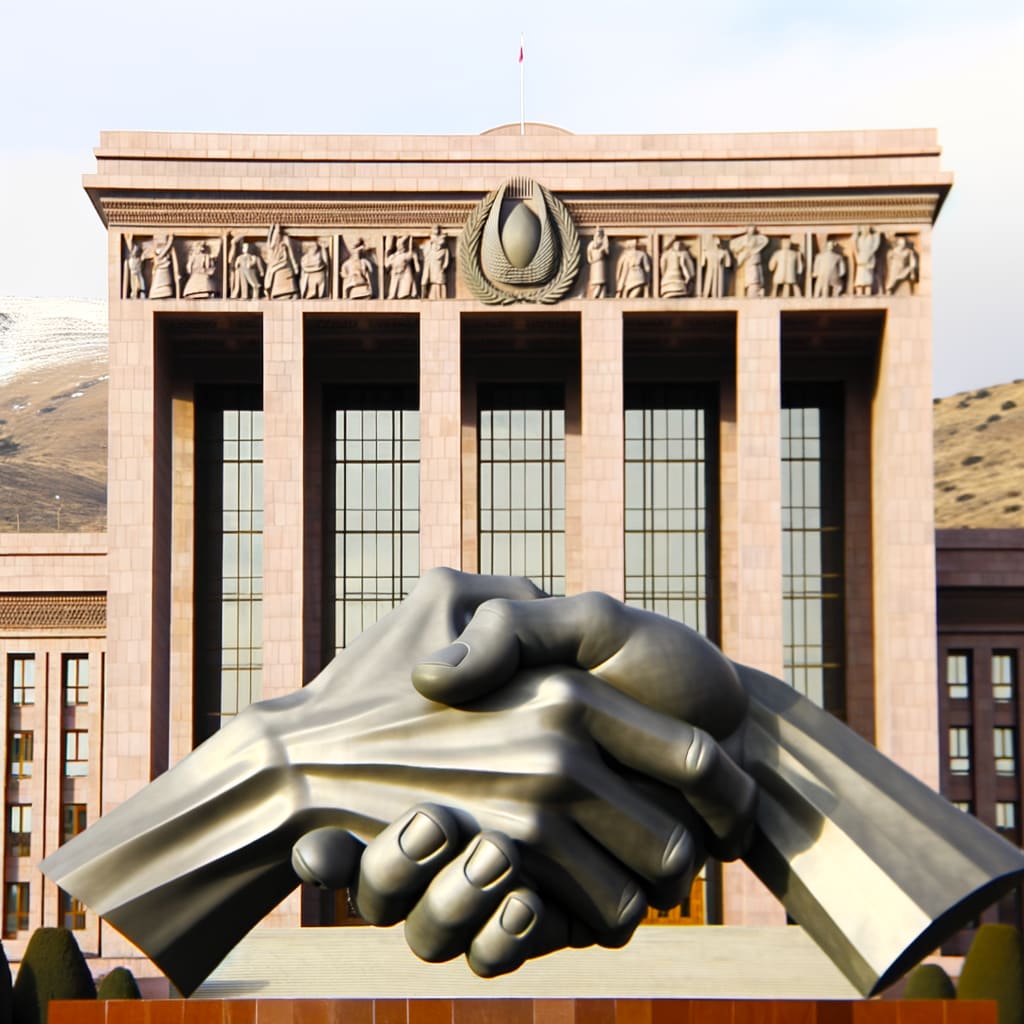
Israel's Foreign Minister Visits Somaliland Amid Controversy
In a historic move, Israeli Foreign Minister Gideon Saar visited Somaliland, marking the first official visit since Israel recognized the breakaway region as an independent state. The visit has sparked international controversy, with reactions ranging from condemnation to support, while Somaliland denied allegations of accepting specific conditions in exchange for Israel's recognition.
Background and Context
Somaliland, a former British protectorate, has sought international recognition as an independent state for decades. The region declared independence from Somalia in 1991, but until now, no country had formally recognized its sovereignty. On 26 December 2025, Prime Minister Netanyahu of Israel announced Israel's official recognition of Somaliland, making it the first country to do so.
Key Developments
Israeli Foreign Minister Gideon Saar's visit to Hargeisa, the capital of Somaliland, comes on the heels of Israel's recognition. Saar met with Somaliland’s president, Abdirahman Mohamed Abdullahi, and both are scheduled to hold a joint news conference at the presidential palace in Hargeisa.
However, the move has sparked a storm of controversy internationally. Somalia condemned Israel’s visit and recognition of Somaliland, with its President Hassan Sheikh Mohamud alleging that the recognition was not merely a diplomatic gesture but a cover for specific, high-stakes Israeli strategic objectives.
Controversial Allegations and Denials
President Mohamud claimed that Somaliland had accepted certain conditions in exchange for Israel's recognition, including the resettlement of Palestinians to its territory and the establishment of Israeli military bases. However, Somaliland's Ministry of Foreign Affairs categorically denied these allegations, stating that their engagement with Israel is purely diplomatic and conducted in full respect of international law.
Reactions and Implications
The African Union (AU) has voiced its condemnation of Israel's recognition of Somaliland, with the AU Peace and Security Council expressing concern over the preservation of the sovereignty, territorial integrity, unity, and stability of the Federal Republic of Somalia. It called for an immediate revocation of Somaliland's recognition by Israel.
Meanwhile, Iran also condemned Israel's move, calling it a dangerous heresy and a serious blow to the foundations of international law and norms.
Conclusion
The situation remains tense as reactions continue to pour in from around the world. While Israel's recognition of Somaliland is seen by some as a bold move in support of a long-unrecognized region's self-determination, others view it as a destabilizing factor that undermines international law and threatens regional stability. As the international community grapples with these developments, the ongoing fallout and potential implications will continue to unfold.