
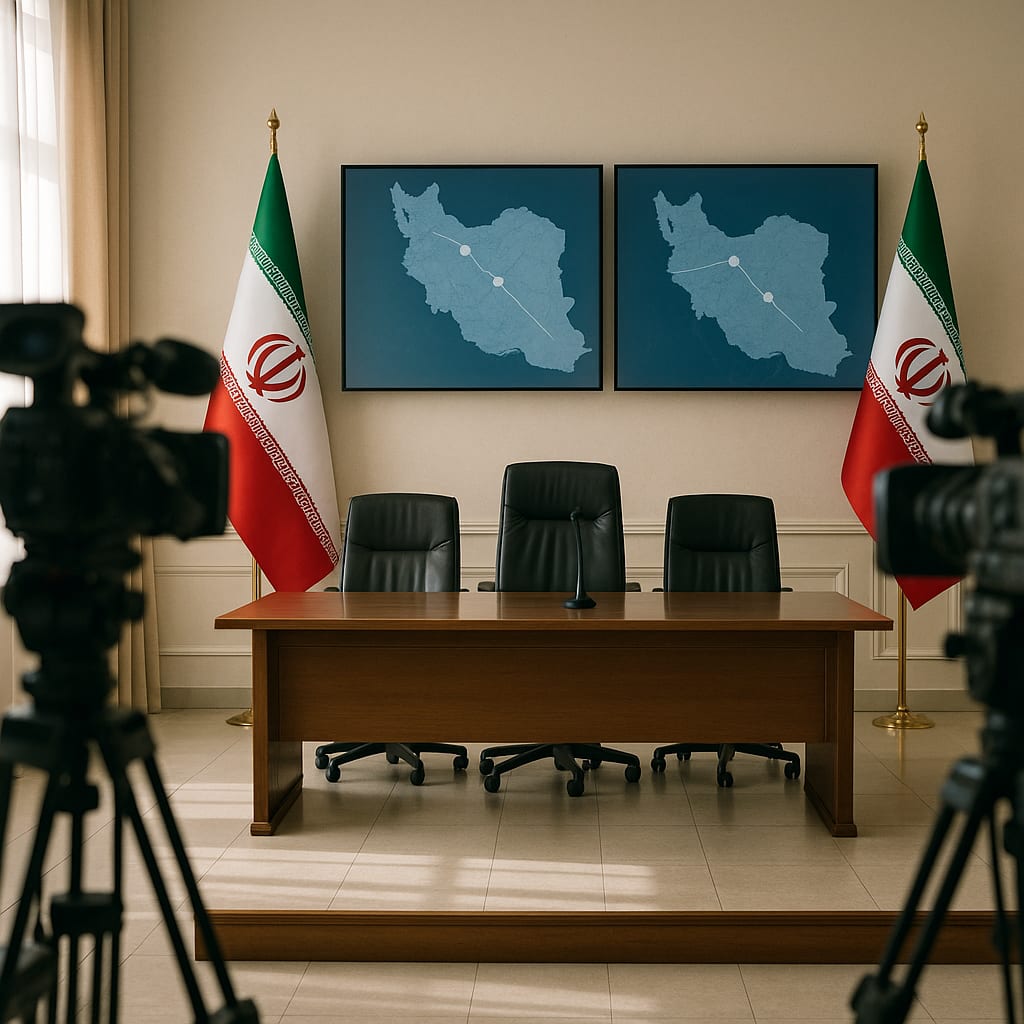
Iran schedules July 4–9 funeral for late Supreme Leader Ali Khamenei, with burial in Mashhad on July 9
Narrative Snapshot
- Broad alignment on logistics: multiple outlets report a six-day sequence starting in Tehran on July 4 and ending with burial at Mashhad’s Imam Reza Shrine on July 9, with processions in Tehran, Qom, and Mashhad (The Hindu; IRNA, 13 and 14 Jun; Al Jazeera; Middle East Eye, 13 and 14 Jun; Folha; SCMP).
- Attribution and framing differ: several international outlets state Khamenei was killed by Israeli and U.S. strikes in late February (The Hindu; Middle East Eye; Folha; SCMP), while Iranian state media uses “martyred Leader” language and emphasizes organization and mass participation (IRNA, 13 and 14 Jun).
- Interpretive overlays vary: Italian coverage reads the July 4 start date as a signal to the United States (Corriere della Sera) and frames the scale as projecting a claimed wartime “victory” narrative (La Repubblica). Fox News centers on security risk, calling the events a “target-rich” gamble amid talk of a possible deal with the U.S. (Fox News; SCMP).
- Procedural detail is uneven: Press TV–sourced schedules relay specific venues and dates for each city (Middle East Eye, 14 Jun), while some reports focus primarily on the headline timeline.
What Happened
Iran announced a multi-day set of farewell, funeral, and burial ceremonies for Ayatollah Ali Khamenei, to be held July 4–9. Farewell events are slated for July 4–5 at Imam Khomeini Mosalla in Tehran, followed by a Tehran funeral procession on July 6, additional ceremonies in Qom, and final burial on July 9 at the Imam Reza Shrine in Mashhad (Middle East Eye, 14 Jun; Al Jazeera). The timetable, conveyed by state outlets and a funeral committee, also references ceremonies for several family members (IRNA, 13 Jun). Authorities in Tehran said the capital is preparing to host a massive crowd (IRNA, 14 Jun). Multiple outlets report Khamenei was killed by Israeli and U.S. strikes in late February, and that an earlier burial date was postponed due to the war (The Hindu; Middle East Eye, 13 Jun; Folha; SCMP).
Why It Matters
The schedule intersects with wartime dynamics and reported mediation efforts. SCMP cites mediators saying a war-ending agreement is close, while Fox News frames the funeral’s scale as a high-stakes security test premised on de-escalation holding (SCMP; Fox News). Multi-city ceremonies concentrate political elites and mass participants, elevating risk management demands and offering a stage for narrative consolidation; IRNA’s “martyred Leader” framing and planning for large turnout underscore mobilization aims (IRNA, 13 and 14 Jun). Italian coverage reads the July 4 start as a deliberate signal to Washington (Corriere della Sera), situating the rites within U.S.–Iran signaling cycles. For policymakers, the proceedings will indicate Iran’s internal control, its appetite for public messaging during negotiations, and the effectiveness of deconfliction arrangements as large state ceremonies proceed amid an ongoing conflict.
Diverging Narratives
Outlets differ most on meaning and risk. Iranian state media foregrounds reverence and logistics—announcing the official schedule, referencing family ceremonies, and preparing for large crowds—without the external attribution emphasized elsewhere (IRNA, 13 and 14 Jun). International and regional coverage explicitly attributes Khamenei’s death to Israeli and U.S. strikes and ties the burial delay to the war (The Hindu; Middle East Eye, 13 Jun; Folha; SCMP). Interpretations diverge on symbolism: Corriere della Sera characterizes the July 4 start as a signal to the U.S., while La Repubblica anticipates an “imposing” ceremony calibrated to project a claimed wartime victory, contrasting with more neutral logistics-focused reporting (Corriere della Sera; La Repubblica). On security and diplomacy, Fox News casts the funeral as a “target-rich” gamble set against a possible peace track; SCMP notes mediator claims of a near agreement, while other outlets stay on procedural facts (Fox News; SCMP).
What Happens Next
- Security posture for mass events: Authorities’ crowd-control measures and route/venue adjustments (IRNA, 14 Jun) will signal confidence levels; heightened restrictions or last-minute changes would reflect evolving risk calculus in line with Fox News’ security concerns.
- Diplomatic track during the rites: SCMP’s reference to mediators nearing an agreement creates a watch point; announcements or silence before/during July 4–9 will shape ceremony messaging and security assumptions.
- Narrative mobilization and turnout: IRNA’s expectation of a massive crowd and Italian outlets’ emphasis on scale suggest attendance will be leveraged symbolically; monitor state media framing, participation across Tehran, Qom, and Mashhad, and whether officials invoke the July 4 timing (IRNA, 14 Jun; Corriere della Sera; Middle East Eye, 14 Jun).
- Schedule resilience: Given prior postponement due to war (Middle East Eye, 13 Jun), any rescheduling, route compression, or city-specific adjustments would be a key indicator of external pressure or internal security reassessment.