
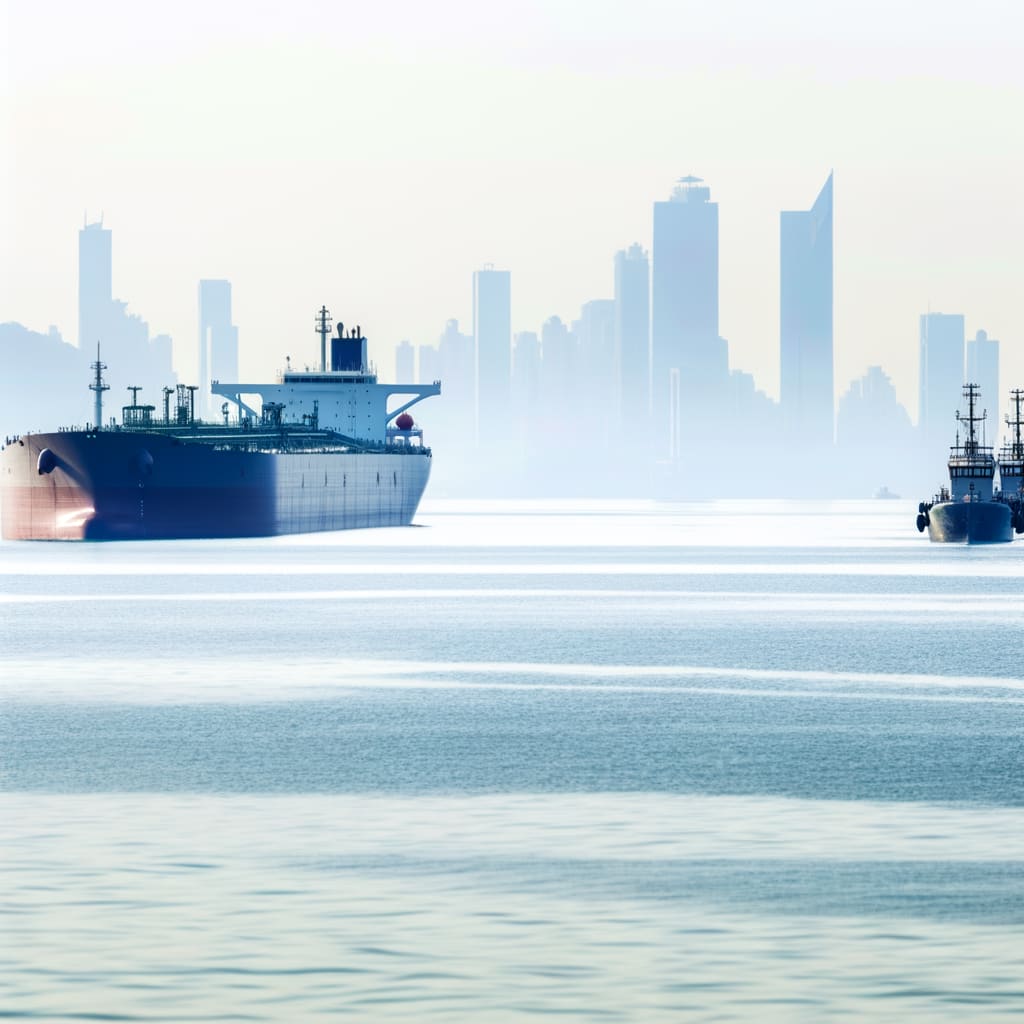
US to Provide Armed Escorts and Insurance for Tankers in Strait of Hormuz Amid Rising Tensions with Iran
The Trump administration is reportedly considering providing armed escorts and financial guarantees for oil and gas tankers traversing the volatile Strait of Hormuz. This comes in response to escalating tensions with Iran, which claims to have seized control of the strategic waterway, threatening to set ablaze
any vessels that attempt to pass through.
Background and Context
The Strait of Hormuz, a vital global conduit for oil and gas shipments, has become a flashpoint in the ongoing US-Israeli conflict with Iran. In the wake of this crisis, the world's largest insurers have canceled war-risk coverage for ships in the Persian Gulf, prompting the US government to explore options to back the necessary insurance for tankers to continue their journey through the strait.
On his Truth Social platform, President Trump stated, If necessary, the United States Navy will begin escorting tankers through the Strait of Hormuz, as soon as possible.
He further declared that the US Development Finance Corporation has been assigned to provide political risk insurance and financial guarantees for maritime trade transiting through the Gulf.
Iran's Assertion of Control and International Response
Iran's Revolutionary Guard Corps has claimed full control over the Strait of Hormuz. Mohammad Akbarzadeh, an official in the naval arm of the Islamic Revolutionary Guard Corps, said in a statement carried by Fars News Agency, Currently, the Strait of Hormuz is under the complete control of the Islamic Republic's Navy.
He warned that any vessel seeking to pass through it risked missile or drone attacks.
This bold assertion has heightened the threat to international maritime trade and energy supplies, with two tankers managing to pass through the strait on Monday, down from five on March 1. As a result, sea shipping insurance could grow by 100% due to the Strait of Hormuz blockade, according to an NBC report, further disrupting the global oil market.
Implications and Reactions
The escalation in the Strait of Hormuz has had significant implications for the global economy. Crude oil prices have surged roughly 15 percent this week due to the conflict, while European natural gas prices are also soaring. The price shocks caused by the suspension of commercial traffic through the strait could kill us all,
warned Serbian President Aleksandar Vucic.
Reacting to the situation, Japan has indicated it could consider exercising its right to collective self-defense in the event of a blockade of the Strait of Hormuz with missiles from Iran or elsewhere.
Conclusion
The crisis in the Strait of Hormuz reflects the broader geopolitical conflict unfolding in the Middle East. As Iran asserts control over the strategic waterway and threatens to disrupt the global oil supply, the US is poised to provide military escorts and financial guarantees for vessels in a bid to maintain the free passage of tankers. This rapidly evolving situation continues to impact global energy markets and international maritime trade.