
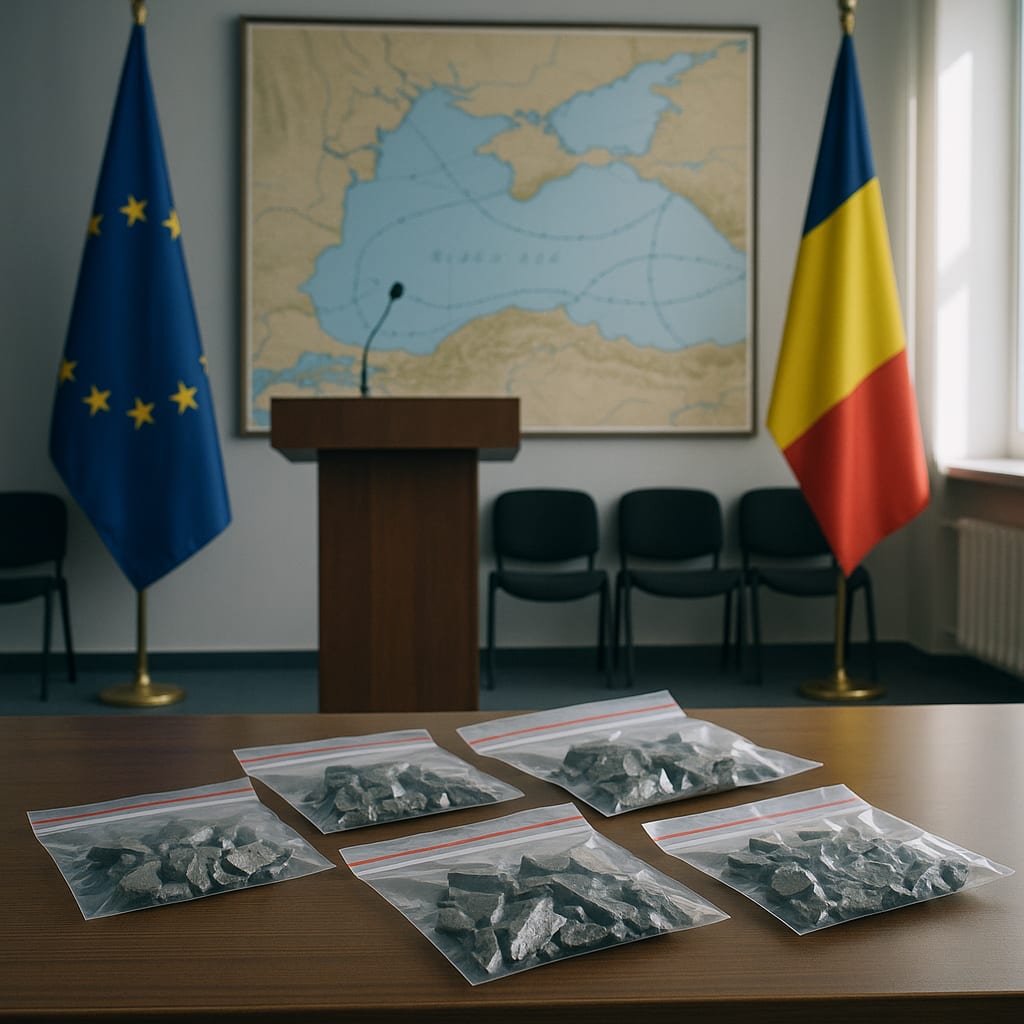
Naval drone explodes at Romania’s Constanța port; Ukraine acknowledges ownership as Romania investigates
Narrative Snapshot
- Broad agreement: the blast occurred at Constanța’s Black Sea port near an oil terminal, with no injuries reported; Romanian authorities opened an investigation and began examining debris (DW; TASS; Al Jazeera).
- Key divergence tightened over time: early reports labeled the device “presumably” or “suspected” Ukrainian (TASS; RT), while Ukraine later acknowledged it was theirs and blamed Russian electronic warfare for a malfunction (Le Monde).
- Emphases vary: Ukrainian admission and jamming dominate French coverage (Le Monde); Russian outlets highlight the number and type of drones present (TASS; RT); European outlets foreground spillover risk to EU/NATO territory (Al Jazeera; DW). Italian and Romanian footage underscores the immediacy and hazard within the port (Corriere della Sera).
- Stakes flagged: energy and shipping infrastructure exposure at a key Black Sea hub, and the potential normalization of drone incidents on NATO soil (Al Jazeera; DW; Folha de S.Paulo).
What Happened
On June 5, a naval drone exploded in the Romanian Black Sea port of Constanța near an oil terminal. Romania’s Defense Ministry announced the incident, and prosecutors in Constanța opened an investigation while authorities examined debris from the device (Kyiv Independent; TASS). No casualties were reported (DW; TASS). Footage circulated as the explosion occurred during a public TV live report from the scene (Corriere della Sera).
Initial descriptions called the craft a model used in the Ukraine war or resembling Ukraine’s MAGURA V5 (Kyiv Independent; RT). The Russian Embassy in Bucharest claimed it was Ukrainian (DW). Later, Ukraine’s navy acknowledged the drone was theirs and said it detonated after being disrupted by Russian jamming (Le Monde). A local official said it had been part of a group of five drones, with searches for others under way by helicopter (TASS).
Why It Matters
The explosion at a major EU and NATO port touches critical concerns about conflict spillover onto allied territory and the safety of maritime infrastructure. Constanța is a pivotal node for Black Sea shipping and regional energy logistics; the blast occurred near an oil terminal (DW; RT). The European Commission president warned the incident was a “direct consequence” of the Russia-Ukraine war, amplifying fears of unintended escalation and cross-border hazards (Al Jazeera).
Outlets noted this was the second such incident in a week, suggesting growing operational risks along NATO’s southeastern flank (Folha de S.Paulo). The event also lands amid intensifying drone activity: Le Monde’s coverage days earlier chronicled record Russian drone use in May and Russia’s move to suspend kerosene exports after strikes on refineries—an environment in which unmanned systems shape strategy and civilian exposure alike (Le Monde, June 1 live reports).
Diverging Narratives
Attribution and causation evolved through the day. Early wire-style and Russian state reports framed the craft as “presumably” or “suspected” Ukrainian (TASS; RT). Ukraine later accepted ownership, asserting the detonation followed Russian electronic-warfare interference—a key contention about cause and intent that others did not independently verify (Le Monde). Romanian authorities have not publicly detailed the chain of events beyond confirming an explosion and an active probe with debris analysis (TASS; Kyiv Independent).
Threat portrayal varies. TASS cited a prefect saying the drone was part of a five-boat group with aerial searches for others ongoing, and RT emphasized the vessel’s likeness to the MAGURA V5 and additional drones reported in the area (TASS; RT). European and German coverage concentrated on the location—an oil terminal at a NATO port—and the absence of injuries, while relaying the Russian Embassy’s attribution (DW). Al Jazeera centered on Brussels’ reaction and spillover risk (Al Jazeera). Corriere della Sera highlighted the live-broadcast detonation, underscoring unpredictability at close quarters (Corriere della Sera).
What Happens Next
Romanian authorities are conducting a criminal investigation through the Constanța prosecutor’s office and examining the drone’s fragments to establish origin, route, and cause (TASS). Helicopter searches were launched for additional devices reportedly detected in the area (TASS). Officials have publicly acknowledged unanswered questions, including how the drone entered the port (TASS).
Politically, the European Commission’s statement signals continued EU-level attention to security externalities from the war (Al Jazeera). Media in Ukraine and Western Europe will likely track official findings alongside any further Romanian briefings or maritime safety advisories. Coverage also indicates monitoring for additional incidents, after reports that this was the second such case within a week (Folha de S.Paulo).