
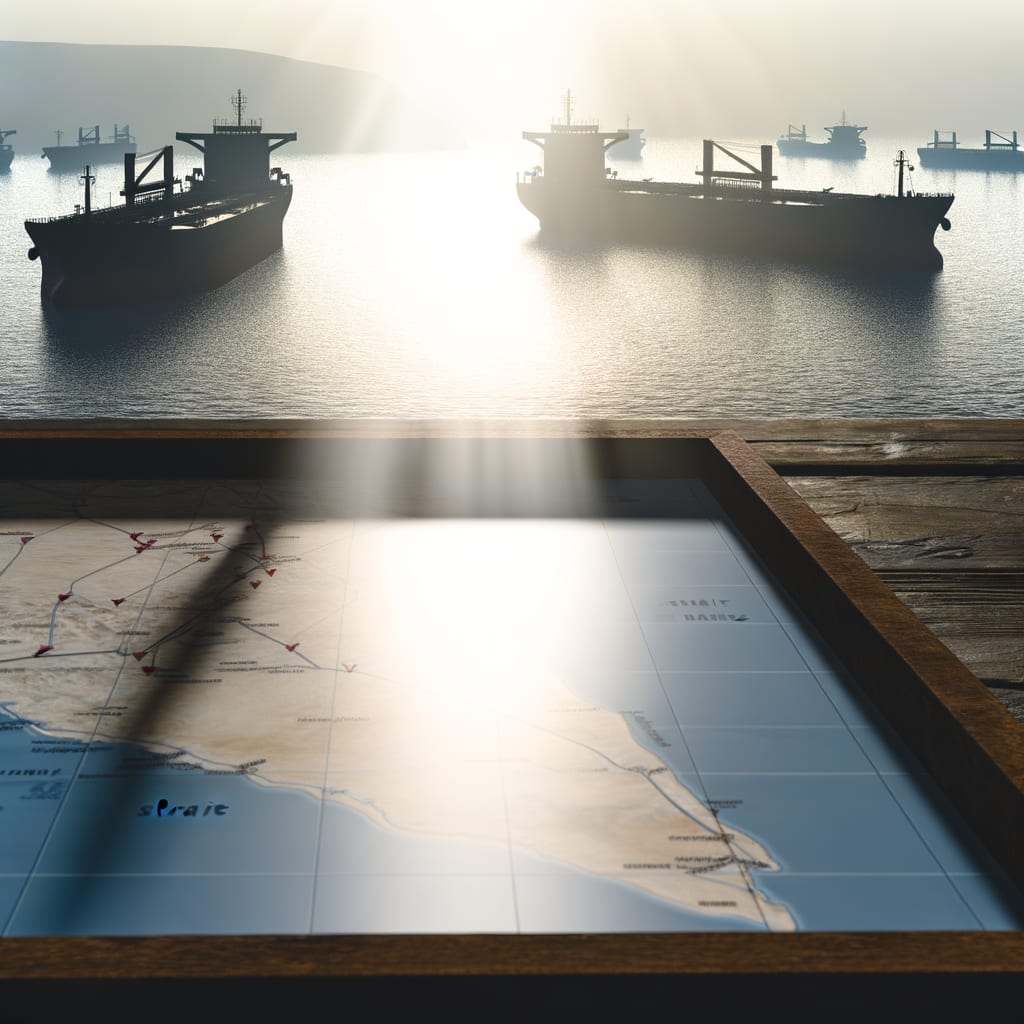
Iran Tightens Control Over Strait of Hormuz Amid Rising Tensions
Tensions escalate as Iran asserts control over the crucial Strait of Hormuz, a key passage for global oil trade. Since the start of the conflict in the Middle East, Iran has selectively permitted transit through the strait, causing significant disruption to international shipping.
Backdrop of the Conflict
Iran's Revolutionary Guards have claimed responsibility for recent attacks on several vessels, including a Thai-registered cargo ship carrying 20 crew members who have recently returned home. Iran has asserted its sovereignty over the strait, leading to a significant drop in maritime traffic. According to maritime analytics firm Windward, there was no commercial traffic through the Strait of Hormuz on a recent Saturday, a first since the conflict began.
Despite this, Iran confirmed that vessels from some states were allowed to cross the strait with Tehran's permission. The country has also allowed a limited number of oil tankers to pass through the Strait of Hormuz, on condition that the oil cargo is traded in Chinese yuan.
US and Iran Locked in Power Struggle
As Iran tightens its grip on the Strait of Hormuz, the United States has responded with military action and political pressure. US President Donald Trump announced strikes against Iran's Kharg Island, targeting 'every military target'. Trump warned that Iran's oil infrastructure could be next if the country interferes with the free and safe passage of ships through the Strait of Hormuz.
In response, Iran vowed to continue fighting and keep the Strait of Hormuz closed. The country warned of retaliation against US-linked oil sites in the Middle East if its energy sector is attacked. Iran's Foreign Minister Abbas Araghchi also threatened to target facilities of American companies in the region.
International Response
Amid the escalating conflict, world leaders have called for restraint. The UN Security Council passed a resolution, sponsored by 135 countries, condemning Iran's actions in the Gulf and calling for an end to attacks. However, the resolution did not mention US or Israeli attacks on Iran, prompting strong criticism from Tehran’s ambassador.
President Trump has called on other countries to send ships to secure the Strait of Hormuz. However, his plea has been met with resistance, as NATO nations have shown reluctance to join the US-Israeli military campaign against Iran. French President Emmanuel Macron ruled out France's participation in operations to unblock the Strait of Hormuz, while other NATO members ignored Trump's call.
Current Situation
Tensions in the Strait of Hormuz remain high, and the situation is seen as unsustainable by experts. Iran's control over the strait has effectively reversed the situation with the US, allowing Iran to permit or deny passage to its advantage. However, the International Maritime Organisation (IMO) states that military escorts for tankers are not a long-term solution. Meanwhile, the conflict continues to impact global oil trade, causing a spike in oil prices and disrupting shipping routes.