
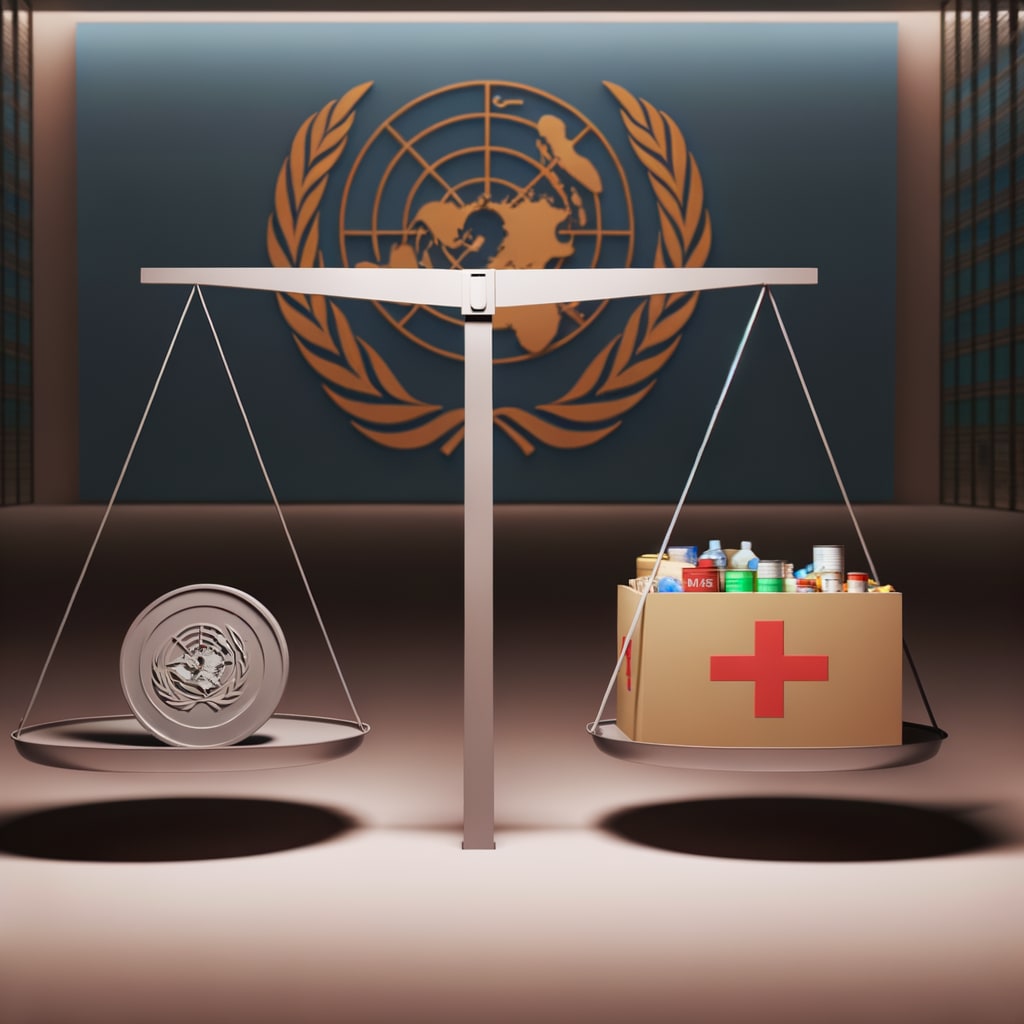
US Pledges $2 Billion in UN Aid Amid Major Foreign Aid Cuts
The United States, under the Trump administration, has pledged $2 billion for United Nations (UN) humanitarian aid for 2026 but has concurrently warned UN agencies to adapt, shrink or die
in the face of new financial realities. This announcement comes as part of a new model for the delivery of life-saving assistance following major foreign aid cuts by the Trump administration.
Context and Background
The $2 billion funding pledge marks a significant decrease in the U.S.'s usual contributions, as the traditional U.S. humanitarian funding for U.N.-backed programs has run as high as $17 billion annually. These cuts reflect the Trump administration's ongoing efforts to slash U.S. foreign assistance, urging UN agencies to adapt to the changing financial landscape.
New Model of Assistance
The billions of dollars in assistance pledged by Washington will be overseen by the UN Office for the Coordination of Humanitarian Affairs and is part of what the U.S. State Department described as a new model of assistance. This model aims to make aid funding and delivery more efficient and increase accountability for the spending of funds.
According to the Department of State, the funding is expected to shield tens of millions of people from hunger, disease, and the devastation of war in 2026 alone. The list of beneficiary countries includes 16 nations, such as Ukraine, Syria, Bangladesh, South Sudan, and Ethiopia.
Reactions and Implications
Despite the reduced funding, the U.S. is expected to remain the world's largest humanitarian donor next year. However, this announcement has been met with criticism, given the drastic funding cuts and stringent directives given to the UN agencies.
The Trump administration's decision to cut foreign aid spending comes at a time when many countries are grappling with humanitarian crises. For instance, Mozambique has seen more than 300,000 people displaced due to an Islamic State insurgency since July. Similarly, Sudan's El-Fasher, captured by paramilitary RSF forces, has become an epicenter of human suffering, according to UN aid coordinator Denise Brown.
Conclusion
While the $2 billion pledge is seen as a landmark commitment to saving lives amid escalating humanitarian needs worldwide, the Trump administration's directive for UN agencies to adapt, shrink or die
raises questions about future U.S. contributions to global aid efforts. As the United States continues to slash its foreign aid, the UN and other humanitarian agencies will need to adjust to a new financial reality.