
Trump's 'Board of Peace' Initiative Draws Mixed Global Responses
The international community has reacted with caution and skepticism to US President Donald Trump's 'Board of Peace' initiative, aimed at resolving global conflicts. Most notably, the plan has been designed to oversee the reconstruction and governance of the war-torn Gaza Strip. While some countries have confirmed their invitations and expressed interest, others have expressed concerns about its implications on the work of the United Nations (UN).
Background and Initiative Details
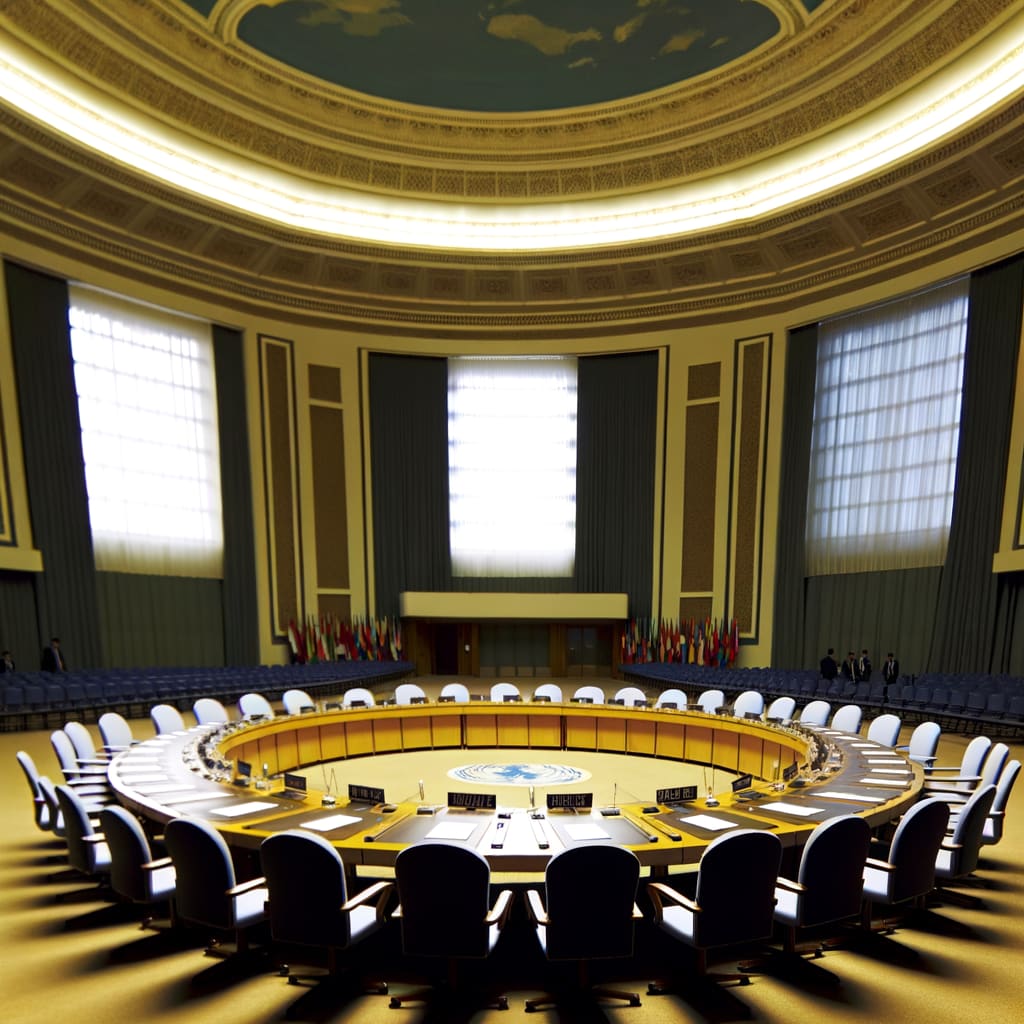
The 'Board of Peace', initially proposed as part of Trump's plan to create a new governance framework for Gaza, has now been presented as a potential US-led alternative to the UN. It invites various world leaders to join the board, chaired by Trump himself. According to the charter obtained by Middle East Eye, the body is implicitly critical of the UN and could replace the world organization.
Trump's initiative extends invitations to over 60 nations, including Russia, China, Hungary, and Israel, among others. The White House proposed a three-year membership, with an option to renew, and a $1 billion fee for a permanent spot on the board. The US President has drawn criticism for this 'pay-to-play' approach, likened to the UN Security Council by some analysts.
Mixed Global Response
Responses to Trump's initiative have varied. Hungary, under the leadership of Trump ally Viktor Orban, has unequivocally accepted the invitation. Israel's Prime Minister, Netanyahu, also agreed to join Trump's 'Board of Peace', and Morocco confirmed it would ratify the founding charter of the organization. China, Pakistan, Jordan, and Australia, among others, have confirmed their invitations but have not yet committed to participation.
On the other hand, several countries have expressed skepticism and caution. France, while confirming its invitation, stated it does not plan to join the 'Board of Peace' at this stage, citing concerns about respect for the principles and structure of the UN. Similarly, Canada's Finance Minister stated that Canada has no intention of paying the $1-billion price tag for a permanent seat on the board.
Implications and Concerns
The initiative has raised concerns over its potential to harm the UN's work and principles of international law. Critics have also pointed out the sidelining of Palestinians and the empowerment of pro-Israel figures. Moreover, the possibility of Trump leading the board even after he leaves the White House has added to the anxiety surrounding the initiative.
The initiative has also led to tensions with some countries. Trump reacted to French President Emmanuel Macron's refusal to join by suggesting that France's reluctance could be reversed with a threat of trade tariffs. This led to harsh responses from several European leaders, expressing their support for principles of international law and denouncing Trump's tariffs.
Current Status
The 'Board of Peace' initiative is currently in its second phase, with the White House having formally launched it. However, the initiative's future remains uncertain, with global responses still divided and many details yet to be clarified. The international community continues to watch closely as the initiative unfolds, with potential implications for the UN and global conflict resolution.