
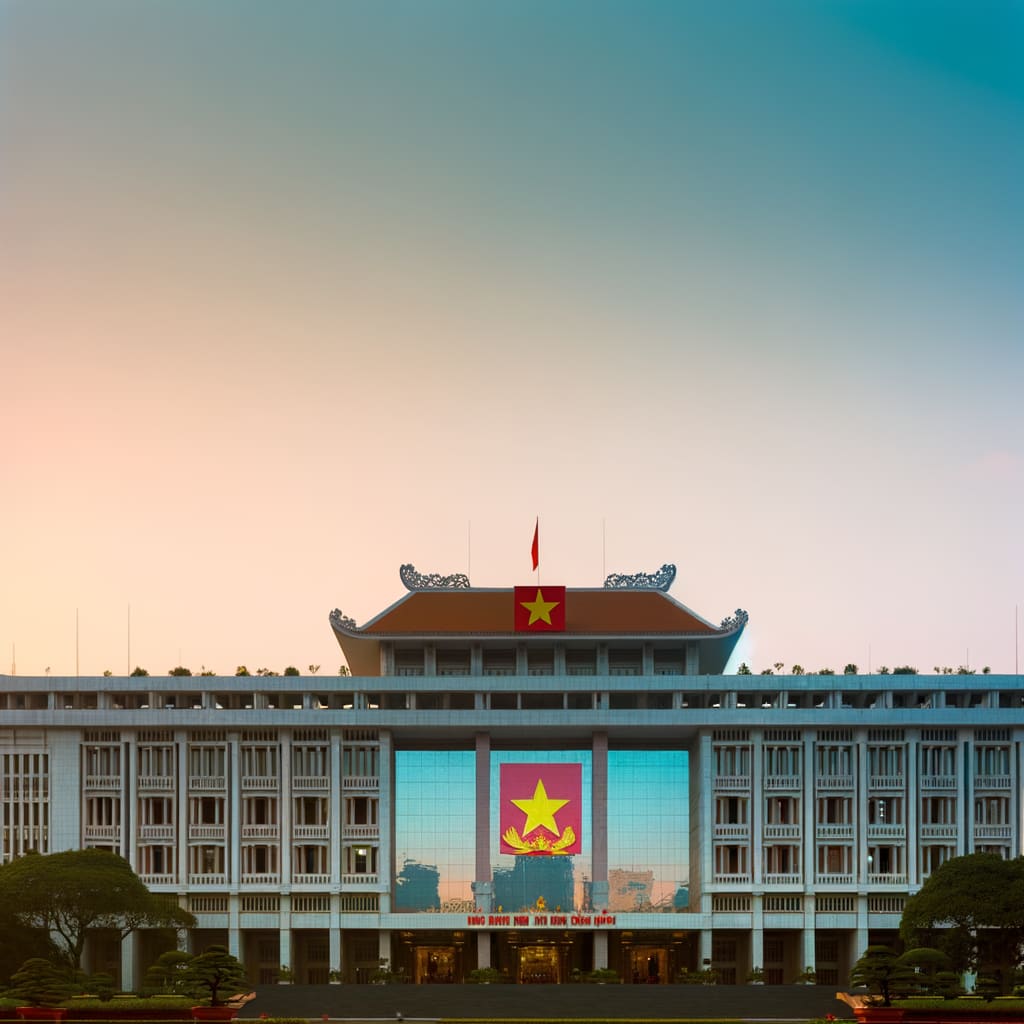
To Lam Elected as Vietnam's President, Marks Shift in Power Structure
In a significant transition in Vietnam's political landscape, To Lam, the General Secretary of the Communist Party, has been elected as the country's president. The unanimous decision by the Vietnamese parliament on Tuesday, April 7, 2026, merges the roles of party leadership and state presidency, previously held by separate individuals, thus centralizing authority in one figure for the first time in the nation's recent history.
A Break from Collective Leadership
Historically, Vietnam's governance has been characterized by a collective leadership system. However, the election of To Lam, as reported by Japan Times and The Diplomat, marks a break from this traditional structure. This move consolidates authority in the hands of To Lam, who also holds the position of the Communist Party chief.
Also, as Deutsche Welle and BBC News affirm, this unusual concentration of power has strengthened To Lam's position in the nation's political arena. The 68-year-old leader has been transformative in his less than two years as party chief, sweeping aside rivals, aggressively driving reforms, combining provinces, and reducing bureaucracy.
Aiming for Ambitious Growth Targets
As the South China Morning Post highlights, Lam has set an ambitious target for Vietnam's socio-economic development. He aims for the country to achieve a 10% annual growth rate under his leadership.
In addition, according to TASS, the Vietnamese parliament is expected to form a new government and define the course of the country's socio-economic development for the next five years following Lam's election.
International Relations in Focus
Lam's election as president is also expected to have implications for Vietnam's international relations. Russian President Vladimir Putin expressed his belief that Lam's election would strengthen Russia-Vietnam relations, according to TASS.
Moreover, Japan Times reports that Lam plans a visit to China next week, which is expected to cement ties between the two nations. This move comes at a time when both countries are concerned about energy security and face tariff pressure from the United States.
Conclusion
To Lam, the Communist Party chief, has emerged as Vietnam's 'supreme leader', as described by South China Morning Post. His election as the state president marks a significant shift in the country's power structure. With ambitious growth targets and plans to strengthen international relations, it will be interesting to see how Lam's leadership shapes the future of Vietnam.