
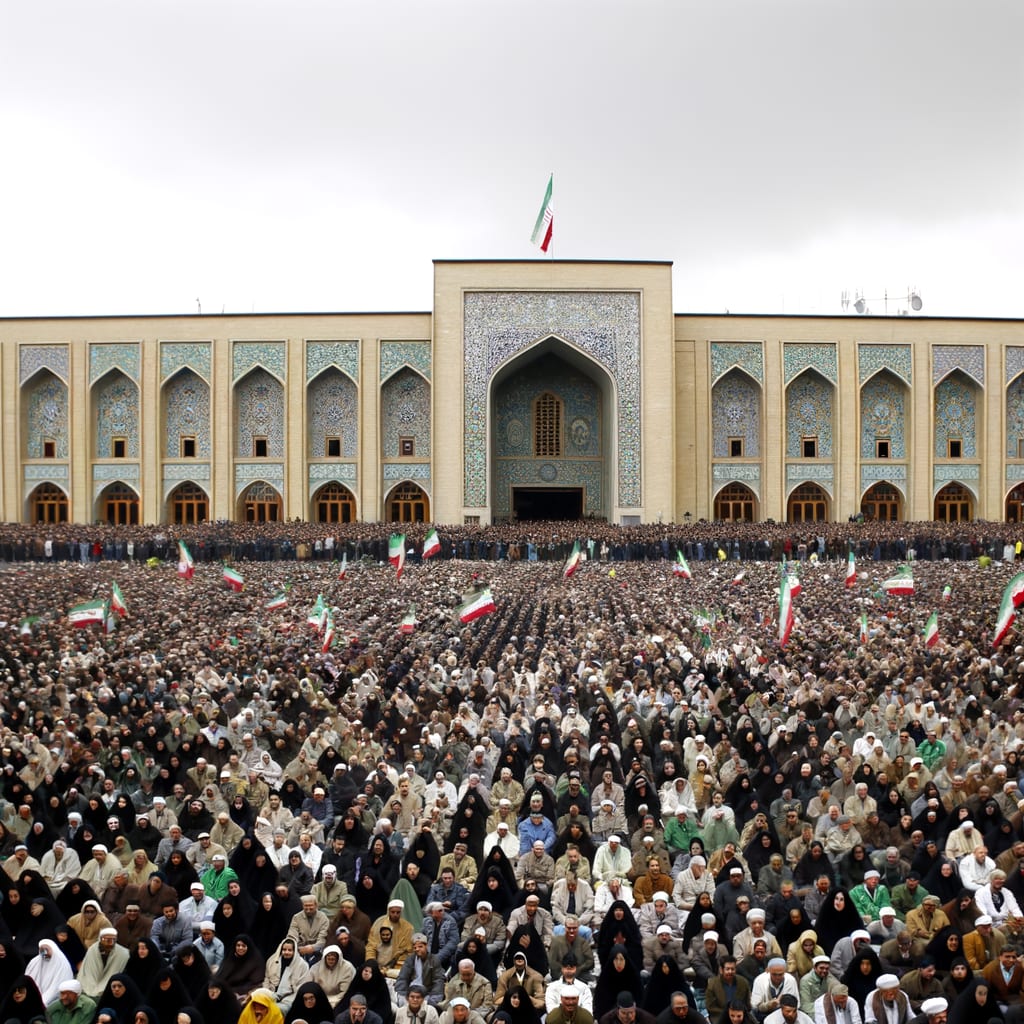
Mojtaba Khamenei Appointed as Iran's New Supreme Leader Amid Rising Tensions
In the wake of Ayatollah Ali Khamenei's death, Iran's Assembly of Experts has chosen his son Mojtaba Khamenei as the country's new Supreme Leader. The announcement has been met with a mixed response, both domestically and internationally, amid ongoing geopolitical tensions.
Background and Context
Ayatollah Ali Khamenei's death during US-Israeli airstrikes in late February left a power vacuum in Iran's leadership. His son, Mojtaba Khamenei, has been chosen to fill this role, marking a new era in Iranian politics. Mojtaba, aged 56, was born in Mashhad in 1969 and his early childhood coincided with his father’s rise as a revolutionary figurehead opposing the monarchy of Shah Mohammad Reza Pahlavi.
Key Developments
The Assembly of Experts reportedly settled on Mojtaba Khamenei as its next supreme leader after precise and extensive deliberations,
despite initial disputes over voting procedures. The decision was welcomed by Iranian President Masoud Pezeshkian, who called it the start of a ‘new era of dignity and strength’ for Iran. Iran's Islamic Revolutionary Guard Corps and several senior officials have also pledged allegiance to the new leader.
In the wake of the appointment, Iran launched a new wave of missiles towards Israel, marking the first such attack under Mojtaba Khamenei's leadership. The Israeli Defense Forces (IDF) have threatened to assassinate anyone replacing the slain Ayatollah Ali Khamenei, adding to the escalating tensions in the region.
International Reactions and Implications
The leadership transition has sparked diverse international reactions. US President Donald Trump has already expressed disdain for Mojtaba Khamenei, calling him ‘unacceptable’. However, China sees Iran's leadership change as a domestic matter, with Chinese foreign ministry spokesperson Guo Jiakun stating, This is a decision by the Iranian side based on its constitution.
Current Status
As Iran grapples with the changes in leadership and escalating tensions, Mojtaba Khamenei's swearing-in ceremony is scheduled to take place on March 9 in Tehran. Amid the ongoing challenges, calls for national unity have been made. The state TV urged the nation to unite behind Mojtaba Khamenei, as the country faces an onslaught from the US and Israel and virtually a war with its Gulf neighbors. That said, the country also faces internal dissent, with some segments of the population reacting to the appointment with chants of 'Death to the heir'.
The future of Iran under the new leadership of Mojtaba Khamenei remains uncertain, as the country navigates both internal pressures and external threats in this new era.