
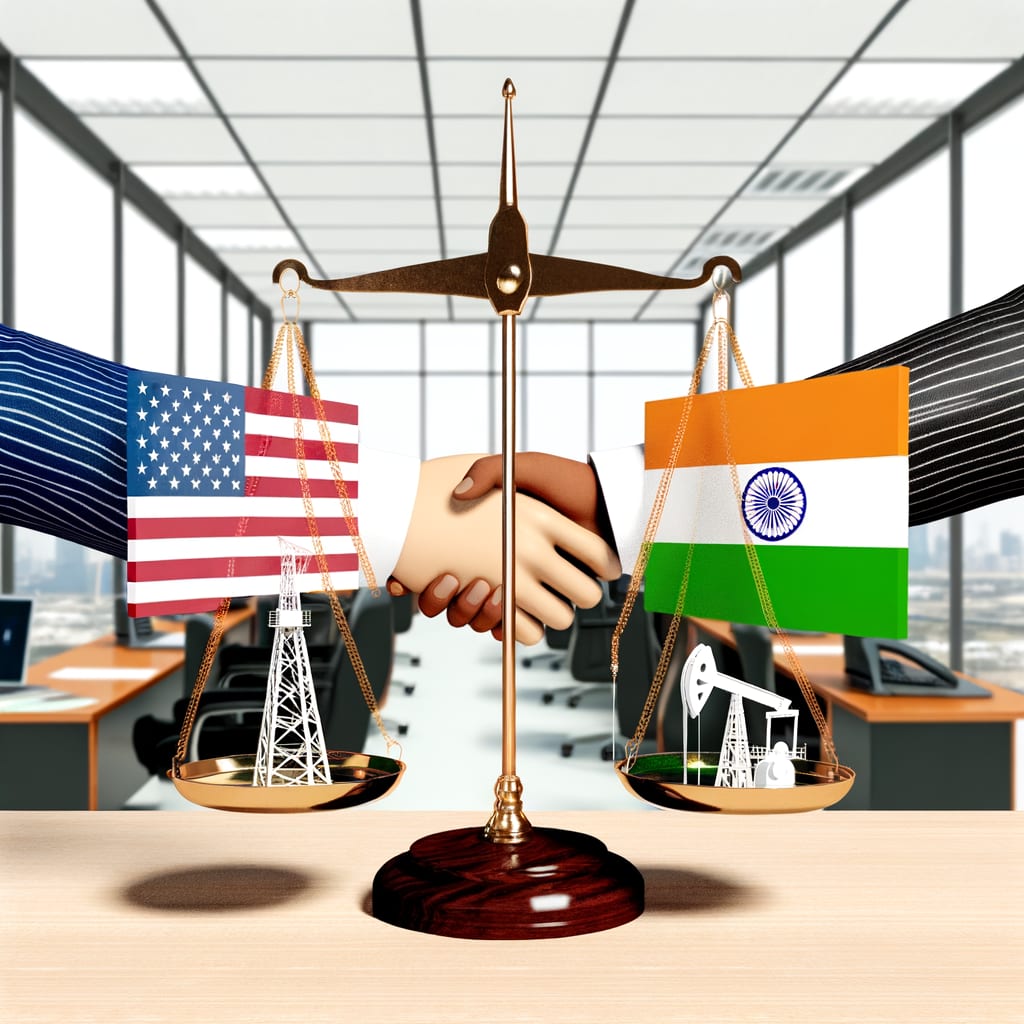
US-India Trade Deal Draws Mixed Reactions
In a move that has drawn both praise and criticism, the United States and India have announced an interim trade agreement, easing months-long tensions over India's purchases of Russian oil. While the deal has seen a positive response from Indian Prime Minister Narendra Modi, who hailed it as a boon for global growth, it has generated concern among others that India might be trading its energy security for capital reassurance.
Background and Context
The trade arrangement, revealed on February 2, comes on the heels of a 25% tariff imposed by the US on imports from India, due to India's purchase of Russian crude oil. This tariff has been cancelled under the new agreement, a move that has been lauded as a significant step towards establishing stronger economic ties between the two nations.
Moreover, the deal arrives amidst India's strategic shift towards the West, with back-to-back trade pacts with the US and the European Union. This development is in the backdrop of the escalating US-China rivalry and has been seen as a potential setback to India's improving ties with China.
Key Developments
Under the new deal, India has committed to BUY AMERICAN,
with over US$500 billion in US products. Furthermore, it will stop buying Russian Oil, and buy much more from the United States,
as stated by US President Donald Trump. In return, the US has slashed its reciprocal
duties on Indian products to 18% from 25% and committed to large purchases of US energy and industrial goods.
India will eliminate or reduce tariffs on all U.S. industrial goods and a wide range of U.S. food and agricultural products, including dried distillers’ grains (DDGs), red sorghum for animal feed, tree nuts, fresh and processed fruit, soybean oil, wine and spirits, and additional products,
as per the joint statement released by the White House.
Implications and Reactions
The trade deal has received mixed responses. While it has been praised as a momentous step towards deepening economic cooperation between the two nations, it has also raised concerns about India's energy security. There are also fears that the agreement could slow the fragile thaw between New Delhi and Beijing, particularly given the vagueness of the reduction in Russian energy imports under the US agreement.
Moreover, the steep hikes by Mexico on Indian goods, following the US tariffs, have added to the woes of several Indian industries already struggling under the burden of US tariffs.
Concluding Remarks
Despite the mixed reactions, the new US-India trade deal marks a significant shift in India's economic strategy. It is yet to be seen how this agreement will affect the balance of power in the India-China-US triangle and India's energy security. However, with the deal in place, India has clearly signaled a major tilt towards stronger economic ties with the West.