
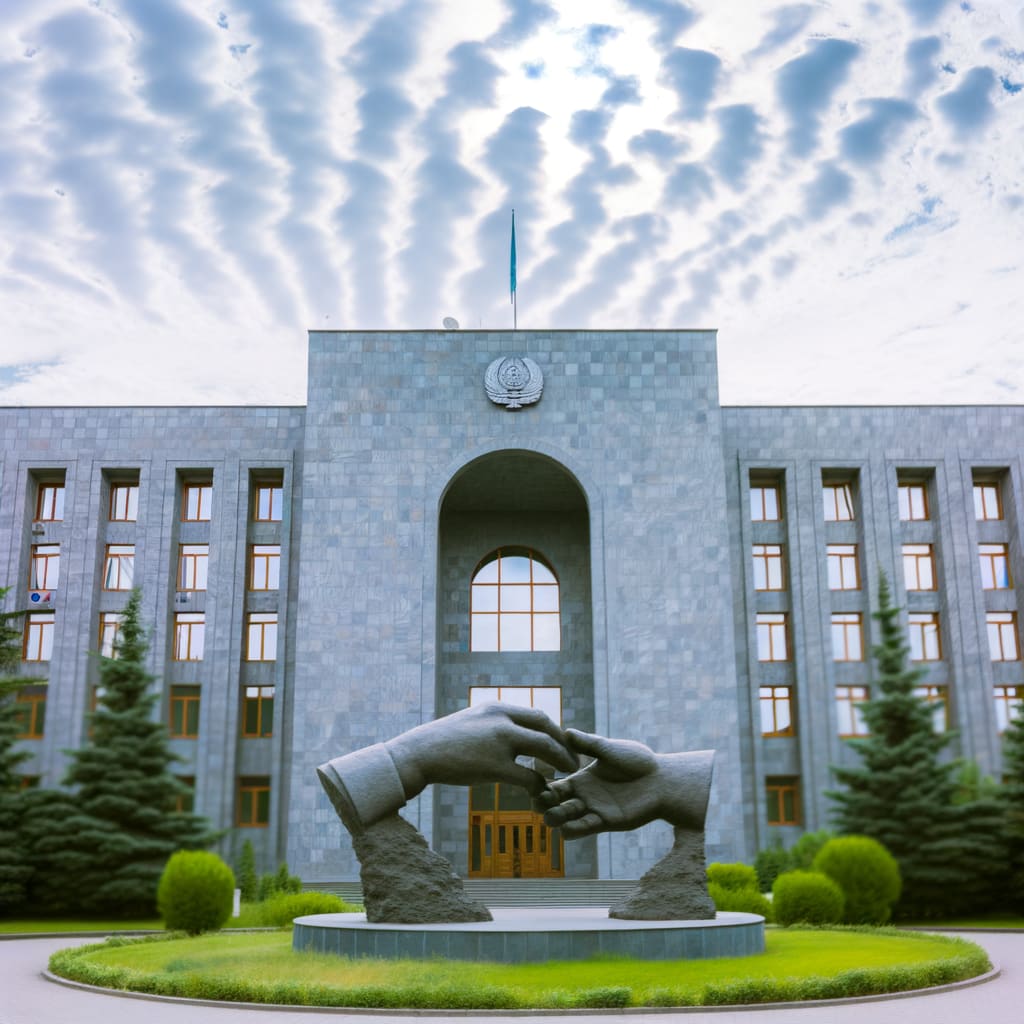
Venezuela and U.S. Resume Limited Diplomatic Contacts, Explore Reopening Embassies
Venezuela and the United States are reportedly resuming limited diplomatic contacts and are considering the reopening of embassies in each other's countries. This comes less than a week after the U.S. military's capture of then Venezuelan president, Nicolás Maduro.
Background
According to the interim government of President Delcy Rodriguez, who assumed power following Maduro's capture, an exploratory diplomatic process
has begun with the U.S. government with the aim of restoring diplomatic relations. These relations have been severed since 201912.
A U.S. State Department delegation is now in Caracas, while a group of Venezuelan diplomats will be sent to the United States34.
The development is seen as the latest sign of cooperation following Maduro's capture and U.S. President Donald Trump's claim of being in charge
of the country5.
Key Developments
The move towards reopening embassies and restoring diplomatic ties comes amidst a fast-changing relationship between the two countries6. The Venezuelan government has expressed intentions to address the aggression and 'kidnapping' of Maduro, but also seek to work 'on a mutual interest agenda'7.
On the other hand, President Trump has issued a stern warning to President Rodríguez, stating that she would face potentially harsher consequences than Maduro if she does not cooperate with the U.S8.
Reactions and Implications
The Trump administration is asserting control over Venezuelan oil, following the seizure of two sanctioned tankers9. Rodríguez defended plans to open up her country’s oil market to Washington, stating that it was “not unusual or irregular” to trade with the U.S9.
However, the U.S. administration's move has sparked criticism, with some calling it a modern-day colonialism1011.
The U.S.'s decision to engage a longtime Maduro loyalist like Rodríguez, instead of rallying behind Venezuela’s most prominent opposition leader, María Corina Machado, reflects a calculated effort to avoid a power vacuum and maintain control during this fragile transition12.
Conclusion
As the exploratory talks commence, there are many uncertainties. The possibility of a presidency of Delcy Rodriguez has enraged President Trump, who says Rodríguez should do what is right or she will pay a high price1314.
Despite the international attention and potential challenges, both Venezuela and the U.S. seem committed to restoring their diplomatic ties and reopening embassies in each other's countries. The developments in the coming weeks will determine the shape of this relationship.